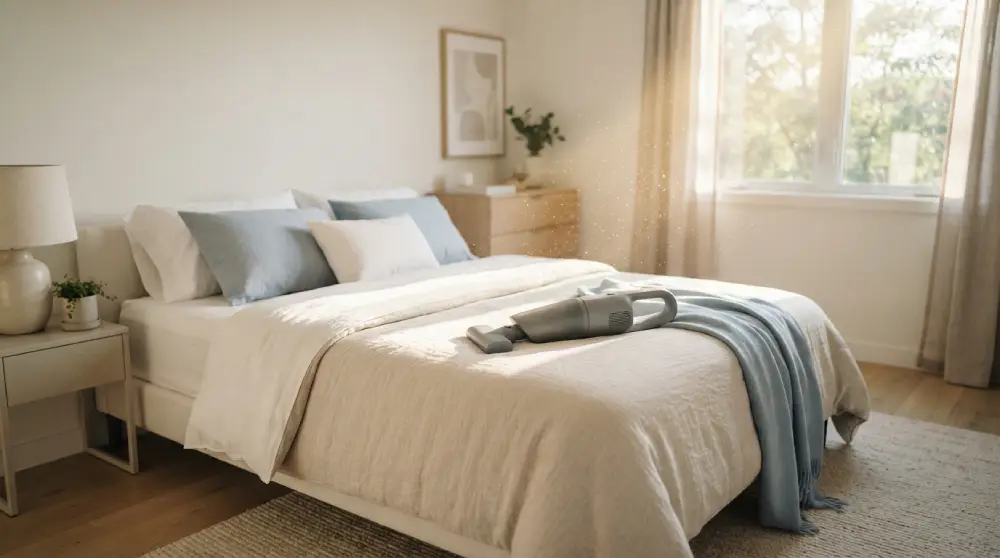
Finding the best vacuum for mattresses can change the way you sleep. Over time, your mattress collects dust, dead skin cells, pet hair, and dust mites.
Most of this stays hidden deep in the fabric. A standard vacuum often misses it.
This guide explains what to look for, which vacuum types work best, and how to clean your mattress properly.
Why Your Mattress Needs a Proper Vacuum
You spend about a third of your life in bed. That is a lot of time close to whatever lives in your mattress.
Dust mites feed on dead skin and thrive in warm bedding. Their waste is a common trigger for sneezing, itchy eyes, and a blocked nose.
A good vacuum removes these irritants before they build up. It also helps your mattress stay fresher and last longer.
Regular vacuuming is especially helpful for:
- People with allergies or asthma
- Pet owners
- Families with young children
- Anyone who eats or works in bed
What Makes the Best Vacuum for Mattresses
Not every vacuum is built for soft, layered surfaces. The best vacuum for mattresses combines a few key features that work together.
Strong Suction Power
Suction is the first thing to check. Mattresses are thick, and dirt sits well below the surface.
Strong suction pulls out particles that a weak motor leaves behind. Look for a model that holds steady power across the whole cleaning session.
HEPA Filtration
A HEPA filter traps tiny particles such as dust mite waste, pollen, and pet dander. Without it, a vacuum can blow fine dust back into the air.
This matters most if you have allergies. A sealed system with a HEPA filter keeps what it collects inside the bin.
A Dedicated Mattress Tool
A wide, flat upholstery nozzle glides over fabric without snagging. Some tools include a beater bar or vibrating pad that loosens dirt from deep inside the fibres.
A tool made for mattresses covers more area in less time. It also reduces strain on your wrist.
UV Light Sanitizing
Many mattress vacuums include a UV light that helps reduce bacteria and dust mites on the surface. It is a helpful extra, though it works best alongside strong suction.
Keep in mind that UV light only works on the surface it touches. Suction still does the heavy lifting.
Lightweight and Easy to Handle
Mattress cleaning means lifting, angling, and reaching across a large bed. A heavy machine gets tiring fast.
A lightweight body with a comfortable grip makes the job easier. You will be more likely to clean regularly when the process feels simple.
Corded or Cordless
Both options can work well.
Corded models give steady power for as long as you need. Cordless models give you freedom to move around the bed without hunting for a socket.
Choose based on your room layout and how long you usually clean.
Types of Vacuums for Mattresses
Several vacuum styles can handle mattress cleaning. Each has its own strengths.
Handheld Mattress Vacuums
These compact machines are designed for beds, sofas, and car seats. They are light, easy to store, and simple to use.
Many include UV light and a vibrating head. They are a great fit for small rooms and quick weekly cleans.
The main limit is run time. Cordless handhelds may need a recharge during a longer session.
Canister and Upright Vacuums with Attachments
A full size vacuum can clean a mattress very well when fitted with the right upholstery tool.
These models often have larger motors and bigger bins. That means fewer interruptions and stronger pull.
The trade off is weight. Moving a bulky machine around a bed takes more effort.
Cordless Stick Vacuums
Stick vacuums work well as a two in one solution. You can clean floors and then switch to a handheld mode for the mattress.
They suit people who want one machine for the whole home. Check that the handheld attachment has enough power for deep cleaning.
Extra Features Worth Having
Small details can make a big difference in daily use. Keep an eye out for these.
- A washable filter that is easy to remove and rinse
- A bin that empties without touching the dust
- A long hose or reach for corners and edges
- A crevice tool for seams and tufted areas
- Quiet operation, so you can clean without waking anyone
None of these are required. Together, they make the vacuum more pleasant to own.
How to Vacuum Your Mattress the Right Way
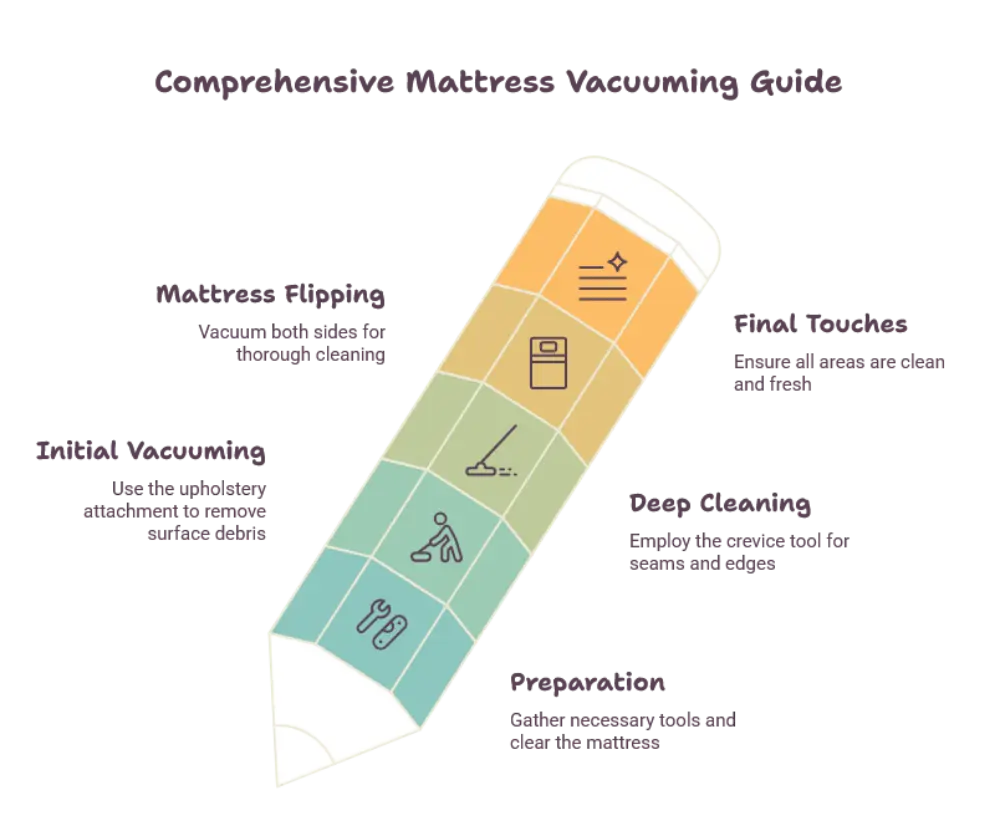
Even the best vacuum for mattresses needs good technique. A few simple steps will improve your results.
Prepare the Bed
Strip all sheets, covers, and pillows. Wash them in hot water if the label allows.
This gives you full access to the surface and refreshes your bedding at the same time.
Vacuum in Slow, Overlapping Lines
Work across the mattress in straight, overlapping passes. Move slowly so the suction has time to lift deeper dirt.
Rushing leaves debris behind. Patience pays off here.
Focus on Seams and Edges
Dust gathers along seams, piping, and tufted spots. Switch to the crevice tool and run it along every edge.
Do not forget the sides of the mattress. They collect more dust than most people expect.
Treat Both Sides
Flip or rotate the mattress if the design allows it. Then repeat the process on the other side.
This also helps the mattress wear evenly.
Let It Air Out
After vacuuming, leave the mattress uncovered for a short while. Fresh air helps remove leftover moisture and odours.
Then make the bed with clean sheets.
How Often Should You Vacuum Your Mattress
A good rule is once a month for most households. This keeps dust and allergens under control.
Clean more often if you have pets, allergies, or children. Every one to two weeks is a better rhythm for those homes.
Also vacuum after illness, spills, or a change of seasons. These moments tend to leave extra debris behind.
Common Mistakes to Avoid
Small errors can limit your results.
- Skipping the filter check, which reduces suction over time
- Using a rough tool that damages the fabric
- Cleaning too fast to lift deeper dirt
- Forgetting to empty the bin before you start
- Ignoring the mattress edges and underside
Avoid these, and your vacuum will perform at its best.
Conclusion
The best vacuum for mattresses brings together strong suction, HEPA filtration, a smart mattress tool, and a comfortable design. UV light and washable filters are useful extras.
Pick the style that fits your home, whether that is a handheld, a stick vacuum, or a full size machine with attachments.
Pair it with a steady cleaning routine, and your mattress will stay fresher, healthier, and more comfortable for years.
FAQs
Can a regular vacuum clean a mattress?
Yes, a regular vacuum can clean a mattress if it has an upholstery attachment and good suction. However, a vacuum made for mattresses usually performs better because it has a wider tool, HEPA filtration, and sometimes UV light.
Does a mattress vacuum really remove dust mites?
A mattress vacuum removes many dust mites and their waste from the surface and upper layers. It will not remove every mite, but regular cleaning with HEPA filtration greatly reduces their numbers.
How often should I vacuum my mattress?
Most people should vacuum their mattress once a month. If you have pets, allergies, or children, cleaning every one to two weeks gives better results.
Is a HEPA filter necessary for a mattress vacuum?
A HEPA filter is not strictly required, but it is strongly recommended. It traps very small particles like dust mite waste and pet dander, so they stay inside the vacuum instead of returning to the air.
Is UV light on a mattress vacuum worth it?
UV light can help reduce bacteria and mites on the surface of the mattress. It works best as an added feature alongside strong suction, since suction does most of the cleaning.