
Knowing how to wash weighted blankets the right way helps you keep them fresh, soft, and comfortable for years. These blankets are heavier and more delicate than regular bedding, so a careless wash can damage the filling or the stitching.
The good news is that cleaning one is not hard. You just need the right method, the right settings, and a little patience.
This guide walks you through every option, from machine washing to hand washing and spot cleaning.
- Check the Care Label First
- Why Weighted Blankets Need Special Care
- How Often Should You Wash a Weighted Blanket?
- How to Wash Weighted Blankets in a Washing Machine
- How to Hand Wash a Weighted Blanket in the Bathtub
- How to Spot Clean a Weighted Blanket
- How to Dry a Weighted Blanket
- Common Mistakes to Avoid
- Tips to Keep Your Weighted Blanket Clean Longer
- Conclusion
- FAQs
Check the Care Label First
Before you do anything else, read the care label on your blanket. This small tag tells you exactly what the maker recommends.
Some blankets are machine washable. Others must be hand washed or spot cleaned only. A few need professional cleaning.
Always follow the label. It is the most reliable guide for your specific blanket.
Why Weighted Blankets Need Special Care
A weighted blanket is filled with glass beads or plastic pellets. These are sewn into small pockets across the fabric.
Water makes this filling much heavier. A wet blanket can weigh double or more, which puts strain on the seams.
Harsh washing can also shift the beads and leave the weight uneven. That is why gentle care matters so much.
How Often Should You Wash a Weighted Blanket?
Most people do not need to wash a weighted blanket often. Washing it every few months is enough for most households.
If you sleep with it every night, you may want to wash it a little sooner. If you only use it on the couch now and then, you can wait longer.
The easiest way to reduce washing is to use a removable duvet cover. You can wash the cover weekly and save the blanket itself for occasional deep cleaning.
How to Wash Weighted Blankets in a Washing Machine
Machine washing is the quickest option, but only if your blanket is machine safe and your washer can handle the load.
Check Your Washer Capacity
Weight is the biggest concern here. Most home washers struggle with heavier blankets, especially once they are soaked.
As a general rule, blankets under about 15 pounds may fit in a large capacity front loading washer. Heavier blankets are better washed at a laundromat with a commercial machine.
Avoid top loading washers with a center agitator. The agitator can twist and tear the blanket.
Prepare the Blanket
Take off any removable cover and wash it separately. Then check the blanket for loose threads, open seams, or small holes.
Fix any damage before washing. Water and spinning can make small tears much worse.
If there are stains, treat them first with a small amount of mild detergent. Dab gently instead of scrubbing.
Choose the Right Settings
Select a gentle or delicate cycle with cold water. Cold water protects the fabric and helps prevent shrinking.
Use a small amount of mild liquid detergent. Too much soap can leave residue that is hard to rinse out of thick fabric.
Skip bleach and fabric softener. Both can weaken the fibers and damage the filling.
Run the Cycle
Place the blanket in the washer by itself. Do not add towels or other items, since extra weight can unbalance the machine.
If your washer has an extra rinse option, use it. This helps remove all the detergent from the thick layers.
Once the cycle ends, take the blanket out right away. Leaving it wet inside the drum can lead to musty smells.
How to Hand Wash a Weighted Blanket in the Bathtub
Hand washing is the safest method for heavier or more delicate blankets. It is also the best choice when the care label says not to use a machine.
Start by cleaning your bathtub. Then fill it with cool water, about enough to cover the blanket.
Add a small amount of gentle detergent and swish the water to mix it.
Lay the blanket flat in the tub and press it down so it soaks through. Gently squeeze and press the fabric with your hands. Avoid twisting or wringing it.
Let it soak for about thirty minutes. Then drain the tub and refill it with clean water to rinse.
Repeat the rinse until the water runs clear and the soap is gone. Press out extra water by gently pushing the blanket against the side of the tub.
Be careful when lifting it. A soaked weighted blanket is very heavy, so ask someone to help if needed.
How to Spot Clean a Weighted Blanket
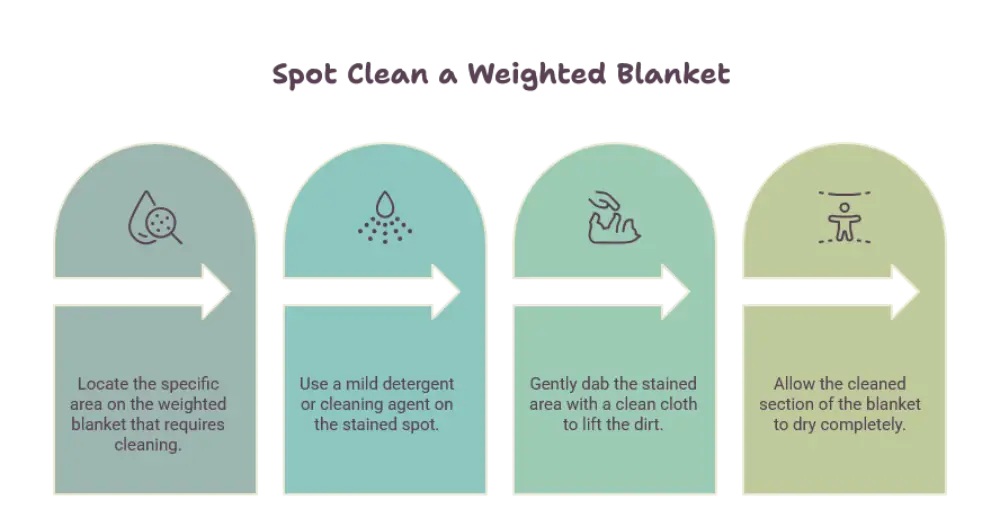
Spot cleaning is perfect for small spills and light marks. It also keeps you from washing the whole blanket too often.
Mix a few drops of mild detergent with cool water. Dip a clean cloth into the mixture and dab the stain gently.
Work from the outside of the stain toward the center. This stops it from spreading.
Then dab the area with a cloth dampened with plain water to remove the soap. Let the spot air dry fully before using the blanket again.
How to Dry a Weighted Blanket
Drying is just as important as washing. A blanket that stays damp can develop mold or a sour smell, and wet filling can clump.
Air Drying
Air drying is the gentlest option. Lay the blanket flat on a clean drying rack or over a sturdy surface in a well ventilated room.
Do not hang it from a clothesline by one edge. The weight of the wet filling can pull on the seams and stretch the fabric.
Flip the blanket every few hours so both sides dry evenly. Fully drying a thick blanket can take a full day or longer.
Using a Dryer
If the care label allows it, you can use a dryer. Choose a large capacity machine and set it to low heat.
High heat can melt plastic pellets and damage the fabric. Check the blanket often and take it out when it feels dry.
Adding a couple of clean dryer balls can help fluff the fabric and spread the filling evenly. Make sure the blanket is completely dry before you put it away.
Common Mistakes to Avoid
Many people damage their blankets by rushing the process. Here are the mistakes to watch for.
Do not use hot water. It can shrink the fabric and harm the filling.
Do not use bleach or strong stain removers. They can break down the fibers and cause fading.
Do not overload your washer. If the blanket is too heavy, the machine can get damaged and the blanket can tear.
Do not store the blanket while it is still damp. Moisture trapped inside can lead to mildew.
Do not wring or twist the blanket. This can pull the seams apart and move the filling out of place.
Tips to Keep Your Weighted Blanket Clean Longer
A few simple habits can make your blanket last much longer between washes.
Use a duvet cover and wash it often. This is the easiest way to protect the blanket itself.
Air the blanket out occasionally by laying it flat in a ventilated space. Fresh air helps remove odors naturally.
Clean spills right away. Fast action keeps stains from setting into the fabric.
Store the blanket in a cool, dry place. Use a breathable cotton bag instead of a sealed plastic one.
Conclusion
Learning how to wash weighted blankets is simple once you know the basics. Always start with the care label, choose a gentle method, and use cold water with mild detergent.
Machine wash lighter blankets in a large washer, hand wash heavier ones in the tub, and spot clean for small messes. Most importantly, dry the blanket completely before using or storing it.
With the right care, your weighted blanket will stay soft, clean, and evenly weighted for many nights of comfortable sleep.
FAQs
Can I wash a weighted blanket in a regular washing machine?
It depends on the weight and the care label. Lighter blankets may fit in a large front loading washer on a gentle cycle. Heavier blankets are better washed in a bathtub or a commercial machine at a laundromat.
How often should I wash my weighted blanket?
Most blankets only need a full wash every few months. Using a removable duvet cover and spot cleaning spills can help you wash the blanket less often.
Can I put a weighted blanket in the dryer?
Only if the care label says it is safe. Use a large dryer on low heat and check the blanket often. Air drying flat is the safest choice for most blankets.
What kind of detergent is best for a weighted blanket?
A mild liquid detergent works best. Use only a small amount, and avoid bleach and fabric softener because they can damage the fabric and filling.
How long does a weighted blanket take to dry?
Air drying usually takes a full day or longer, depending on the size and thickness. Make sure the blanket is completely dry inside before you use it or store it.