Finding the best cleaner for quartz countertops is essential if you want your kitchen or bathroom surfaces to stay glossy, stain free, and scratch free for years to come. Quartz is engineered from natural stone combined with resin, which makes it durable and nonporous, but it still needs the right cleaning approach to keep its shine intact. Using the wrong products can dull the finish, cause discoloration, or weaken the resin binder over time. This guide walks you through everything you need to know about choosing and using the right cleaner for quartz surfaces.
- Why Quartz Countertops Need Special Care
- What Makes a Cleaner Ideal for Quartz
- Best Types of Cleaners for Quartz Countertops
- Cleaning Products to Avoid
- Step by Step Guide to Cleaning Quartz Countertops
- Tips to Keep Quartz Looking New
- Natural Alternatives for Cleaning Quartz
- Conclusion
- Frequently Asked Questions
Why Quartz Countertops Need Special Care
Quartz countertops are popular because they resist stains, scratches, and bacteria better than many other surfaces. However, this resistance comes from the resin used in manufacturing, and harsh chemicals can slowly damage that protective layer. Unlike granite or marble, quartz does not need sealing, but it is sensitive to certain acidic and abrasive substances.
The Resin Factor
The resin in quartz is what gives it flexibility and shine. Strong chemicals such as bleach or ammonia can break down this resin over time, leading to dullness or discoloration. This is why choosing a gentle yet effective cleaner matters so much.
Heat and Sunlight Sensitivity
Quartz can also be sensitive to prolonged heat exposure and direct sunlight. While cleaning products do not directly cause this issue, combining sun exposure with the wrong chemical cleaner can speed up fading and surface stress.
What Makes a Cleaner Ideal for Quartz
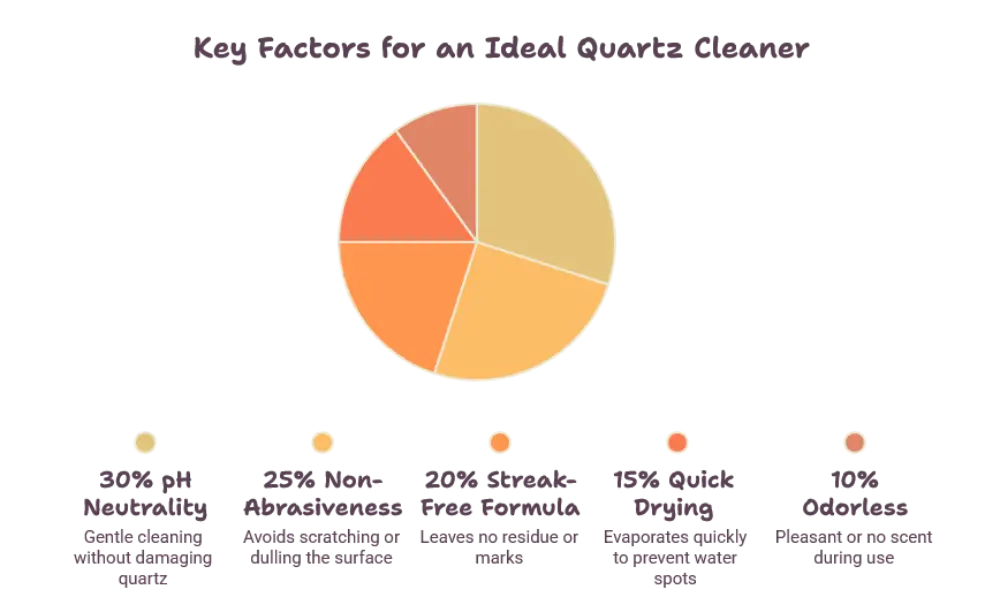
Not every surface cleaner is safe for quartz. The best cleaner for quartz countertops should meet a few important criteria.
pH Balanced Formula
A pH balanced cleaner is neither too acidic nor too alkaline. This balance protects the resin binder while still cutting through grease, food residue, and everyday grime.
Non Abrasive Texture
Abrasive powders or rough scrubbing pads can scratch the surface, creating tiny grooves where bacteria and stains can settle. A good quartz cleaner should be a liquid or gel formula that glides smoothly without grit.
Streak Free Finish
Since quartz has a glossy surface, streaks are easily visible. The best cleaners leave no residue behind and dry to a clear, polished finish.
Best Types of Cleaners for Quartz Countertops
Mild Dish Soap and Warm Water
For everyday cleaning, a few drops of mild dish soap mixed with warm water is often all you need. This combination removes light stains, fingerprints, and food splatters without risking damage to the resin.
Specialized Quartz Cleaning Sprays
Many brands now manufacture cleaning sprays designed specifically for engineered stone. These sprays are formulated to be pH neutral and often include a light polish that enhances shine after every wipe down.
Isopropyl Alcohol Solution
A diluted isopropyl alcohol solution is excellent for disinfecting quartz surfaces without leaving harmful residue. It evaporates quickly and does not interact negatively with the resin, making it a safe choice for sanitizing kitchen counters.
Glass Cleaner for Extra Shine
Some homeowners use a small amount of ammonia free glass cleaner to bring out extra shine after washing with soap and water. This step is optional but can be helpful for surfaces that see heavy daily use.
Cleaning Products to Avoid
Knowing what not to use is just as important as knowing what works.
Bleach and Ammonia Based Products
These harsh chemicals can break down the resin binder, causing discoloration or a dull, worn appearance over time.
Abrasive Powders and Scouring Pads
Products like scouring powders or steel wool can scratch the surface permanently, so they should never be used on quartz.
Vinegar and Acidic Cleaners
Vinegar, lemon juice, and other acidic solutions can etch the surface, weakening the resin and creating a hazy or dull appearance over time.
Step by Step Guide to Cleaning Quartz Countertops
Daily Maintenance
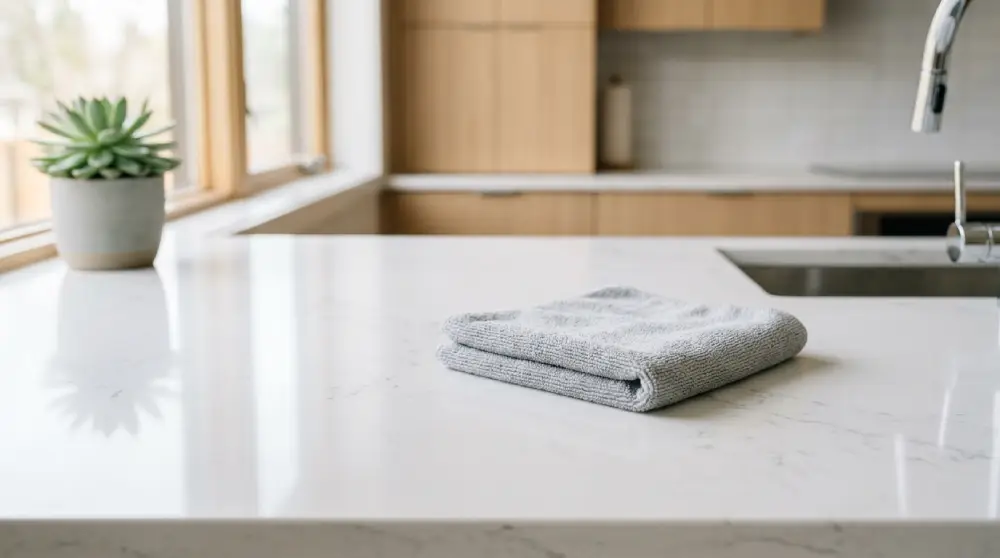
Wipe down the surface every day with a soft microfiber cloth and a pH balanced cleaner or mild soap solution. This prevents buildup of grease and residue.
Weekly Deep Clean
Once a week, use a specialized quartz spray to remove any stubborn spots and restore shine. Focus on areas near the sink and stove where grease tends to accumulate.
Handling Stubborn Stains
For dried food or sticky residue, apply a small amount of cleaner and let it sit for a few minutes before wiping with a soft cloth. Avoid scraping with sharp tools, as this can damage the surface.
Tips to Keep Quartz Looking New
Use Cutting Boards and Trivets
Although quartz is scratch resistant, using cutting boards and trivets under hot pots protects the surface from unnecessary wear and thermal stress.
Wipe Spills Immediately
Wine, coffee, and oil based spills should be wiped up right away to prevent staining, even though quartz is nonporous and generally resistant to stains.
Avoid Harsh Chemical Exposure
Keep nail polish remover, paint thinner, and other strong solvents away from quartz surfaces, as these substances can cause permanent damage.
Natural Alternatives for Cleaning Quartz
Baking Soda Paste
A gentle paste made from baking soda and water can help lift stubborn stains without scratching the surface. Apply it softly with a microfiber cloth and rinse thoroughly.
Diluted Dish Soap Solution
This remains one of the safest and most natural ways to clean quartz daily, offering effective grease removal without any risk of chemical damage.
Conclusion
Choosing the best cleaner for quartz countertops comes down to understanding what protects the resin and finish while still tackling everyday messes. A pH balanced, non abrasive cleaner combined with regular maintenance will keep your quartz surfaces looking polished and new for years. Avoid harsh chemicals like bleach, ammonia, and acidic solutions, and your countertops will continue to shine brightly in your kitchen or bathroom.
Frequently Asked Questions
What is the safest cleaner for quartz countertops?
A pH balanced, non abrasive cleaner or a mix of mild dish soap and warm water is the safest choice for daily cleaning.
Can I use vinegar to clean quartz countertops?
No, vinegar is acidic and can etch the surface, weakening the resin and dulling the finish over time.
Is it safe to use bleach on quartz countertops?
Bleach should be avoided since it can break down the resin binder and cause discoloration or a hazy appearance.
How often should quartz countertops be cleaned?
Wipe them daily with a soft cloth and gentle cleaner, and do a deeper clean weekly to maintain their natural shine.
Can I use a magic eraser on quartz countertops?
Magic erasers are mildly abrasive and can dull the glossy finish, so it is better to use a soft microfiber cloth instead.