Choosing the best cleaner for laminate floors can feel confusing since laminate is more sensitive to moisture and harsh chemicals than tile or hardwood. Using the wrong product can leave streaks, dull the finish, or even cause the layers to warp over time. This guide breaks down what actually works, what to avoid, and how to keep your laminate flooring looking fresh for years.
Why Laminate Floors Need Special Care
Laminate flooring is made of layered materials topped with a printed design and a protective wear layer. Unlike solid hardwood, laminate cannot be sanded or refinished, so any damage from cleaning products tends to be permanent.
Excess water is the biggest enemy of laminate. It can seep into the seams and cause swelling or bubbling. This is why the best cleaner for laminate floors is almost always a low moisture, pH balanced formula rather than a soapy or oil based product.
What Makes a Cleaner Safe for Laminate

Not every floor cleaner on the shelf is suitable for laminate surfaces. Here are the qualities to look for before picking a product.
pH Balanced Formulas
A neutral pH cleaner will not strip the protective coating on laminate. Alkaline or acidic cleaners can slowly break down the wear layer, leading to a dull or cloudy appearance.
No Wax or Oil Based Ingredients
Waxes and oils are meant for hardwood, not laminate. They tend to sit on top of the laminate surface and create a hazy film that attracts more dust and dirt.
Quick Drying Formula
Since moisture is risky for laminate, the best cleaners evaporate quickly and do not leave puddles or residue behind.
Top Types of Cleaners for Laminate Floors
Commercial Laminate Floor Cleaners
Many flooring brands sell cleaners specifically formulated for laminate. These products are pH neutral, streak free, and safe for daily use. They usually come in a spray bottle for controlled application, which helps avoid soaking the floor.
DIY Vinegar Solution
A mild vinegar and water solution is a popular natural option. Combine a small amount of white vinegar with warm water in a spray bottle for a simple homemade cleaner. This works well for light dust and everyday grime, though it should be used sparingly since vinegar is acidic and frequent use may dull the finish over time.
Microfiber Mop Systems
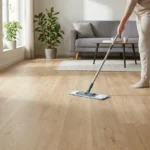
Sometimes the tool matters more than the liquid. A microfiber mop paired with a laminate safe spray cleaner picks up dust and debris without scratching the surface, and the pads can be washed and reused.
Steam Cleaners
Steam cleaners are generally not recommended for laminate. The heat and moisture can seep into seams and cause long term damage, even though they work beautifully on tile and sealed hardwood.
How to Clean Laminate Floors the Right Way
Sweep or Vacuum First
Always remove loose dirt and grit before applying any liquid cleaner. Dragging a mop over sandy debris can scratch the laminate surface.
Use a Damp Mop, Not a Wet One
Spray the cleaner lightly onto the mop head rather than directly onto the floor. This controls moisture and prevents pooling in seams.
Wipe in the Direction of the Planks
Cleaning along the grain of the laminate planks helps avoid streaking and gives a more even, natural looking finish.
Dry Immediately
Use a clean, dry microfiber cloth to buff the floor right after mopping. This step locks in the shine and prevents water spots.
Common Mistakes to Avoid
Soaking the floor with too much liquid is one of the most frequent mistakes people make. Another is using ammonia based glass cleaners, which can leave a cloudy residue. Abrasive scrub brushes or steel wool should also be avoided since they can permanently scratch the wear layer.
Homemade Cleaning Tips That Actually Work
Baking soda paste can help lift tough stains without scratching, as long as it is wiped away completely and the area is dried right after. Rubbing alcohol on a soft cloth is effective for sticky spots like gum or crayon marks. A few drops of dish soap mixed into warm water also works as a gentle everyday cleaner when a store bought formula is not available.
Maintaining Shine Between Deep Cleans
Daily dust mopping keeps grit from building up and scratching the surface over time. Placing mats at entryways reduces the amount of dirt tracked onto laminate floors. Felt pads under furniture legs also prevent scuffing and help maintain the glossy finish for longer.
Conclusion
The best cleaner for laminate floors is one that balances cleaning power with gentleness, keeping moisture low and avoiding harsh chemicals or waxy residues. Whether you choose a dedicated laminate cleaner or a simple homemade solution, the key is consistency, proper tools, and quick drying after every clean. With the right routine, laminate floors can stay bright, streak free, and scratch resistant for years to come.
Frequently Asked Questions
What is the safest cleaner for laminate floors?
A pH neutral, laminate specific floor cleaner is the safest option since it will not strip the finish or leave a residue behind.
Can I use vinegar to clean laminate floors?
Yes, a diluted vinegar and water solution can be used occasionally, but frequent use may dull the finish due to its acidity.
Is steam cleaning safe for laminate floors?
No, steam cleaning is not recommended because the heat and moisture can seep into the seams and cause warping or bubbling.
How often should laminate floors be cleaned?
Dust mopping should be done a few times a week, while a deeper clean with a laminate safe cleaner can be done every couple of weeks depending on foot traffic.
Why does my laminate floor look streaky after cleaning?
Streaks usually happen from using too much liquid, low quality cleaning products, or not drying the floor immediately after mopping.