How often should you wash bed sheets is a question most people don’t think about until they notice a strange smell or an itchy skin reaction. On average, experts recommend washing your bed sheets once a week. This simple habit keeps sweat, dead skin cells, oils, and dust mites from building up while you sleep. Your bed feels like a safe, cozy space, but it can also become a breeding ground for bacteria and allergens if left unwashed for too long.
In this guide, we will explore exactly how often you should wash your sheets, what factors change that timeline, and how to keep your bedding fresh and hygienic all year round.
Why Washing Bed Sheets Regularly Matters
Every night, your body sheds skin cells, releases sweat, and produces natural oils. Over time, these substances soak into your sheets and pillowcases. Add in dust mites, pet dander, and any allergens from the air, and your bed can quickly become an unhygienic environment.
Sleeping in unwashed sheets for extended periods can lead to skin irritation, breakouts, allergy flare ups, and an unpleasant odor. Regular washing helps maintain a clean sleeping surface and supports better overall sleep hygiene.
What Builds Up On Your Sheets
Understanding what actually accumulates on your bedding makes it easier to see why regular washing is so important.
- Sweat and body oils soak into the fabric fibers every night.
- Dead skin cells shed naturally and attract dust mites.
- Dust mites and their waste are a common trigger for allergies and asthma.
- Saliva and drool can leave stains and bacteria on pillowcases.
- Pet dander if your furry friend shares the bed with you.
How Often Should You Wash Bed Sheets: The General Rule
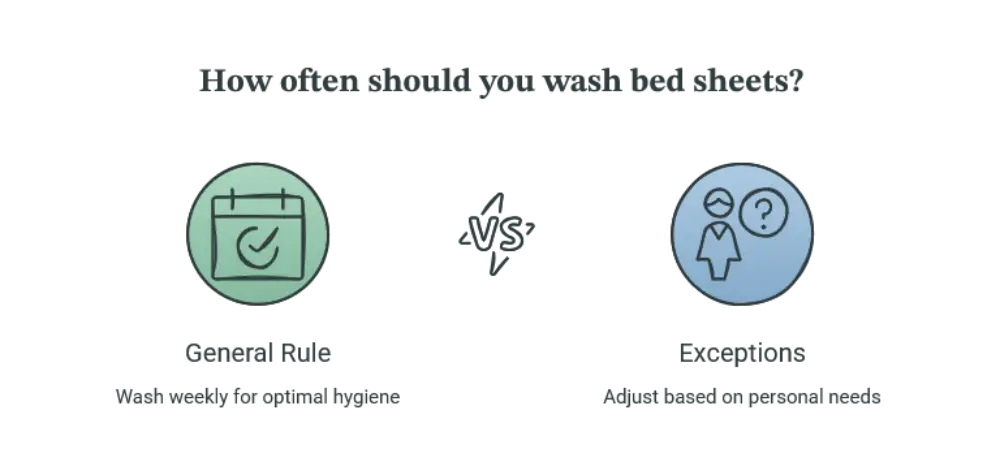
For most people, washing bed sheets once every week is the ideal frequency. This keeps oils, sweat, and allergens from accumulating to unhealthy levels. If weekly washing feels like too much, washing every ten to fourteen days is the outer limit most sleep experts recommend.
Pillowcases tend to need more frequent washing since they come in direct contact with your face, hair products, and skin oils. Changing pillowcases every three to four days can help reduce breakouts and skin irritation.
Factors That Affect Washing Frequency
Not everyone needs to follow the exact same schedule. Several factors can shift how often you should wash your sheets.
- Sleeping without pajamas increases the amount of sweat and oil transferred directly to the sheets.
- Sleeping with pets adds fur, dander, and outdoor dirt to your bedding.
- Eating in bed introduces crumbs and food residue that attract bacteria and pests.
- Allergies or asthma may require more frequent washing to reduce dust mite exposure.
- Excessive sweating due to climate, illness, or hormonal changes calls for washing more often.
- Sharing a bed with a partner doubles the amount of skin cells, oils, and sweat on the sheets.
Signs Your Bed Sheets Need Washing
Sometimes your schedule alone is not the only indicator. Your sheets themselves can give you clues that it is time for a wash.
Visible Stains or Discoloration
Yellowish patches, especially around the pillow area, are a clear sign of sweat and oil buildup.
Unpleasant Odor
If your sheets smell musty or sour even after airing out the room, it is time to wash them.
Itchy or Irritated Skin
Waking up with itchy skin, redness, or unexplained breakouts can point to dirty bedding.
Increased Allergy Symptoms
Sneezing, congestion, or watery eyes right after getting into bed may signal a buildup of dust mites.
Best Practices For Washing Bed Sheets
Washing frequency is only part of the equation. How you wash your sheets matters just as much for hygiene and fabric longevity.
Use the Right Water Temperature
Hot water is generally more effective at killing bacteria, dust mites, and allergens. Always check the fabric care label since some materials require cooler water to avoid shrinking or damage.
Choose a Gentle but Effective Detergent
A mild detergent works well for most cotton and linen sheets. Avoid excessive fabric softener, as it can reduce the breathability of the fabric over time.
Dry Sheets Completely
Make sure your sheets are fully dry before placing them back on the bed. Damp fabric can encourage mold and mildew growth.
Rotate Between Sheet Sets
Having two or three sets of bed sheets makes it easier to maintain a consistent washing routine without leaving your bed bare.
How Often Should You Wash Other Bedding Items
Sheets are not the only bedding component that needs regular cleaning. Here is a general guideline for the rest of your bedding.
Pillowcases
Wash every three to four days due to direct contact with skin and hair oils.
Duvet Covers
Wash every one to two weeks, similar to your fitted and flat sheets.
Comforters or Duvets
Wash every two to three months since they do not touch your skin directly.
Pillows
Wash every three to six months to remove dust mites and refresh the filling.
Mattress Protectors
Wash every two months to protect against sweat and allergen buildup that seeps through sheets.
Tips to Keep Your Bed Cleaner For Longer
Small daily habits can extend the freshness of your sheets between washes.
Shower before bed to reduce the amount of oil and sweat transferred to your sheets.
Keep pets off the bed or use a designated blanket for them.
Avoid eating or drinking in bed to prevent spills and crumbs.
Air out your bedroom daily to reduce humidity and odor buildup.
Use a top sheet to add a protective layer between your body and the main sheets.
Conclusion
So, how often should you wash bed sheets? For most people, washing sheets once a week strikes the right balance between hygiene and practicality. Factors like allergies, pets, sweating, and sharing a bed can shift this frequency slightly. Paying attention to your sheets and how your skin feels is the best way to know when it is truly time for a wash. A clean bed is not just about appearances, it plays a real role in your skin health, allergy management, and overall sleep quality.
FAQs
How often should you wash bed sheets if you sweat a lot?
If you sweat heavily during sleep, it is best to wash your sheets every three to four days to prevent bacteria buildup and unpleasant odors.
Is it bad to wash sheets too often?
Washing sheets too frequently is generally not harmful, though it can cause faster fabric wear over time. Following a weekly schedule is usually a safe and effective balance.
Should pillowcases be washed more often than sheets?
Yes, pillowcases should be washed every three to four days since they come into direct contact with facial oils, hair products, and skin.
Can dirty bed sheets cause skin problems?
Yes, unwashed sheets can harbor bacteria, oils, and dust mites that may lead to acne, irritation, and allergic reactions on the skin.
What temperature should I use to wash bed sheets?
Hot water is most effective for killing bacteria and dust mites, but always check the care label to avoid damaging delicate fabrics.