Learning how to remove burnt food from glass cookware can save your favorite baking dish or saucepan from ending up in the trash. Glass cookware is popular because it heats evenly and looks great on the table, but it can also trap burnt residue that seems impossible to scrub away. The good news is that with a few household ingredients and a little patience, you can restore your glass dishes to a spotless, shiny finish without scratching the surface.
- Why Glass Cookware Gets Burnt Food So Easily
- What You Need Before You Start
- Simple Methods to Remove Burnt Food from Glass Cookware
- How to Remove Stubborn Burnt Stains
- Cleaning Tips for Different Types of Glass Cookware
- Mistakes to Avoid When Cleaning Glass Cookware
- How to Prevent Burnt Food from Sticking Again
- Conclusion
- Frequently Asked Questions
Why Glass Cookware Gets Burnt Food So Easily
Glass conducts heat differently than metal or ceramic, which means food can scorch quickly if the temperature is too high or the dish is left on the stove for too long. Once sugars and proteins in food caramelize onto the surface, they form a stubborn layer that clings tightly to the glass. Unlike nonstick pans, glass does not have a protective coating, so burnt bits bond directly to the material. This is why regular washing with a sponge often is not enough to get the job done.
What You Need Before You Start
Before diving into the cleaning process, gather a few simple supplies from your kitchen. You will likely need baking soda, white vinegar, dish soap, warm water, a soft sponge or nonabrasive scrub pad, and a plastic scraper. Avoid using steel wool or anything metallic, as these can scratch the glass surface permanently. Having everything ready ahead of time makes the whole process much smoother.
Simple Methods to Remove Burnt Food from Glass Cookware
There are several effective ways to tackle burnt residue, ranging from gentle soaking to more active scrubbing techniques. Choose the method that matches how stubborn the stain is.
Soaking with Warm Soapy Water
The easiest first step is to fill the dish with warm water and a few drops of dish soap, then let it sit for thirty minutes to an hour. This softens the burnt layer and makes it easier to wipe away. For lighter burns, this alone may be enough to loosen the residue completely.
Baking Soda and Vinegar Method
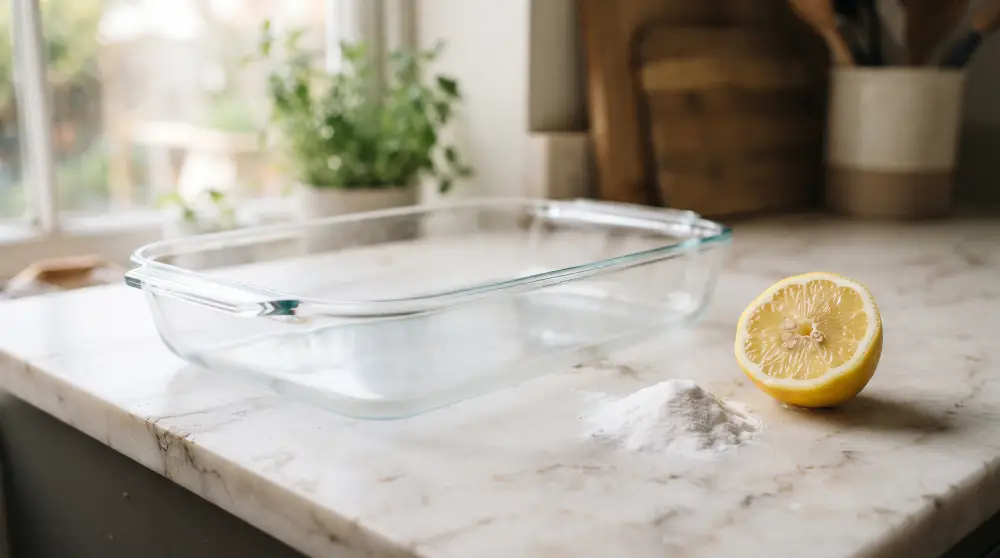
Sprinkle a generous layer of baking soda over the burnt area, then pour white vinegar on top. The mixture will fizz and bubble, which helps lift the burnt particles from the glass. Let it sit for about fifteen minutes before scrubbing gently with a soft sponge. Rinse thoroughly with warm water afterward.
Boiling Water with Baking Soda
For dishes that were burnt on the stovetop, fill the pan with water, add a few tablespoons of baking soda, and bring it to a gentle boil. The heat combined with the baking soda helps break down the stuck on food. Once the water cools slightly, the burnt layer should wipe away with much less effort.
Using a Dryer Sheet
This might sound unusual, but a fabric softener dryer sheet can work wonders on burnt glass cookware. Soak the dish in warm water with a dryer sheet submerged inside for an hour. The softening agents help loosen burnt food, allowing you to wipe it clean with minimal scrubbing.
Salt and Lemon Scrub
Cut a lemon in half and dip it into coarse salt, then scrub the burnt areas directly. The acidity in lemon juice combined with the abrasive texture of salt helps break down burnt residue naturally, leaving behind a fresh citrus scent.
How to Remove Stubborn Burnt Stains
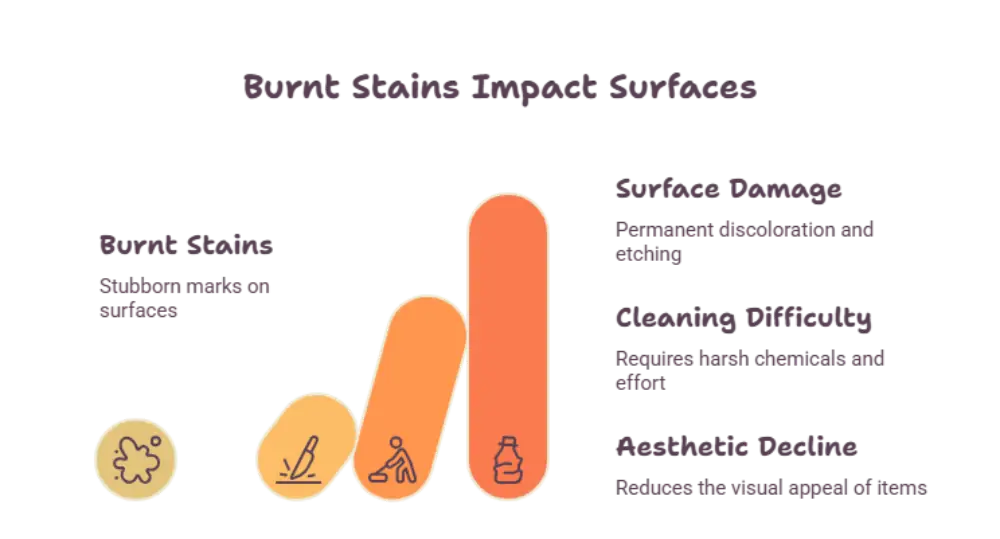
Some burnt marks are deeply set and require a slightly stronger approach. These methods are safe for glass but tackle tougher, older stains.
Hydrogen Peroxide Paste
Mix hydrogen peroxide with baking soda until it forms a thick paste. Spread the paste over the burnt area and let it sit for at least twenty minutes. This combination is particularly good at lifting dark, caramelized stains that have been sitting for a while. Rinse well once you are finished.
Denture Tablets
Drop a couple of denture cleaning tablets into warm water and let the glass cookware soak overnight. The effervescent action helps dissolve tough burnt layers gradually, so by morning most of the residue should wipe off with ease.
Cleaning Tips for Different Types of Glass Cookware
Not all glass cookware is exactly the same, so it helps to adjust your approach slightly depending on what you own.
Borosilicate glass, often used for baking dishes, tends to be more resistant to thermal shock, so it can handle boiling water treatments well. Soda lime glass, which is common in everyday casserole dishes, should be treated more gently and allowed to cool naturally before adding hot water to avoid cracking. Always check the manufacturer’s care instructions if you are unsure which type you own, since sudden temperature changes are the most common cause of cracked glass cookware.
Mistakes to Avoid When Cleaning Glass Cookware
While cleaning burnt glass cookware, it is easy to make small mistakes that cause more harm than good. Avoid pouring cold water directly onto a hot glass dish, since the sudden temperature change can cause cracking or shattering. Steer clear of metal scouring pads, steel wool, and harsh abrasive powders, as these can leave permanent scratches on the surface. Never use bleach on glass cookware, since it can react poorly with certain residues and leave behind an unpleasant smell. Patience is key, as rushing the process with excessive force often does more damage than the burnt food itself.
How to Prevent Burnt Food from Sticking Again
Prevention is always easier than cleanup. Cooking on medium or low heat instead of high heat gives you more control and reduces the chances of scorching. Stirring food regularly, especially sauces and dishes with sugar content, helps distribute heat evenly. Using a small amount of oil or butter before cooking can also create a light barrier between the food and the glass surface. Soaking the dish immediately after use, rather than letting it sit dirty for hours, makes future cleaning far easier as well.
Conclusion
Removing burnt food from glass cookware does not have to be a frustrating chore. With natural ingredients like baking soda, vinegar, and lemon, along with a little soaking time, even the toughest burnt stains can be lifted without damaging the glass. By adjusting your cooking habits and cleaning your dishes soon after use, you can keep your glass cookware looking clear and spotless for years to come.
Frequently Asked Questions
Is it safe to use baking soda on glass cookware?
Yes, baking soda is gentle and safe for glass cookware. It helps lift burnt food without scratching the surface.
Can I put burnt glass cookware in the dishwasher?
Light burns may come off in the dishwasher, but heavily burnt residue usually needs manual soaking and scrubbing first.
Why does my glass pan crack when I add water to it?
Cracking happens due to sudden temperature changes. Always let a hot glass dish cool down before adding cold water.
How long should I soak burnt glass cookware?
Soaking for thirty minutes to a few hours is usually enough, though very stubborn stains may need an overnight soak.
Does vinegar damage glass cookware?
No, vinegar is safe for glass and actually helps break down burnt residue when combined with baking soda.