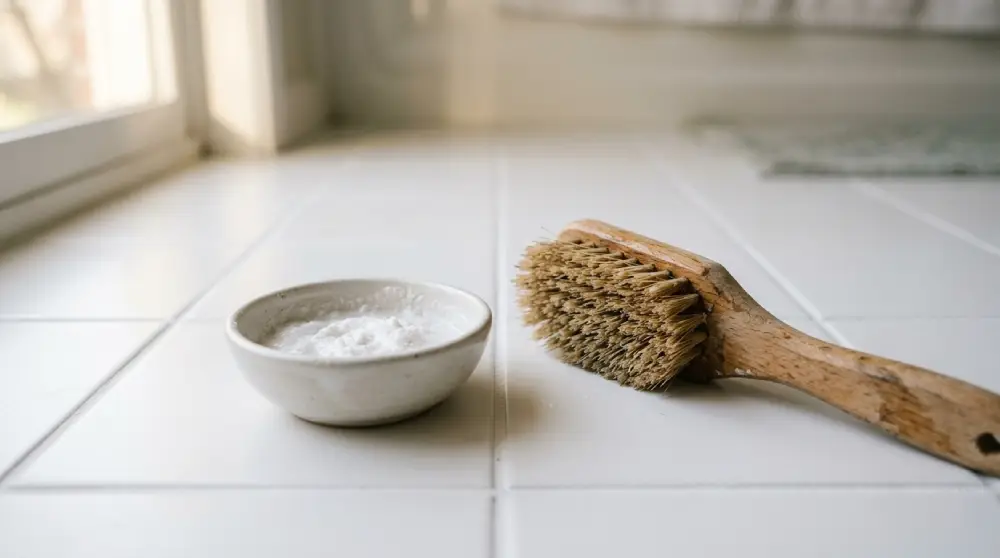
Grout lines tend to collect dirt, soap residue, and mildew faster than the tiles around them, which is why so many homeowners search for how to clean grout without bleach when they want a safer, less harsh way to freshen up their floors and walls. Bleach can fade colored grout, release strong fumes, and irritate skin, so switching to natural alternatives is often a smarter long term choice for your home.
Why Avoid Bleach for Grout Cleaning
Bleach is a powerful cleaner, but it comes with real downsides. It can weaken grout over time, cause discoloration on colored or sealed grout, and produce fumes that are unpleasant in small bathrooms with poor ventilation. For households with kids, pets, or anyone sensitive to strong chemicals, natural alternatives offer a gentler option that still gets the job done.
Grout Damage Over Time
Repeated bleach use can break down the sealant on grout, making it more porous and prone to future staining. This means you could end up cleaning more often, not less.
What You Need Before You Start
Before diving into the cleaning process, gather a few basic supplies. Most of these items are already sitting in your kitchen cabinet.
You will want baking soda, white vinegar, hydrogen peroxide, a spray bottle, an old toothbrush or grout brush, warm water, and a clean microfiber cloth. None of these require special handling or protective gear, which makes the whole process much simpler than working with bleach.
Natural Ingredients That Clean Grout Effectively
Several household ingredients work just as well as bleach when it comes to breaking down dirt and mild mildew in grout lines.
Baking Soda and Water Paste
Baking soda is mildly abrasive and alkaline, which makes it excellent for lifting grime without scratching tile. Mixing it with water creates a thick paste that clings to grout lines and works its way into stains.
Vinegar and Water Solution
White vinegar is acidic and naturally antibacterial. When combined with warm water in equal parts, it becomes a reliable spray for breaking down soap scum and light mildew.
Hydrogen Peroxide
Hydrogen peroxide is a gentle bleaching agent that brightens grout without the strong smell or harshness of chlorine bleach. It works especially well when paired with baking soda paste for tougher stains.
Lemon Juice
Lemon juice has natural acidic properties that cut through grease and leave a fresh scent behind. It works best on lighter stains or as a finishing touch after using vinegar or baking soda.
Step by Step Method to Clean Grout Without Bleach
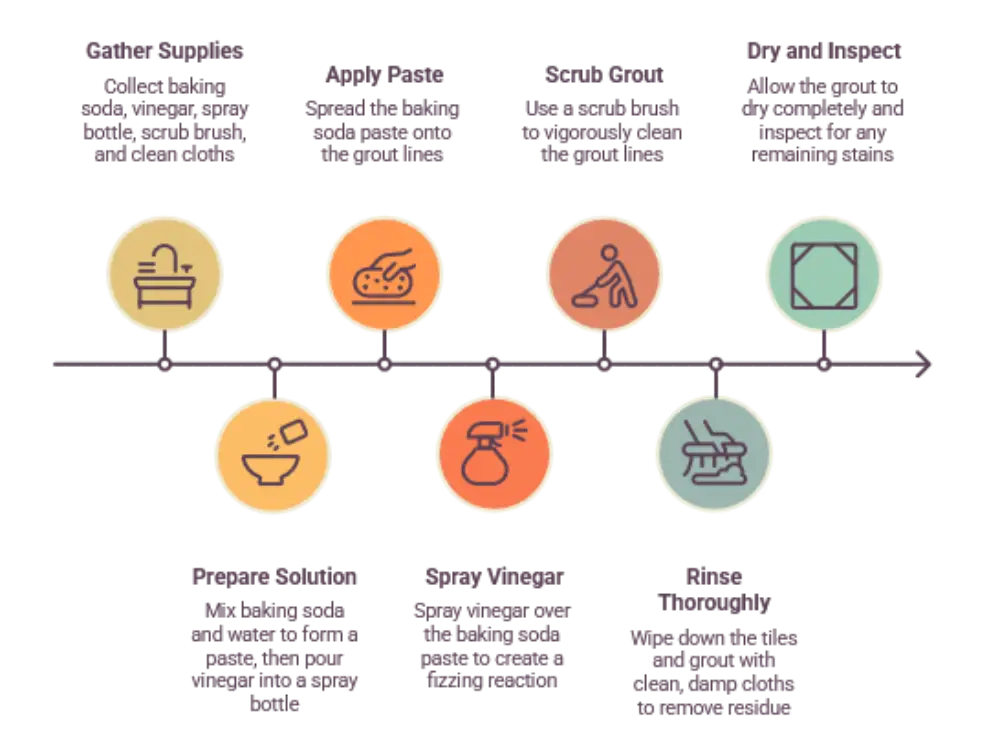
Start by clearing the floor or wall area and sweeping away loose dirt and dust so it does not turn into mud once you apply liquid.
Next, sprinkle baking soda directly onto the grout lines, focusing on areas with visible stains or discoloration.
Spray the vinegar and water solution over the baking soda. It will fizz slightly, which helps loosen embedded dirt and buildup.
Let the mixture sit for about ten to fifteen minutes so the ingredients have time to break down grime.
Scrub the grout lines using a toothbrush or a dedicated grout brush, applying gentle pressure in small circular motions.
Wipe away the residue with a damp microfiber cloth, then rinse the area with clean water to remove any leftover paste.
For particularly stubborn spots, apply hydrogen peroxide directly and let it sit for a few minutes before scrubbing again.
Finish by drying the area with a clean towel to prevent new moisture from settling into the grout.
Tips for Deep Stains and Discolored Grout
Some grout stains are stubborn enough that a single pass will not fully remove them. In these cases, patience matters more than scrubbing harder.
Repeat Applications
Reapplying the baking soda and vinegar mixture over several days can gradually lift stains that have set in over months or years. Trying to force results in one session often leads to unnecessary scrubbing that can wear down the grout surface.
Steam Cleaning as an Alternative
A steam cleaner can loosen deep set grime using heat and pressure alone, without any chemicals at all. This works particularly well for kitchen and bathroom floors that see heavy daily use.
How to Maintain Clean Grout After Washing
Once your grout is clean, a little regular maintenance goes a long way in keeping it that way.
Seal the Grout
Applying a grout sealer after cleaning helps prevent future staining by creating a protective barrier against moisture and dirt. Most sealers last several months before needing to be reapplied.
Wipe Down Regularly
Wiping tile surfaces after showers or spills prevents soap scum and water spots from settling into grout lines in the first place. A quick daily habit can significantly reduce how often deep cleaning is needed.
Improve Ventilation
Good airflow in bathrooms and kitchens reduces moisture buildup, which is one of the main causes of mildew and grout discoloration. Running an exhaust fan during and after showers makes a noticeable difference over time.
Common Mistakes to Avoid
Even with natural ingredients, a few habits can undo your hard work. Scrubbing too aggressively can wear down grout lines and make them more porous. Skipping the rinse step can leave behind residue that attracts dirt faster. Ignoring small stains early often allows them to set in permanently, requiring much more effort later.
Conclusion
Learning how to clean grout without bleach opens the door to a safer, more sustainable cleaning routine that still delivers real results. With ingredients like baking soda, vinegar, hydrogen peroxide, and lemon juice, you can tackle everyday grime and stubborn stains alike, all while protecting your grout, your health, and your home environment. A little consistency with sealing and regular wipe downs will keep your tile looking fresh for much longer between deep cleans.
FAQs
Can vinegar damage grout if used too often?
Vinegar is safe for most grout when diluted with water, but frequent undiluted use can gradually wear down the sealant, so it is best used occasionally rather than daily.
How long should baking soda paste sit on grout before scrubbing?
Letting the paste sit for about ten to fifteen minutes gives it enough time to loosen dirt and stains before you start scrubbing.
Is hydrogen peroxide safe for colored grout?
Yes, hydrogen peroxide is generally safe for colored grout since it is milder than chlorine bleach, though it is wise to test a small hidden area first.
How often should grout be deep cleaned?
Most homes benefit from a deep grout cleaning every few weeks, with lighter maintenance wiping done in between to prevent buildup.
Does sealing grout really help prevent stains?
Sealing creates a protective layer that makes it much harder for dirt, moisture, and mildew to penetrate the grout, which significantly reduces future staining.