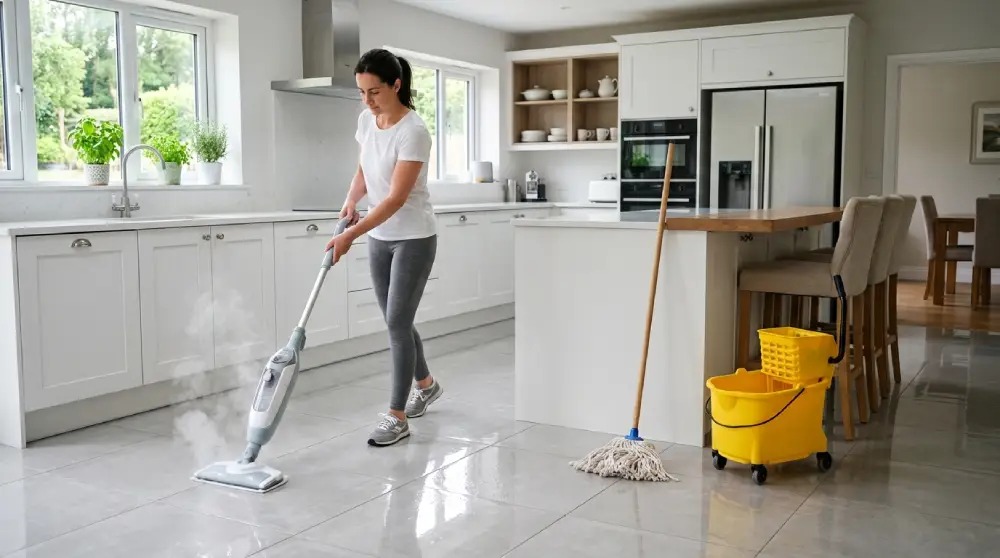
When it comes to keeping floors clean, the debate of steam mop vs mop is one that almost every homeowner faces at some point. Both tools promise clean, fresh floors, but they work in completely different ways. Understanding how each one functions can help you decide which cleaning method truly fits your lifestyle and your home.
What Is a Traditional Mop
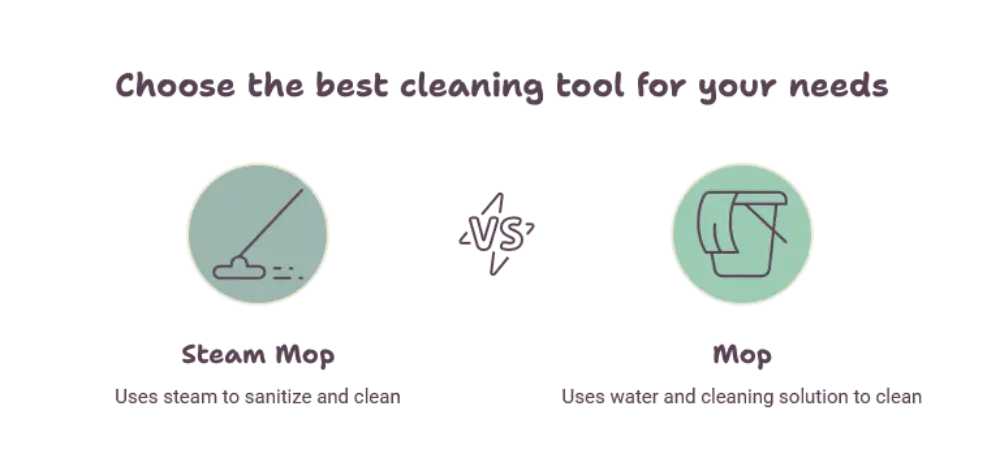
A traditional mop is the classic cleaning tool most people grew up using. It usually comes with a bucket, water, and sometimes a cleaning solution. You dip the mop head into the water, wring it out, and manually scrub the floor to remove dirt and stains.
Traditional mops are simple, familiar, and require no electricity. They rely entirely on manual effort and the cleaning solution used.
What Is a Steam Mop
A steam mop is an electric cleaning device that uses heated water to produce steam. This steam loosens dirt, grime, and bacteria from the floor surface. Instead of a bucket, it usually has a water tank attached to the mop itself.
Steam mops are designed to clean and sanitize at the same time, using heat rather than chemical cleaners.
Steam Mop vs Mop: Key Differences
Cleaning Method
A traditional mop cleans through physical scrubbing combined with water and detergent. A steam mop, on the other hand, uses hot steam to break down dirt and kill germs without needing extra cleaning chemicals.
Hygiene and Sanitization
Steam mops are known for their sanitizing power. The high temperature steam can kill many common household germs and bacteria. Traditional mops mainly remove visible dirt and rely on the cleaning solution for germ control.
Water Usage
Traditional mops usually require a full bucket of water that needs to be changed frequently. Steam mops use a much smaller water tank since steam requires far less liquid to clean effectively.
Drying Time
Because steam evaporates quickly, floors cleaned with a steam mop tend to dry faster. Traditional mops often leave floors wetter for longer, especially if excess water isn’t wrung out properly.
Suitable Flooring Types
Steam mops work well on sealed hardwood, tile, and laminate floors, but may not be suitable for unsealed wood or certain delicate surfaces. Traditional mops are generally safe for a wider variety of flooring types since you control the amount of water and cleaning solution used.
Ease of Use
Steam mops are lightweight and often glide smoothly across the floor, requiring less physical effort. Traditional mops need more manual scrubbing, especially for tough stains or sticky spots.
Advantages of Traditional Mops
Traditional mops are easy to use and don’t require electricity or heating time. They work well for spot cleaning and can handle a variety of flooring types, including some surfaces that steam mops should avoid.
They also allow more control over the amount of water and cleaning solution applied to the floor.
Advantages of Steam Mops
Steam mops offer a chemical free cleaning option since steam alone can lift dirt and kill germs. They are especially useful for households with pets or young children where sanitizing floors is a priority.
They also tend to be faster for everyday maintenance cleaning since there is no need to fill a bucket or wring out a mop head repeatedly.
Which One Should You Choose
The right choice really depends on your flooring type, cleaning habits, and how much time you want to spend cleaning. If your home has sealed hard flooring and you want quick sanitizing power, a steam mop may suit you well.
If you have mixed flooring types or prefer a more traditional, hands on cleaning approach, a classic mop might be the better fit. Some households even use both, depending on the room and the level of cleaning needed.
Conclusion
The steam mop vs mop comparison ultimately comes down to your specific cleaning needs and flooring types. Steam mops offer sanitizing power and quick drying, while traditional mops offer flexibility and simplicity. Knowing the strengths of each can help you choose the right tool to keep your floors spotless and fresh.
Frequently Asked Questions
Is a steam mop better than a regular mop for cleaning floors?
A steam mop can be better for sanitizing sealed hard floors quickly, while a regular mop offers more flexibility across different flooring types and cleaning situations.
Can a steam mop be used on all types of flooring?
No, steam mops are best suited for sealed hardwood, tile, and laminate floors. They may not be safe for unsealed wood or certain delicate flooring materials.
Does a steam mop really kill germs and bacteria?
Yes, the high temperature steam produced by a steam mop can kill many common household germs and bacteria without the need for chemical cleaners.
Is a traditional mop still effective for deep cleaning?
Yes, a traditional mop combined with a good cleaning solution can effectively remove dirt, stains, and grime from a wide range of flooring types.
Which option dries faster after mopping?
A steam mop typically dries faster because steam evaporates quickly, while a traditional mop can leave floors wet for a longer period depending on how much water is used.