
Knowing how to wash pillows safely is one of those small household skills that makes a big difference to your sleep, your allergies, and how long your pillows actually last. Pillows soak up sweat, oils, dust mites, and skin cells every single night, yet most people forget to clean them for months or even years. This guide walks you through simple, safe methods for washing every common pillow type, along with drying tips and mistakes to avoid.
Why Washing Pillows Regularly Matters
Pillows sit close to your face for roughly eight hours a night. Over time they collect sweat, drool, dead skin, and dust mites, which can trigger allergies, breakouts, and stuffy noses.
Regular washing keeps your pillow fresh, extends its lifespan, and improves the overall air quality in your bedroom. Even if your pillow has a case and a protector, moisture and oils still seep through eventually.
Signs Your Pillow Needs a Wash
You don’t need a strict schedule to know when it’s time. Watch for these signals instead.
- A noticeable odor even after airing it out
- Visible yellowing or discoloration
- Lumpy or flattened filling
- Increased sneezing or allergy symptoms at night
Check the Care Label First
Before doing anything else, look at the manufacturer’s care label. It tells you whether the pillow is machine washable, hand wash only, or dry clean only. Skipping this step is the most common reason pillows get ruined during cleaning.
If the label has faded or is missing, identify the fill material first, since that determines the safest washing method.
How to Wash Different Types of Pillows
Not all pillows are created equal, and the fill material changes how you should clean them.
Washing Polyester and Synthetic Fill Pillows
Polyester pillows are usually the easiest and safest to machine wash.
Start by removing the pillowcase and any protector. Place two pillows in the washer at once to balance the drum, add a mild detergent, and run a gentle cycle with warm water. Avoid fabric softener, since it can clog the fibers and reduce fluffiness.
Washing Down and Feather Pillows
Down and feather pillows require a gentler touch because moisture takes longer to escape the fill.
Use a small amount of mild, specially formulated down detergent rather than regular laundry soap. Run the washer on a delicate or gentle cycle with cold or lukewarm water, and always do a second rinse cycle to remove all soap residue, since leftover detergent can cause clumping.
Washing Memory Foam Pillows
Memory foam should never go in a washing machine or dryer, since the agitation and heat can break down the foam structure.
Instead, spot clean the surface with a cloth dampened in mild soapy water, and let it air dry completely in a well ventilated area before use. If the pillow has a removable cover, that cover can usually be machine washed separately.
Washing Buckwheat and Latex Pillows
Buckwheat hull pillows should never be submerged in water, since the hulls will absorb moisture and rot.
Wipe the outer cover with a damp cloth and let the hulls air out in sunlight periodically. Latex pillows can be gently hand washed using lukewarm water and mild soap, then squeezed (not wrung) to remove excess moisture.
Step by Step Guide for Machine Washable Pillows
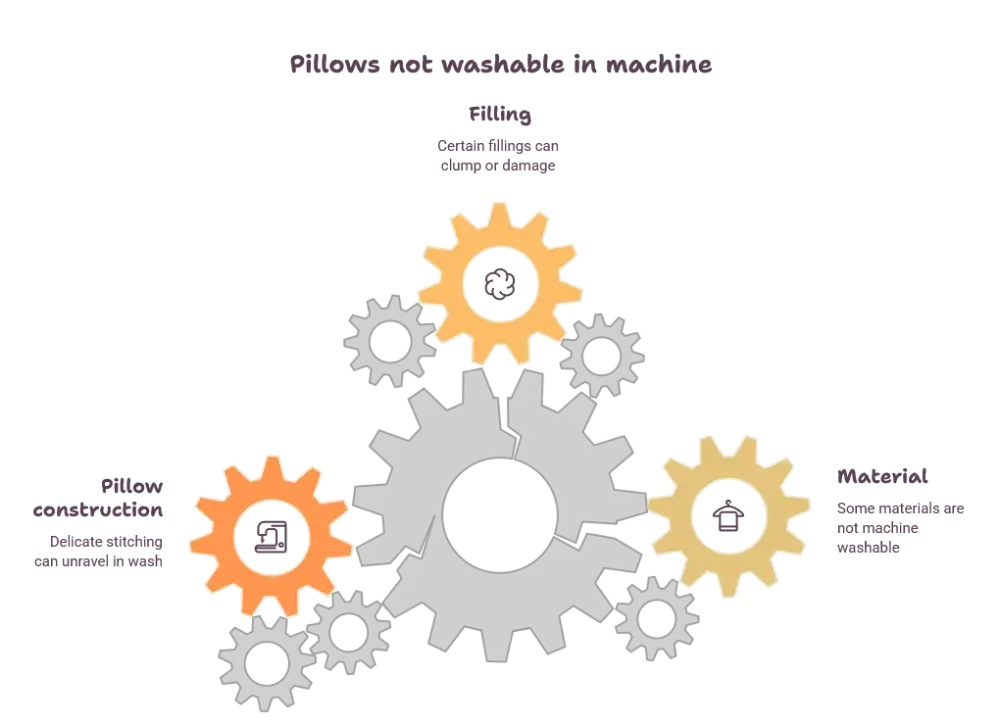
Once you know your pillow is safe for the washer, follow this simple process for the best results.
Preparing the Pillow
Remove all pillowcases, protectors, and shams. Inspect the pillow for tears or loose seams, since a damaged pillow may leak filling during the wash.
Choosing the Right Settings
Use warm water and a gentle or delicate cycle. Add a small amount of mild liquid detergent, and consider a second rinse cycle to make sure all soap is fully removed.
Balancing the Load
Wash two pillows together whenever possible. This keeps the washer balanced and prevents excessive spinning damage to a single pillow.
Drying Pillows the Safe Way
Drying is often more important than washing, since trapped moisture inside a pillow can lead to mold and mildew.
Machine Drying Tips
Use a low heat, no heat, or air fluff setting. Add clean tennis balls or dryer balls wrapped in a sock to help break up clumps and restore fluffiness. Dry in multiple short cycles rather than one long one, checking the pillow’s dampness between rounds.
Air Drying Tips
If your pillow cannot go in the dryer, lay it flat outdoors in direct sunlight, which naturally helps kill bacteria and odors. Flip and fluff the pillow every few hours until it is completely dry all the way through, including the center.
Common Mistakes to Avoid
Even careful cleaners make small errors that shorten a pillow’s life. Keep these points in mind.
- Skipping the care label and guessing the fabric type
- Using hot water on delicate fills like down or memory foam
- Storing a pillow before it is fully dry
- Overloading the washer with too many items at once
- Using strong detergents or bleach on natural fibers
How Often Should You Wash Your Pillows
Most experts suggest washing pillows every three to six months, depending on usage, allergies, and whether you use a protective cover. Pillow protectors and pillowcases should be washed weekly to reduce how often the pillow itself needs a deep clean.
Conclusion
Learning how to wash pillows safely protects both your health and your investment in a good night’s sleep. Always check the care label, choose the cleaning method that matches the fill type, and dry the pillow completely before putting it back on your bed. With the right approach, your pillows will stay fresh, fluffy, and allergen free for much longer.
Frequently Asked Questions
Can I wash all types of pillows in a washing machine?
No. Polyester and most down pillows are machine washable, but memory foam, buckwheat, and latex pillows should be spot cleaned or hand washed instead to avoid damage.
How do I know if my pillow is completely dry?
Squeeze the center of the pillow gently. If it feels cool, damp, or heavy, it needs more drying time, since trapped moisture can lead to mold growth.
Is it safe to wash a memory foam pillow in the washing machine?
No. Memory foam breaks down easily with water agitation and heat, so it should only be spot cleaned on the surface and air dried.
What detergent is best for washing pillows?
A mild, fragrance free liquid detergent works best. Harsh detergents and fabric softeners can leave residue or damage delicate fill materials.
How often should pillows be washed for allergy relief?
Washing pillows every three to six months, along with weekly washing of pillowcases and protectors, significantly reduces allergens like dust mites and skin cells.