Finding the best way to wash white sneakers can feel tricky when your once-crisp kicks start looking dull, yellowed, or scuffed after just a few wears. Whether you own canvas, leather, or mesh sneakers, keeping them bright white takes the right cleaning method, a bit of patience, and a few household tools you probably already have. This guide walks you through simple, effective techniques to restore that fresh-out-of-the-box look without damaging your shoes.
Why White Sneakers Get Dirty So Fast
White sneakers show every bit of dirt, dust, and grime because there is no dark color to hide stains. Everyday activities like walking outdoors, standing on grass, or even sitting in a car can leave marks on the fabric. Sweat and oils from your feet can also cause yellowing over time, especially around the soles and toe box.
Understanding why your sneakers get dirty helps you choose the right cleaning approach and prevents you from using harsh methods that could ruin the material.
Common Causes of Stains
Mud, grass, and outdoor dust settle into the fabric weave. Sweat and moisture trapped inside the shoe encourage yellowing. Oils from handling the shoes with bare hands can also leave subtle marks that darken with time.
What You Need Before You Start
Before diving into the cleaning process, gather a few basic supplies. You will need a soft bristle brush or an old toothbrush, mild laundry detergent or a paste made from baking soda and water, a clean microfiber cloth, lukewarm water, and a magic eraser for tough scuff marks.
Having everything ready before you begin makes the process smoother and prevents your shoes from sitting half wet while you search for supplies.
Check the Material First
Not all white sneakers are made the same. Canvas sneakers can handle more scrubbing and even a gentle machine wash, while leather sneakers need a softer touch and should never be soaked. Mesh sneakers fall somewhere in between and respond well to spot cleaning. Always check the shoe label or manufacturer guidelines before choosing a cleaning method.
Step by Step Cleaning Process
The best way to wash white sneakers depends on the material, but the general approach stays consistent across most shoe types.
Remove Laces and Insoles
Start by taking out the laces and insoles. This lets you clean every part of the shoe thoroughly and prevents the laces from tangling or staying dirty while the rest of the shoe gets cleaned. Laces can be washed separately in warm soapy water or placed in a mesh laundry bag.
Brush Off Loose Dirt
Use a dry brush to remove loose dirt, dust, and debris from the surface. This step prevents you from rubbing mud deeper into the fabric once you add water and detergent.
Create a Cleaning Pasteenhances
Mix baking soda with a small amount of water until it forms a thick paste. Baking soda works as a gentle abrasive that lifts stains without damaging the material. For tougher stains, adding a splash of hydrogen peroxide can boost brightening power, especially on canvas fabric.
Scrub Gently in Circular Motions
Apply the paste to the sneaker using your brush and scrub gently in small circular motions. Focus on stained areas first, then move to the rest of the shoe for even cleaning. Avoid pressing too hard, especially on leather or suede panels, since excessive pressure can wear down the material.
Wipe Away Residue
Once you have scrubbed the entire shoe, wipe away the paste using a damp microfiber cloth. Rinse the cloth frequently so you do not spread dirt back onto the shoe.
Clean the Soles Separately
Soles often collect the most grime since they touch the ground constantly. A magic eraser works wonders here, gently lifting scuffs and discoloration without harsh scrubbing. For rubber soles, a mixture of baking soda and dish soap can also restore brightness.
Drying Your Sneakers the Right Way
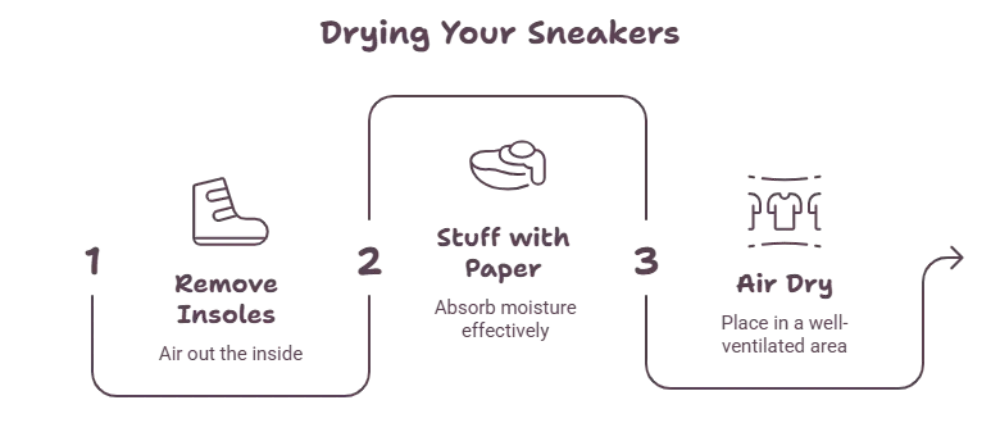
Drying is just as important as cleaning when it comes to preserving your sneakers. Never place white sneakers in a dryer, since heat can warp the shape, weaken glue, and yellow the fabric.
Air Dry in a Shaded Spot
Stuff your sneakers with paper towels or a clean cloth to help them hold their shape while drying. Place them in a well ventilated area away from direct sunlight, since UV rays can cause yellowing over time despite popular belief that sunlight bleaches sneakers evenly.
Let Them Dry Completely
Give your sneakers enough time to dry fully before wearing them again. Rushing this step can trap moisture inside, leading to unpleasant odors or mildew growth.
Machine Washing Canvas Sneakers
If your sneakers are made of canvas and the manufacturer allows machine washing, this method can save time. Place the shoes inside a mesh laundry bag or an old pillowcase to protect them during the cycle. Use cold water and a gentle cycle with a small amount of mild detergent. Avoid fabric softener, since it can break down the glue holding the shoe together.
Air Dry After Machine Washing
Even if you machine wash your sneakers, always air dry them afterward. Skipping the dryer step protects the shoe’s shape and prevents damage to the sole material.
Preventing Future Stains
Keeping your sneakers white for longer starts with simple prevention habits. Applying a fabric protector spray before wearing new sneakers creates a barrier against dirt and moisture. Wiping down your shoes after each wear with a damp cloth also prevents stains from setting in.
Store Them Properly
Store your sneakers in a cool, dry place away from direct sunlight when not in use. Avoid leaving them in damp areas like a car trunk or a humid closet, since this encourages yellowing and mildew growth.
Rotate Your Sneakers
Wearing the same pair of white sneakers every day speeds up wear and staining. Rotating between a couple of pairs gives each pair time to air out and reduces the buildup of sweat and dirt.
Handling Yellowed Soles
Yellowed soles are one of the most common frustrations with white sneakers. This happens due to oxidation from sunlight exposure and natural aging of the rubber material. A paste of baking soda and hydrogen peroxide applied directly to the soles and left for a few hours can help lift discoloration. Wrapping the soles in plastic wrap after applying the paste and leaving them in indirect sunlight can also speed up the brightening process.
Final Thoughts
Keeping your white sneakers looking fresh does not require complicated products or excessive effort. With the right combination of gentle scrubbing, proper drying, and preventive care, you can maintain that clean, bright look for much longer. Regular maintenance after each wear goes a long way in reducing the need for deep cleaning sessions, keeping your favorite sneakers ready to wear at a moment’s notice.
Conclusion
Washing white sneakers does not have to be a stressful chore. By understanding your shoe material, using gentle cleaning tools like baking soda paste and a soft brush, and drying your sneakers properly, you can keep them looking bright and fresh wear after wear. Add a few preventive habits like fabric protector spray and proper storage, and your white sneakers will stay in great shape for a long time to come.
FAQs
How often should I wash my white sneakers?
It is best to spot clean white sneakers after every few wears and do a deeper clean once a month, depending on how often you wear them and the conditions they are exposed to.
Can I use bleach on white sneakers?
Bleach can weaken fabric fibers and yellow certain materials over time, so it is safer to use baking soda paste or mild detergent instead of bleach.
Is it safe to put white sneakers in the washing machine?
Canvas sneakers can often be machine washed on a gentle cold cycle inside a mesh bag, but leather and suede sneakers should always be cleaned by hand.
Why do my white sneakers turn yellow even when I do not wear them often?
Yellowing can happen due to oxidation from light exposure and age, even without regular wear, especially on rubber soles and certain synthetic materials.
What household items work best for cleaning white sneakers?
Baking soda, mild dish soap, hydrogen peroxide, and a soft bristle brush are effective household items for cleaning white sneakers without damaging the material.