You want to conquer the clutter, but the sheer mountain of mess feels insurmountable. The thought of a deep clean sends a shiver down your spine, conjuring images of days spent scrubbing and organizing. You’ve heard whispers, perhaps, of a simpler approach, a way to chip away at the chaos without requiring a Herculean effort. This is where the 20-minute rule of cleaning enters the picture, a strategy designed to make maintaining your environment less daunting and more achievable.
The 20-minute rule, in its most fundamental form, is precisely what it sounds like: dedicating a concentrated block of 20 minutes each day to cleaning and tidying a specific area or task. It’s not about achieving a showroom finish in every corner, but rather about implementing a consistent, manageable habit that prevents the accumulation of grime and disarray. Think of it as a daily dental floss for your home; it might not be the most exciting activity, but it’s crucial for long-term oral hygiene, and in this case, for the long-term health and pleasantness of your living space.
Defining the “Rule”
At its heart, the 20-minute rule is a commitment. You are agreeing to yourself that for a short, defined period, you will actively engage in cleaning. This commitment is the bedrock upon which its effectiveness is built. It’s not about perfection; it’s about persistence. It’s the difference between a single, overwhelming marathon and a series of short, brisk walks. The accumulated benefits of these short walks, over time, will far outweigh the single, often unstartled, marathon.
The Psychology Behind Short Bursts
The human brain often recoils from tasks perceived as large or complex. Confronted with a cluttered living room, your mind might immediately catalog all the individual items out of place, the dust bunnies lurking under furniture, and the general disorganization. This mental inventory can lead to feelings of overwhelm, prompting procrastination. The 20-minute rule, however, acts as a mental bypass. By limiting the perceived scope of the task, you reduce the psychological barrier to entry. It’s like being asked to carry a single brick versus an entire wall. The brick feels manageable; the wall feels impossible. This focused duration allows you to enter a state of “flow,” where the work becomes less burdensome and more engaging.
The Power of Consistency
The true magic of the 20-minute rule lies not in the intensity of the cleaning performed within those 20 minutes, but in the unwavering consistency of its application. Imagine a leaky faucet. If you ignore it, the accumulated water creates visible rings and stains. If you wipe it up daily, the problem remains contained and easily managed. This rule is a similar principle applied to your home. By consistently addressing small messes, you prevent them from snowballing into larger, more time-consuming problems. It’s a proactive approach to housekeeping, shifting the paradigm from reactive “big cleans” to preventative “daily maintenance.”
Benefits of Implementing the 20-Minute Rule
The advantages of adopting this focused cleaning strategy extend beyond mere tidiness. You’ll find that this consistent, albeit brief, attention to your environment positively impacts your mental state, your productivity, and even your overall well-being. It’s a habit that pays dividends in unexpected ways.
Reduced Stress and Overwhelm
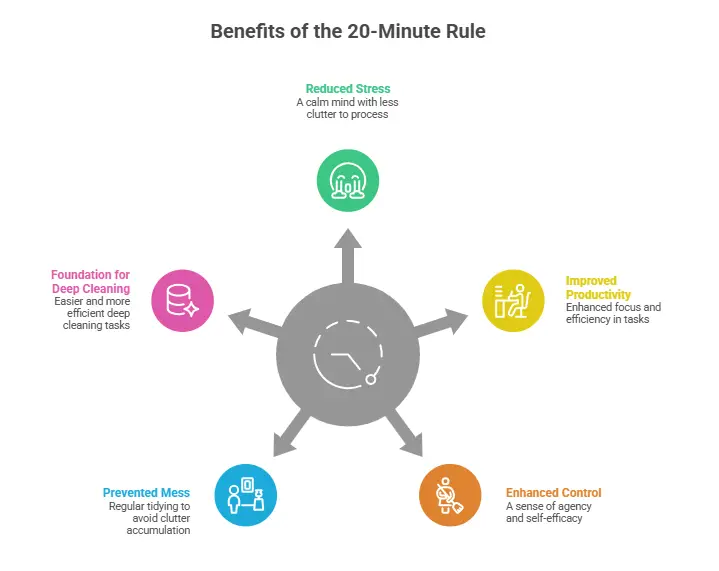
One of the most significant benefits you’ll experience is a tangible reduction in stress and feelings of overwhelm related to your living space. When your home is consistently tidy, your mind has less clutter to process. You’re not constantly bombarded by visual reminders of unfinished tasks. This mental breathing room can translate into a more relaxed and peaceful existence. Think of your mind as a computer. If too many programs are open and running in the background, it slows down and becomes unresponsive. Cleaning up your physical environment is akin to closing unnecessary programs, freeing up your mental RAM.
Improved Productivity and Focus
A clean and organized environment can act as a catalyst for increased productivity and improved focus. When your workspace is clear, your thoughts tend to be clearer as well. The absence of distractions in your immediate surroundings allows you to concentrate more effectively on the tasks at hand, whether that be professional work, personal projects, or even simply enjoying a leisure activity. It’s like having a well-tuned instrument; it performs optimally when all parts are in order.
Enhanced Sense of Control
Living in a cluttered or disorganized space can often lead to feelings of helplessness or a lack of control. By actively engaging in the 20-minute rule, you are taking direct action to improve your environment. This act of taking control, however small, can foster a greater sense of agency and self-efficacy. You are not passively accepting a messy environment; you are actively shaping it. This sense of accomplishment, even from a short cleaning session, can be incredibly empowering.
Preventing Habitual Mess
The 20-minute rule is extremely effective at preventing the development of habitually messy areas or the accumulation of “stuff.” Instead of letting items pile up on surfaces or in corners, you are addressing them regularly before they become an ingrained part of the landscape of your home. This prevents the formation of what can be termed “clutter highways,” well-worn paths where discarded items tend to migrate and settle.
A Foundation for Deeper Cleaning (When Needed)
While the 20-minute rule is about maintenance, it also serves as an excellent foundation for the occasional deeper cleaning. When you have a consistent habit of tidying, the larger cleaning tasks become less daunting. Instead of facing a room that hasn’t been touched in months, you’re starting from a place of relative order. This makes deep cleaning more efficient and less of a monumental undertaking. It’s like preparing the soil before planting. A well-tended garden bed makes the planting process much smoother.
Practical Application of the 20-Minute Rule
Knowing about the 20-minute rule is one thing; effectively implementing it in your daily life is another. The key lies in strategic planning and a willingness to adapt the rule to your specific circumstances.
Designing Your Daily 20-Minute Routine
The beauty of the 20-minute rule is its flexibility. You can tailor it to your specific needs and the demands of your household.
Option 1: The “One Area” Approach
This method involves dedicating your 20 minutes to a single room or a specific zone within your home each day.
Monday: Kitchen Countertops and Sink
Focus on clearing and wiping down all kitchen surfaces. This typically involves putting away stray items, washing any dishes, and wiping down the countertops and sink. You might also take a moment to quickly sweep or vacuum the floor in this area.
Tuesday: Bathroom Vanity and Toilet
Concentrate on the bathroom, focusing on the vanity area. This could include wiping down the sink and countertop, cleaning mirrors, and tidying up any items. A quick wipe-down of the toilet seat and exterior is also a good addition to this task.
Wednesday: Living Room Surfaces
Dedicate your time to tidying up the main living area. This might involve folding blankets, straightening cushions, clearing coffee tables of magazines and remote controls, and putting away any items that are out of place.
Thursday: Bedroom Nightstands and Dresser Tops
Focus on your bedroom by organizing your nightstand and dresser. This could involve tidying loose papers, putting away jewelry, or simply wiping down the surfaces. The goal is to create a more serene and organized space.
Friday: Entryway and Hallway Clutter
Tackle the areas where clutter tends to accumulate as people enter and leave the house. This could involve organizing mail, putting away shoes, hanging up coats, and generally clearing the entryway and hallway.
Saturday: Focus on a Specific Task (e.g., Dusting)
Use this day for a more specific cleaning task that might be overlooked in daily tidying. Dusting all accessible surfaces in a chosen room or throughout the house can be a great way to maintain a fresh feel.
Sunday: Catch-Up or Deep Dive into One Area
This day can be used as a catch-up day if you missed a previous day’s task. Alternatively, you can choose one area that you feel needs a little extra attention and devote your 20 minutes to a more thorough task within that zone, like organizing a drawer or cleaning out a cupboard.
Option 2: The “Task-Based” Approach
This approach focuses on completing a specific type of cleaning task throughout your home within the 20 minutes.
Monday: Decluttering Sprint
Set a timer for 20 minutes and go through your house with a donation box or trash bag, quickly grabbing any items that are no longer needed or wanted. Focus on visible clutter.
Tuesday: Surface Wiping Blitz
Use this time to wipe down all available horizontal surfaces in your home. This could include countertops, tables, shelves, and even appliance fronts.
Wednesday: Quick Floor Sweep/Vacuum
Dedicate your 20 minutes to rapidly sweeping or vacuuming the main traffic areas of your home – entrances, kitchen, and living room.
Thursday: Bathroom Quick Clean
Focus on a quick refresh of your bathrooms. Wipe down sinks, toilets, and mirrors, and perhaps give the floor a quick sweep.
Friday: Kitchen Reset
Spend your 20 minutes tidying up the kitchen. This could involve unloading the dishwasher, wiping down the stove top, and organizing the sink area.
Saturday: Laundry Tidy-Up
This could involve folding any clean laundry that’s lingering, putting away clothes, and ensuring laundry baskets are empty or neatly organized.
Sunday: Window or Mirror Cleaning Burst
Use this time for a focused session of cleaning windows or mirrors throughout your home. The difference can be surprisingly impactful.
Setting a Timer
The timer is your closest ally in this endeavor. It provides a clear signal of when to start and, crucially, when to stop. This prevents the task from expanding indefinitely and ensures you maintain the designated 20-minute timeframe. Once the timer dings, you stop. This discipline is paramount. It’s the difference between a controlled sprint and a marathon that never ends, turning a manageable task into another source of stress.
Prioritizing Tasks
Within your 20 minutes, you won’t be able to accomplish everything. Effective prioritization is key.
Identifying High-Impact Areas
Which areas of your home most benefit from a quick tidy-up? Often, these are the areas that are most visible and most frequently used.
High-Traffic Zones:
Entrances, hallways, kitchens, and living rooms are prime candidates. These are the spaces guests see and where daily life unfolds, so keeping them presentable makes a significant difference to the overall feel of your home.
Surfaces Prone to Clutter:
Kitchen counters, dining tables, coffee tables, and entry hall consoles are natural magnets for mail, keys, and miscellaneous items. Regularly clearing these surfaces can have an immediate visual impact.
Areas that Trigger Stress:
For some, a overflowing sink can be a major stressor. For others, it might be a pile of unfolded laundry. Identify the areas that, when messy, consistently bring you down.
Focusing on Visible Impact
Sometimes, the most effective use of your 20 minutes is to focus on tasks that yield a visible and immediate improvement.
Clearing Surfaces:
Putting items back where they belong or into designated “homes” creates an instant sense of order. A clear countertop looks significantly tidier than one cluttered with mail and knick-knacks.
Straightening and Tidying:
Fluffed cushions, folded blankets, and straightened rugs can transform the look of a room. These are quick wins that contribute to a more welcoming atmosphere.
Wiping Down Key Areas:
A quick wipe of a kitchen counter or a bathroom sink can make a space feel much cleaner and more hygienic.
Integrating it into Your Schedule
The 20-minute rule is most effective when it becomes a consistent part of your daily routine.
Finding Your Optimal Time Slot
Consider when you are most likely to commit to the task.
Morning Power-Up:
Some people find they have more energy and focus in the morning, making it an ideal time to clear their mind and their space before the day truly begins.
Post-Work Wind-Down:
Others prefer to use the 20 minutes as a way to transition from work to home, decompressing and creating a more relaxing environment for the evening.
Before Bed Tidy:
A quick tidy before bed can ensure you wake up to a more serene environment, setting a positive tone for the start of your day.
During a Break:
If there’s a natural lull in your day, perhaps during a lunch break or between work tasks, you can utilize that time for a quick cleaning burst.
Making it a Non-Negotiable Habit
Treat your 20 minutes of cleaning with the same importance as any other scheduled appointment. It’s not optional; it’s essential for maintaining your environment.
Tools and Supplies for Efficient 20-Minute Cleaning
Having the right tools readily accessible can significantly streamline your 20-minute cleaning sessions. The goal is to minimize time spent searching for supplies and maximize time spent cleaning.
Essential Cleaning Supplies
You don’t need a vast arsenal of specialized products for this approach. A few key items can cover most of your needs.
Multi-Purpose Cleaners
A good all-purpose cleaner can be your workhorse, capable of tackling a variety of surfaces.
Benefits:
Versatility reduces the need to store multiple specialized cleaners, saving space and time. Look for cleaners that are effective on common materials like countertops, sinks, and tables.
Considerations:
Ensure the cleaner you choose is safe for different surfaces you commonly encounter in your home. Always check labels for compatibility.
Microfiber Cloths
These cloths are highly absorbent and excellent at trapping dust and grime without leaving streaks.
Benefits:
They are reusable, environmentally friendly, and far more effective than paper towels for most cleaning tasks. Their effectiveness in picking up small particles is invaluable.
Usage:
Designate different cloths for different areas (e.g., kitchen, bathroom) to prevent cross-contamination.
A Good All-Purpose Spray Bottle
For mixing your own cleaning solutions or for diluted versions of commercial cleaners.
Benefits:
Cost-effective and environmentally friendly, especially if you opt for making your own cleaning solutions with water and vinegar or essential oils.
Tips:
Clearly label your spray bottles to avoid confusion.
A Small Dustpan and Brush Set
For quick clean-ups of crumbs or debris.
Benefits:
Much more efficient than a vacuum for small, localized messes. Their compact size makes them easy to store and accessible.
Trash Bags
For easy disposal of waste and decluttered items.
Benefits:
Essential for any decluttering or tidying task. Having them readily available prevents interruptions.
Organizing Your Supplies
The effectiveness of your 20-minute rule is directly proportional to how quickly you can access your tools.
Designated Cleaning Caddy or Basket
Keep all your essential supplies together in one easily transportable container.
Benefits:
This allows you to grab your cleaning caddy and move efficiently to the area you’ve chosen to tackle for the day. It eliminates the need to hunt for individual items.
Contents:
Stock it with your multi-purpose cleaner, microfiber cloths, and a small dustpan and brush.
Easy Access Storage
Ensure your cleaning caddy or individual supplies are stored in a location that’s convenient for your cleaning routine.
Proximity to High-Use Areas:
Having supplies stored near the kitchen or bathroom, depending on your chosen daily focus, can save precious minutes.
Within Reach:
Store them where you can easily grab them without a struggle.
Challenges and How to Overcome Them
| Aspect | Description | Recommended Duration | Benefits |
|---|---|---|---|
| Rule Definition | Spend 20 minutes daily cleaning or tidying up a specific area or task. | 20 minutes per day | Prevents clutter buildup and maintains cleanliness consistently. |
| Focus Area | Choose one room or task to clean each day (e.g., kitchen, bathroom, laundry). | 20 minutes per chosen area | Improves manageability and reduces overwhelm. |
| Frequency | Daily practice to maintain a clean environment. | 7 days a week | Establishes routine and habit formation. |
| Effectiveness | Small, consistent efforts lead to a cleaner home over time. | Accumulated over weeks/months | Reduces need for large, exhausting cleaning sessions. |
| Psychological Impact | Short, timed cleaning sessions reduce procrastination and increase motivation. | 20 minutes per session | Enhances mental well-being and sense of accomplishment. |
Like any new habit, you might encounter obstacles when trying to implement the 20-minute rule. Recognizing these challenges and having strategies to overcome them will increase your chances of long-term success.
Overcoming Procrastination
The “I’ll do it later” mentality, the insidious whisper of inertia, is perhaps the most common enemy of the 20-minute rule.
The “Just Start” Mentality
The most effective antidote to procrastination is simply to start. Tell yourself you only need to commit for 20 minutes. Once you begin, you’ll often find that momentum carries you forward. The initial resistance is often the biggest hurdle. Consider it like pushing a heavy boulder; the first push requires the most effort, but once it’s rolling, it’s much easier to maintain its movement.
Breaking Down Tasks Further
If even a 20-minute block feels overwhelming, break it down further. Commit to just the first 5 minutes, or even the first 2 minutes. The goal is to initiate action, and often, that initial small action snowballs into completing the entire 20 minutes.
Dealing with Unexpected Interruptions
Life is unpredictable. Children, pets, phone calls, and unexpected events can easily derail your carefully planned 20 minutes.
Flexibility and Grace
Accept that interruptions will happen. If your 20 minutes are cut short, don’t get discouraged. Simply pick up where you left off as soon as you can, or adjust your schedule for the next day. The goal is consistency over perfection.
The “Little and Often” Advantage
The beauty of this rule is that even if you only manage 10 minutes on a particular day, it’s still more productive than zero. These smaller bursts of cleaning still contribute to maintaining your environment.
Maintaining Motivation
Keeping the momentum going beyond the initial enthusiasm can be a challenge.
Track Your Progress
Visually seeing the areas you’ve tidied or the tasks you’ve accomplished can be a powerful motivator. Consider keeping a simple checklist or a journal of your daily cleaning efforts.
Reward Yourself
Set small rewards for yourself when you consistently stick to the 20-minute rule for a week or a month. This could be anything from enjoying a favorite beverage to indulging in a small treat. Positive reinforcement can be very effective.
Focus on the “Why”
Remind yourself of the benefits you are experiencing – reduced stress, increased productivity, a more pleasant living environment. Connecting with the positive outcomes can reignite your motivation.
Avoiding the “All or Nothing” Trap
It’s easy to fall into the trap of thinking that if you can’t do a thorough, deep clean, then there’s no point in doing anything.
Embrace Incremental Progress
Remember, the 20-minute rule is about consistent effort, not perfection. Each 20-minute session is a victory in itself, contributing to the overall tidiness and well-being of your home. It’s about building a habit through small, achievable steps rather than aiming for an overwhelming, unsustainable ideal.
Celebrate Small Wins
Acknowledge and appreciate the progress you’re making, no matter how small it may seem. This positive reinforcement is crucial for long-term adherence to the rule.
The 20-Minute Rule as a Lifestyle Shift
Adopting the 20-minute rule isn’t just about cleaning; it’s about cultivating a more mindful and organized approach to your living space and, by extension, your life. It’s a subtle but powerful shift that can lead to substantial improvements in your overall well-being.
Creating a More Peaceful Environment
A consistently tidy home acts as a sanctuary from the chaos of the outside world. When you step through your front door, you are entering a space that is calm, organized, and conducive to relaxation. This visual peace can have a profound impact on your mental state, reducing stress and promoting a sense of tranquility. It’s like a calm harbor in a stormy sea, offering a consistent place of refuge.
Fostering a Sense of Accomplishment
Each day, as you complete your 20-minute cleaning session, you are creating a tangible sense of accomplishment. This feeling of having effectively managed a task, however small, can build confidence and a greater sense of self-efficacy. It’s the satisfaction of completing a small but important piece of work, contributing to the larger picture of maintaining a pleasant and functional home.
The Ripple Effect on Other Areas of Life
The discipline and habit-forming principles learned by adhering to the 20-minute rule can easily be applied to other areas of your life. The ability to break down large tasks, commit to consistent action, and overcome procrastination can translate into greater success in your professional endeavors, personal projects, and even your health and fitness goals. It’s a kernel of discipline that can blossom into broader positive changes.
Cultivating Mindfulness and Presence
By dedicating a focused block of time to cleaning, you are practicing mindfulness. You are present in the moment, engaging with your surroundings and performing a task with intention. This conscious engagement can be a form of active meditation, helping you to detach from worries and distractions and to appreciate the process of caring for your environment. It’s about being actively involved in the creation and maintenance of your personal space.
A Sustainable Approach to Home Maintenance
Unlike drastic, often short-lived, deep-cleaning efforts, the 20-minute rule is a sustainable strategy for maintaining your home. It integrates seamlessly into your daily life without requiring significant overhauls or overwhelming time commitments. This makes it an achievable and long-term solution for keeping your living space in order, fostering a sense of pride and comfort in your home for years to come. It is a marathon, not a sprint, where the finish line is a consistently pleasant living environment.
FAQs
What is the 20 minute rule of cleaning?
The 20 minute rule of cleaning is a time management technique where you dedicate 20 minutes to tidying or cleaning a specific area or task. It helps break down cleaning into manageable chunks, making it less overwhelming and more consistent.
How does the 20 minute rule of cleaning work?
You set a timer for 20 minutes and focus solely on cleaning during that time. Once the timer goes off, you stop, regardless of whether the task is fully completed. This encourages regular cleaning habits without burnout.
What are the benefits of using the 20 minute rule for cleaning?
The rule helps reduce procrastination, makes cleaning feel less daunting, improves consistency, and can lead to a cleaner home over time. It also fits easily into busy schedules since it requires only a short, focused effort.
Can the 20 minute rule be applied to all types of cleaning tasks?
Yes, the 20 minute rule can be applied to various cleaning tasks, from tidying a room to organizing a closet or wiping down surfaces. It is flexible and can be adapted to suit different cleaning needs.
Is the 20 minute rule effective for maintaining a clean home?
Yes, when practiced regularly, the 20 minute rule can be very effective for maintaining a clean and organized home. It encourages daily or frequent cleaning sessions, preventing clutter and mess from accumulating.