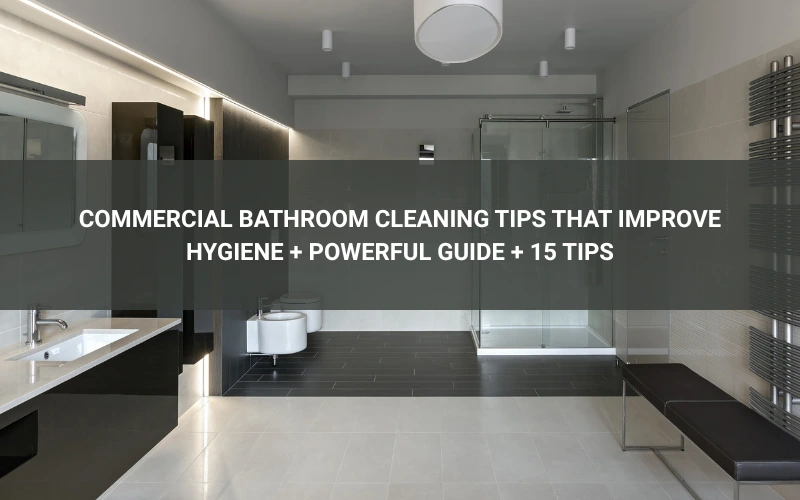
Maintaining a clean commercial restroom is more than just appearance—it’s about health, safety, and professionalism. Businesses such as offices, restaurants, retail stores, and medical facilities must maintain strict sanitation standards to protect employees and customers. These commercial bathroom cleaning tips will help improve hygiene, reduce germs, and create a clean environment.
A dirty restroom can quickly damage a business’s reputation. On the other hand, a clean restroom shows professionalism, care, and attention to detail. In this guide, we’ll cover professional cleaning methods, schedules, supplies, and expert tips for maintaining spotless commercial bathrooms.
Why Commercial Bathroom Hygiene Is Important
Commercial bathrooms receive heavy traffic daily, making them a breeding ground for bacteria, viruses, and odors. Proper cleaning reduces health risks and improves customer satisfaction.
Health and Safety Benefits
Clean bathrooms help prevent the spread of germs such as bacteria and viruses. High-touch surfaces like door handles, faucets, and flush handles can carry harmful microorganisms. Regular cleaning and disinfecting reduce the risk of illness in the workplace.
Benefits include:
- Reduced spread of germs
- Improved employee health
- Better indoor air quality
- Compliance with health regulations
- Safer environment for customers
Business Reputation Impact
Customers often judge a business by the cleanliness of its restrooms. A clean restroom creates a positive impression, while a dirty restroom can drive customers away. Clean facilities show that a business cares about hygiene and customer comfort.
Essential Commercial Bathroom Cleaning Supplies
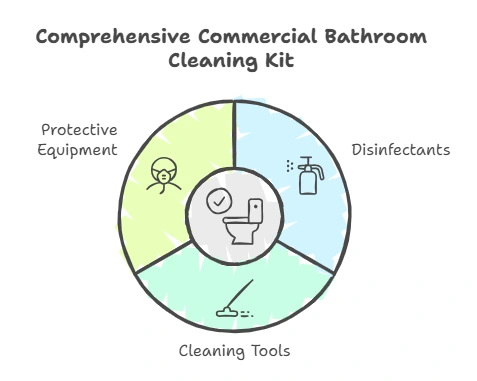
Using the right cleaning supplies is essential for effective restroom cleaning. Professional cleaning requires disinfectants, tools, and protective equipment.
Disinfectants
Disinfectants kill bacteria and viruses on surfaces. Always use commercial-grade disinfectants for restrooms.
Common disinfectants include:
- Bleach solutions
- Hydrogen peroxide cleaners
- Quaternary ammonium cleaners
- Alcohol-based disinfectants
Make sure disinfectants remain on surfaces for the recommended contact time to kill germs effectively.
Cleaning Tools
Professional cleaning tools improve efficiency and cleaning quality.
Essential tools include:
- Microfiber cloths
- Toilet brushes
- Mop and bucket
- Spray bottles
- Scrub brushes
- Floor scrubbers
- Paper towels
- Sponges
Color-coded cleaning cloths help prevent cross-contamination between toilets, sinks, and mirrors.
Protective Equipment
Cleaning staff should always use protective equipment:
- Gloves
- Face masks
- Safety glasses
- Aprons
This protects cleaners from chemicals and bacteria during cleaning.
Daily Commercial Bathroom Cleaning Checklist
Daily cleaning is necessary to maintain hygiene in commercial restrooms.
Toilets and Urinals
Daily toilet cleaning steps:
- Apply toilet bowl cleaner.
- Scrub bowl with toilet brush.
- Clean flush handle.
- Wipe toilet seat and lid.
- Disinfect exterior surfaces.
- Mop around toilet area.
Urinals should also be cleaned and disinfected daily to prevent odors and stains.
Sinks and Countertops
Sink cleaning steps:
- Clean faucet handles
- Scrub sink basin
- Wipe countertops
- Polish metal fixtures
- Refill soap dispensers
- Restock paper towels
Sinks are high-touch areas and must be disinfected regularly.
Floors and Mirrors
Floor cleaning steps:
- Sweep floor
- Mop with disinfectant
- Clean corners and edges
- Remove stains
- Dry floor to prevent slipping
Mirror cleaning steps:
- Spray glass cleaner
- Wipe with microfiber cloth
- Remove streaks
- Polish edges
Deep Cleaning Procedures for Commercial Bathrooms
Deep cleaning should be done weekly or monthly depending on restroom usage.
Tile and Grout Cleaning
Tiles and grout collect dirt and bacteria over time. Use grout cleaner and a scrub brush to clean between tiles. Steam cleaning is also effective for deep cleaning grout lines.
Odor Removal
Bathroom odors are common in commercial restrooms. Odor removal methods include:
- Cleaning drains
- Using enzyme cleaners
- Installing air fresheners
- Cleaning trash bins
- Disinfecting floors and walls
Drain Cleaning
Clogged or dirty drains cause bad smells. Pour enzyme drain cleaner weekly to prevent buildup and odors.
Best Practices for Disinfection
Disinfection is different from cleaning. Cleaning removes dirt, while disinfecting kills germs.
High-Touch Surfaces
High-touch surfaces include:
- Door handles
- Light switches
- Faucet handles
- Soap dispensers
- Paper towel dispensers
- Flush handles
- Stall locks
These surfaces should be disinfected multiple times per day.
Proper Chemical Use
Follow these chemical safety tips:
- Never mix chemicals
- Use correct dilution ratios
- Allow disinfectant contact time
- Store chemicals safely
- Label spray bottles
Proper chemical use ensures effective disinfection and safety.
Green Cleaning Solutions for Commercial Bathrooms
Many businesses are switching to eco-friendly cleaning products. Green cleaning reduces environmental impact and improves indoor air quality.
Eco-friendly cleaning options include:
- Vinegar solutions
- Baking soda cleaners
- Lemon-based cleaners
- Eco-friendly disinfectants
- Microfiber cleaning cloths
- Steam cleaning
Green cleaning is safer for employees and customers while still maintaining hygiene.
Cleaning Schedule for Commercial Bathrooms
A cleaning schedule ensures restrooms remain clean and hygienic at all times.
Daily Cleaning
Daily tasks include:
- Clean toilets and urinals
- Clean sinks
- Mop floors
- Refill supplies
- Empty trash
- Disinfect surfaces
Weekly Cleaning
Weekly tasks include:
- Clean walls and partitions
- Deep clean floors
- Clean vents
- Polish fixtures
- Clean grout
Monthly Deep Cleaning
Monthly tasks include:
- Steam clean tiles
- Deep clean drains
- Replace air fresheners
- Inspect plumbing
- Deep sanitize entire restroom
Common Commercial Bathroom Cleaning Mistakes
Avoid these common mistakes:
- Not disinfecting high-touch surfaces
- Using dirty mop water
- Mixing cleaning chemicals
- Not following cleaning schedule
- Ignoring odors
- Not restocking supplies
- Using wrong cleaning products
- Skipping deep cleaning
Avoiding these mistakes improves restroom hygiene and cleanliness.
Professional Commercial Cleaning vs In-House Cleaning
Businesses often choose between hiring professional cleaners or cleaning in-house staff.
| Professional Cleaning | In-House Cleaning |
|---|---|
| Professional equipment | Basic tools |
| Trained cleaners | Limited training |
| Deep cleaning services | Basic cleaning |
| Higher cost | Lower cost |
| Better sanitation | Moderate sanitation |
Professional cleaning services usually provide better sanitation and deep cleaning results.
Commercial Bathroom Hygiene Checklist Table
| Area | Cleaning Task | Frequency |
|---|---|---|
| Toilets | Disinfect and scrub | Daily |
| Sinks | Clean and disinfect | Daily |
| Mirrors | Clean | Daily |
| Floors | Mop and disinfect | Daily |
| Trash | Empty | Daily |
| Walls | Clean | Weekly |
| Tiles | Deep clean | Monthly |
| Drains | Clean | Monthly |
| Fixtures | Polish | Weekly |
FAQs
How often should commercial bathrooms be cleaned?
Commercial bathrooms should be cleaned daily, with high-traffic restrooms cleaned multiple times per day.
What is the best disinfectant for commercial bathrooms?
Commercial disinfectants like bleach solutions or hydrogen peroxide cleaners are very effective.
How do you keep commercial bathrooms smelling fresh?
Clean drains, empty trash regularly, disinfect floors, and use air fresheners.
What are high-touch surfaces in bathrooms?
Door handles, flush handles, faucets, soap dispensers, and paper towel dispensers.
Should commercial bathrooms be deep cleaned?
Yes, deep cleaning should be done weekly or monthly depending on usage.
Why is restroom hygiene important for businesses?
Clean restrooms improve customer satisfaction, employee health, and business reputation.
Conclusion
Maintaining clean commercial restrooms is essential for hygiene, safety, and business reputation. By following these commercial bathroom cleaning tips, businesses can maintain sanitary facilities, reduce germs, and create a positive impression for customers and employees.
Daily cleaning, proper disinfection, deep cleaning schedules, and using the right cleaning supplies all contribute to better restroom hygiene. Whether cleaning is done in-house or by professionals, consistency is the key to maintaining a clean commercial bathroom.
Clean restrooms are not just about appearance—they reflect the overall professionalism and standards of a business. By implementing these cleaning tips and schedules, any business can maintain spotless and hygienic commercial bathrooms year-round.