
Learning how to clean a washing machine drum is one of the easiest ways to keep your clothes smelling fresh, your machine running efficiently, and your laundry room free of musty odors. Over time, detergent residue, fabric softener buildup, and trapped moisture create the perfect environment for mold and bacteria inside the drum. The good news is that cleaning it does not require harsh chemicals or a technician. With a few household ingredients and a little time, you can restore your machine to a fresh, like new condition.
- Why Cleaning Your Washing Machine Drum Matters
- How to Clean a Washing Machine Drum With Vinegar and Baking Soda
- How to Clean a Washing Machine Drum With Bleach
- Deep Cleaning the Rubber Seal and Detergent Drawer
- How to Prevent Mold and Odor Buildup
- How Often Should You Clean the Washing Machine Drum
- Common Mistakes to Avoid
- Conclusion
- FAQs
Why Cleaning Your Washing Machine Drum Matters
Every wash cycle leaves behind tiny amounts of detergent, fabric softener, lint, and moisture. When the drum stays damp between loads, these residues combine to form a thin film that mold and bacteria love to grow in. This buildup is often the real reason clothes come out smelling sour even though they were just washed. A clean drum not only smells better, it also helps your machine drain properly, spin evenly, and last longer.
Signs Your Drum Needs Cleaning
There are a few clear signals that your washing machine drum is overdue for a clean. A musty smell that lingers even after a fresh wash is the most common one. You might also notice dark spots or a slimy texture around the rubber door seal, a lingering odor when you open the door after the machine has been idle, or clothes that come out with a faint residue. If any of these sound familiar, it is time for a deep clean.
What You Need Before You Start
You do not need anything fancy to get your drum spotless. White vinegar, baking soda, a microfiber cloth, an old toothbrush, and warm water will handle most machines. If your drum has heavy mold or has not been cleaned in a long time, a small amount of bleach can help as well, though it should never be combined with vinegar.
How to Clean a Washing Machine Drum With Vinegar and Baking Soda
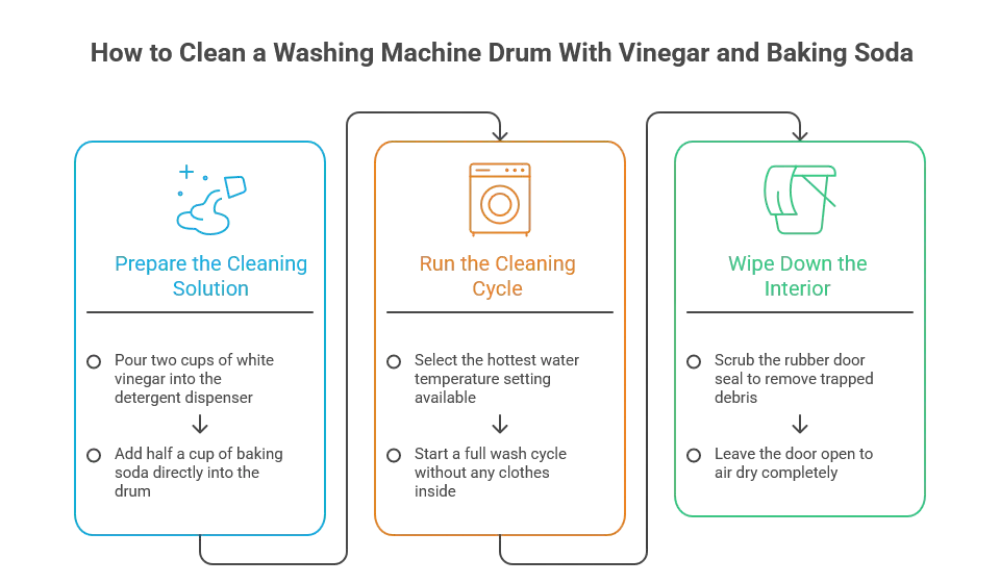
This method is gentle, natural, and works well for regular maintenance cleaning.
Start With an Empty Drum
Make sure the washing machine is completely empty before you begin. Running any cleaning cycle with clothes inside will reduce its effectiveness and could leave your laundry smelling like vinegar.
Run a Hot Cycle With Vinegar
Pour about two cups of white vinegar directly into the empty drum. Set the machine to its hottest and longest cycle available. The heat combined with the acidity of the vinegar helps dissolve detergent buildup, soap scum, and mineral deposits clinging to the drum walls.
Follow Up With Baking Soda
Once the vinegar cycle finishes, sprinkle about half a cup of baking soda directly into the drum and run a second hot cycle. Baking soda works as a natural deodorizer and gentle abrasive, lifting away any remaining grime and neutralizing lingering odors.
Wipe Down the Interior
After both cycles are complete, open the door and wipe the inside of the drum with a clean microfiber cloth. This removes any loosened residue and leaves the surface dry and shining.
How to Clean a Washing Machine Drum With Bleach
For machines with stubborn mold or a strong musty smell that vinegar alone cannot fix, bleach offers a stronger alternative. Add about a cup of bleach to the empty drum and run a hot cycle, just as you would with vinegar. Bleach is particularly effective at killing mold spores that have settled into small crevices.
Safety Tips When Using Bleach
Bleach should always be used with care. Never mix it with vinegar or any ammonia based cleaner, since the combination can create harmful fumes. Keep the room well ventilated while the cycle runs, wear gloves if you are adding it manually, and always run an extra rinse cycle afterward to clear any remaining residue before washing clothes.
Deep Cleaning the Rubber Seal and Detergent Drawer
The drum itself is only part of the story. Two other areas trap just as much grime and are often forgotten during routine cleaning.
Cleaning the Rubber Door Seal
Front loading machines have a rubber gasket around the door that traps water and debris in its folds, making it a prime spot for mold. Gently pull back the seal and wipe inside the folds with a cloth dampened in a vinegar and water solution. An old toothbrush works well for reaching into tighter grooves. Dry the seal thoroughly once finished.
Cleaning the Detergent Drawer
Pull out the detergent drawer and soak it in warm soapy water for a few minutes. Use a toothbrush to scrub away caked on detergent and fabric softener residue from the compartments and the slot it sits in. Rinse well and let it dry completely before sliding it back into place.
How to Prevent Mold and Odor Buildup
Cleaning the drum occasionally is helpful, but a few simple habits can keep it fresh for much longer between deep cleans.
Simple Habits That Keep the Drum Fresh
Leave the washing machine door open after every load so air can circulate and moisture can evaporate. Wipe the rubber seal dry after use rather than letting water sit in the folds. Use only the recommended amount of detergent, since too much leaves behind more residue than the wash can rinse away. Running an empty hot maintenance cycle once a month also keeps buildup from forming in the first place.
How Often Should You Clean the Washing Machine Drum
For most households, cleaning the drum once a month is enough to keep odors and buildup under control. Homes in humid climates, or households doing frequent loads for young children, athletes, or pets, may benefit from cleaning every two to three weeks instead. Paying attention to smell and appearance is usually the best guide for timing your next clean.
Common Mistakes to Avoid
A few habits can undo all your cleaning effort. Mixing bleach and vinegar in the same cycle is dangerous and should always be avoided. Skipping the rubber seal is another common oversight, since it is one of the biggest sources of mold and odor. Using too much detergent, ignoring the detergent drawer, and shutting the door immediately after a wash all contribute to the same buildup you are trying to eliminate. Avoiding these habits will keep your machine cleaner for much longer.
Conclusion
Knowing how to clean a washing machine drum properly makes a real difference in how your laundry smells and how long your machine lasts. A simple routine using vinegar, baking soda, and occasional bleach, paired with regular attention to the rubber seal and detergent drawer, keeps mold and odor from ever becoming a problem. Add a few small daily habits like leaving the door open after each wash, and your washing machine will stay fresh, efficient, and reliable for years to come.
FAQs
How often should I clean my washing machine drum?
Cleaning it once a month is enough for most households, though homes in humid areas or with heavy laundry loads may want to clean every two to three weeks.
Can I use vinegar and bleach together to clean the drum?
No. Vinegar and bleach should never be combined, since mixing them can release harmful fumes. Use one or the other, never both in the same cycle.
Why does my washing machine smell even after I clean it?
A lingering smell is often caused by moisture trapped in the rubber door seal or detergent drawer. Make sure both are wiped dry and cleaned along with the drum itself.
Is it safe to use baking soda in a washing machine?
Yes. Baking soda is gentle, safe for washing machine drums, and works well as a natural deodorizer when combined with a hot water cycle.
Do front load and top load washing machines need different cleaning methods?
The vinegar and baking soda method works for both types, though front load machines need extra attention to the rubber door seal, which top load machines do not have.