
A proper deep cleaning bathroom checklist helps you move through every corner of the room without missing the spots that regular wiping tends to skip. Bathrooms collect soap scum, hard water stains, mildew, and hidden grime in places you rarely look. Following a structured checklist turns a stressful chore into a simple routine you can repeat every few weeks.
- Why Deep Cleaning Your Bathroom Matters
- What You Need Before You Start
- Deep Cleaning Bathroom Checklist for the Shower and Tub
- Deep Cleaning Bathroom Checklist for the Toilet
- Deep Cleaning Bathroom Checklist for Sink and Countertop
- Deep Cleaning Bathroom Checklist for Floors and Grout
- Deep Cleaning Bathroom Checklist for Mirrors, Windows and Fixtures
- Deep Cleaning Bathroom Checklist for Storage and Cabinets
- Tips to Maintain a Clean Bathroom Between Deep Cleans
- Conclusion
- FAQs
Why Deep Cleaning Your Bathroom Matters
Bathrooms are damp, warm, and used daily, which makes them a natural breeding ground for bacteria and mold. A quick wipe down keeps things looking tidy, but it does not remove buildup from grout lines, drains, or fixtures.
Deep cleaning reaches those hidden areas. It protects your health, extends the life of your fixtures, and keeps the whole room smelling fresh instead of musty.
What You Need Before You Start
Getting your supplies ready ahead of time makes the whole process smoother and faster.
Cleaning Supplies to Gather
You will want an all purpose cleaner, a bathroom specific disinfectant, glass cleaner, and a grout brush. A microfiber cloth set works better than paper towels since it traps dust and grime instead of pushing it around.
Tools That Make the Job Easier
Keep a toothbrush or small scrub brush on hand for tight corners. A squeegee helps with glass shower doors, and rubber gloves protect your skin from harsh chemicals during longer cleaning sessions.
Deep Cleaning Bathroom Checklist for the Shower and Tub
The shower and tub usually need the most attention because soap scum and mineral deposits build up quickly.
Start by spraying the walls, tub, and shower door with a cleaner suited for soap scum. Let it sit so the solution can break down grime before scrubbing.
Checklist for this area includes:
- Scrub tile walls and tub surfaces with a non abrasive sponge
- Clean the shower door track and hinges with a small brush
- Remove and clean the showerhead to clear mineral buildup
- Wash shower curtains or liners, or replace them if heavily stained
- Rinse thoroughly and dry with a squeegee to prevent water spots
Dealing With Mold and Mildew
Check corners and caulking for dark spots. A mold and mildew remover applied directly to the area, left to sit, then scrubbed and rinsed will keep this problem from spreading.
Deep Cleaning Bathroom Checklist for the Toilet
The toilet needs its own dedicated cleaning routine, separate from the rest of the bathroom.
Apply toilet bowl cleaner inside the bowl and let it sit while you clean other surfaces. Scrub thoroughly with a toilet brush, paying attention to under the rim.
Wipe down the exterior including the tank, lid, seat, and base. Do not forget the hinges where grime often hides, and finish by disinfecting the flush handle.
Deep Cleaning Bathroom Checklist for Sink and Countertop
Sinks and countertops face daily use from toothpaste splatter, soap residue, and makeup spills.
Clear everything off the counter first so you can clean the full surface. Spray an all purpose cleaner and wipe down the countertop, backsplash, and sink basin.
Pay close attention to the faucet base and handles where water spots and grime collect. Clean the drain stopper and remove any hair or debris caught underneath.
Polishing Fixtures
Chrome and stainless fixtures benefit from a final polish. A dry microfiber cloth removes streaks and leaves faucets and handles looking shiny.
Deep Cleaning Bathroom Checklist for Floors and Grout
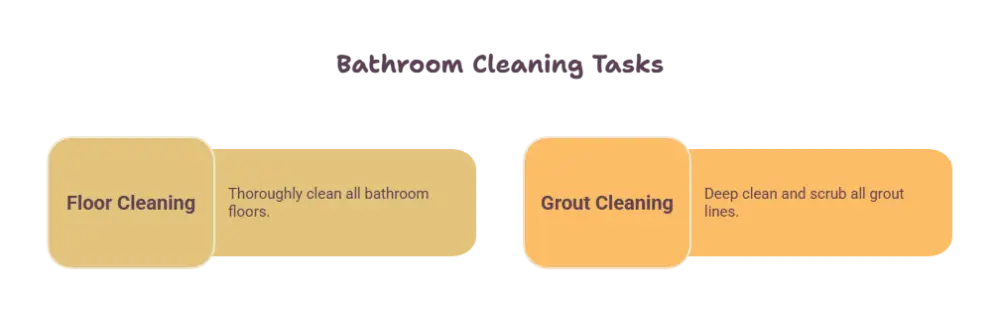
Floors take the brunt of daily foot traffic and moisture, so grout lines especially need extra care during a deep clean.
Sweep or vacuum the floor first to remove loose dirt and hair. Apply a grout cleaner and scrub with a stiff brush, working in small sections.
Mop the entire floor afterward with a suitable cleaner for your flooring type. Reach behind the toilet and along baseboards where dust tends to gather unnoticed.
Deep Cleaning Bathroom Checklist for Mirrors, Windows and Fixtures
Streaky mirrors and dusty light fixtures can make an otherwise clean bathroom feel unfinished.
Spray glass cleaner on mirrors and windows, then wipe in smooth motions with a lint free cloth. Dust light fixtures and exhaust fan covers, which often collect a surprising amount of grime.
Vents and Exhaust Fans
Remove the exhaust fan cover if possible and wash it separately. Dust buildup here restricts airflow and can affect how well your bathroom clears moisture.
Deep Cleaning Bathroom Checklist for Storage and Cabinets
Cabinets and drawers rarely get attention during routine cleaning, yet they collect dust, spills, and expired products over time.
Empty each cabinet and drawer completely. Wipe down interior surfaces, check for expired products, and organize items neatly before putting them back.
Wipe the exterior of cabinets and drawer handles, since these surfaces are touched constantly and hold more bacteria than people expect.
Tips to Maintain a Clean Bathroom Between Deep Cleans
A deep clean lasts longer when you build a few small habits into your daily routine.
Wipe down the shower after each use to prevent soap scum from hardening. Keep a squeegee near the shower so drying the glass becomes second nature.
Run the exhaust fan during and after showers to reduce moisture in the air. Doing a quick wipe of the sink and counter each morning also keeps grime from building up between deep cleaning sessions.
Conclusion
A deep cleaning bathroom checklist takes the guesswork out of keeping this high traffic room fresh, sanitary, and pleasant to use. Working through each area systematically, from the shower to the cabinets, ensures nothing gets overlooked. With the right supplies and a consistent routine, your bathroom can stay spotless with far less effort over time.
FAQs
How often should I deep clean my bathroom?
Most homes benefit from a deep clean every two to four weeks, depending on how often the bathroom is used and how much moisture builds up.
What is the best way to remove soap scum from glass shower doors?
A vinegar based cleaner or a dedicated soap scum remover, applied and left to sit before scrubbing, works well for breaking down stubborn buildup.
How do I clean grout without damaging it?
Use a soft to medium bristle brush with a grout safe cleaner and avoid abrasive tools that can wear down the surface over repeated use.
Why does my bathroom smell musty even after cleaning?
A musty smell often comes from trapped moisture in grout, caulking, or the exhaust fan, so improving ventilation alongside cleaning helps resolve it.
Should I clean the toilet before or after the rest of the bathroom?
Clean the toilet last, since it is the most contaminated surface, to avoid spreading bacteria to other areas you have already cleaned.