How often should floors be mopped is a question almost every homeowner asks at some point. Clean floors are more than just a matter of appearance. They affect the air quality in your home, the lifespan of your flooring, and even the health of your family. The right mopping frequency depends on the type of flooring you have, how much foot traffic your home gets, and whether you have pets or kids running around.
In this guide, you will learn exactly how often to mop different types of floors, what signs tell you it is time to mop, and simple tips to make the job easier.
Why Mopping Frequency Matters
Floors collect dust, dirt, bacteria, and allergens every single day. Sweeping or vacuuming removes surface debris, but mopping is what actually lifts grime and sanitizes the surface. Skipping mopping for too long allows buildup that can scratch flooring, dull its finish, and create an unhealthy environment.
On the other hand, mopping too often, especially with the wrong products, can damage certain floor types like hardwood. Finding the right balance keeps your home clean without wearing down your flooring.
General Mopping Guidelines by Room
Kitchen
The kitchen tends to collect the most spills, grease, and food particles. It is best to mop the kitchen floor at least once or twice a week. High traffic kitchens or homes with young children may need mopping every few days.
Bathroom
Bathrooms deal with moisture, soap residue, and bacteria buildup. Mopping the bathroom floor once a week is usually enough to keep it clean and hygienic.
Living Room and Bedrooms
These areas typically see less spillage but still gather dust and allergens. Mopping once every one to two weeks is generally sufficient, depending on foot traffic.
Entryways and Hallways
Entryways collect the most outdoor dirt, mud, and debris since they are the first point of contact when entering a home. These areas often benefit from mopping once a week or even more frequently during rainy or muddy seasons.
Mopping Frequency Based on Floor Type
Hardwood Floors
Hardwood should be mopped sparingly, ideally once a week, using a slightly damp mop and a cleaner made specifically for wood. Excess water can seep into seams and cause warping.
Tile Floors
Tile is durable and water resistant, making it easier to mop more often. Once or twice a week keeps grout lines from collecting grime.
Laminate Floors
Laminate should be treated similarly to hardwood. A damp mop once a week is usually ideal to avoid moisture damage.
Vinyl Floors
Vinyl handles moisture well and can be mopped once or twice a week without concern.
Stone Floors
Natural stone such as marble or granite needs gentle care. Mopping once a week with a pH neutral cleaner helps preserve its finish.
Factors That Affect How Often You Should Mop
Foot Traffic
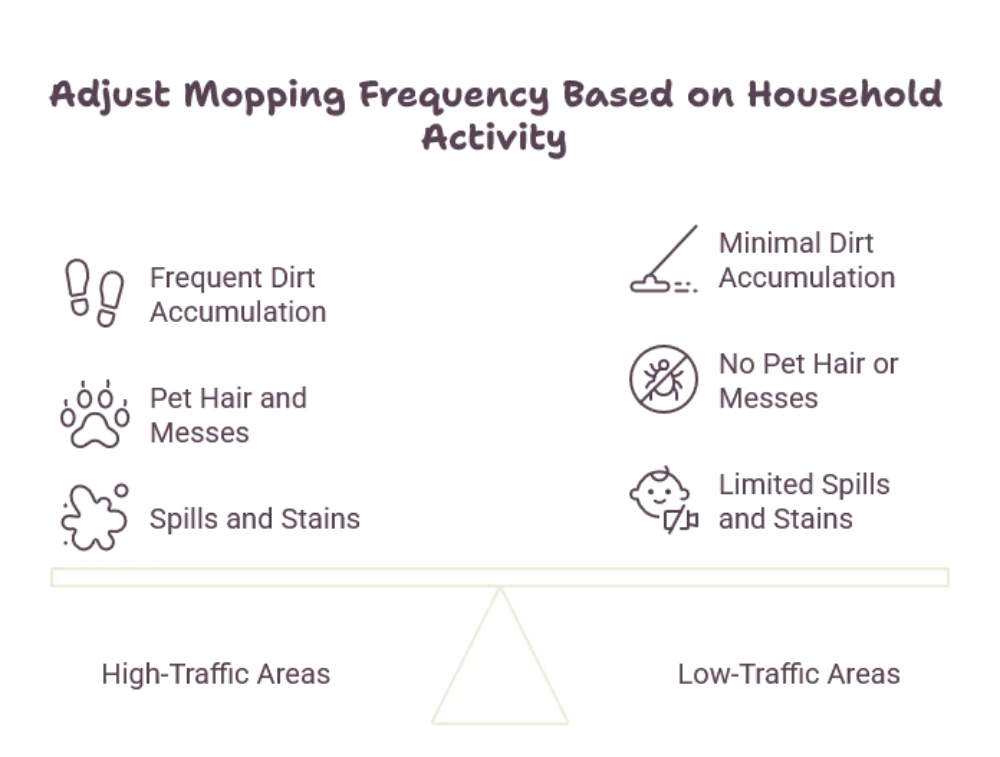
Homes with more people, pets, or frequent visitors will need more frequent mopping since dirt accumulates faster.
Pets
Pet hair, paw prints, and accidents mean floors need extra attention. Pet owners often mop two to three times a week.
Children
Kids naturally bring more mess indoors, from spilled snacks to muddy shoes, which increases the need for regular mopping.
Weather and Season
Rainy or snowy seasons introduce more moisture and debris into the home, requiring more frequent floor cleaning.
Allergies
If anyone in the household has allergies or asthma, mopping more frequently helps reduce dust and allergen buildup.
Signs It Is Time to Mop Your Floors
Even with a set schedule, your floors will often tell you when they need attention. Watch for a dull or hazy appearance, visible dirt or footprints, sticky spots from spills, and a noticeable buildup of dust in corners. If you notice any of these signs, it is a good idea to mop regardless of your usual schedule.
Tips for Effective Floor Mopping
Sweep or Vacuum First
Always remove loose dirt and debris before mopping. This prevents you from just pushing dirt around and turning it into mud.
Use the Right Cleaner
Different floor types need different cleaning solutions. Using the wrong product can damage the finish or leave residue behind.
Change the Water Often
Dirty mop water spreads grime instead of removing it. Refresh your water and rinse your mop head frequently during cleaning.
Let Floors Air Dry
Allowing floors to air dry naturally helps prevent streaks and reduces the risk of slipping.
Rotate Cleaning Tools
Microfiber mops are gentle and effective for most floor types, while string mops may work better for heavily soiled areas.
Creating a Simple Mopping Routine
A consistent routine makes floor care less overwhelming. Consider mopping high traffic areas like kitchens and entryways more often, while less used rooms can be cleaned on a lighter schedule. Pay attention to your household’s specific needs, including pets, kids, and allergy concerns, and adjust as necessary.
Conclusion
So, how often should floors be mopped? The answer depends on your flooring type, household activity, and lifestyle. As a general rule, high traffic areas like kitchens and entryways benefit from mopping once or twice a week, while bedrooms and living rooms can often go one to two weeks between mopping sessions. Paying attention to visible signs of dirt and adjusting your routine based on pets, kids, and seasonal changes will help keep your floors clean, safe, and long lasting.
Frequently Asked Questions
How often should I mop hardwood floors?
Hardwood floors should be mopped about once a week using a slightly damp mop and a wood safe cleaner to avoid moisture damage.
Is it bad to mop floors every day?
Mopping daily is not necessary for most homes and can wear down certain floor finishes over time, especially on hardwood or laminate.
How often should tile floors be mopped?
Tile floors are durable and can be mopped once or twice a week without any issue.
Do pets make a difference in how often floors should be mopped?
Yes, homes with pets often need mopping two to three times a week due to hair, dander, and tracked in dirt.
What is the best way to know when floors need mopping?
Look for dullness, visible footprints, sticky spots, or dust buildup in corners as signs that it is time to mop.