Microfiber couches are loved for their soft texture and durability, but keeping them looking fresh requires the right cleaning approach. If you want to learn how to clean microfiber couches properly, you need to understand the fabric type, use suitable cleaning agents, and follow gentle techniques that protect the material’s texture. This guide walks you through everything you need to know to restore your microfiber couch to its original softness and shine.
Understanding Microfiber Fabric Before You Clean
Microfiber is a synthetic fabric made from tightly woven polyester and nylon fibers. This tight weave makes it resistant to stains and spills, but it also means the wrong cleaning method can leave watermarks or a rough texture.
Check the Cleaning Code Tag
Most microfiber furniture comes with a manufacturer tag showing a cleaning code. This code tells you exactly what type of cleaner is safe to use.
The common codes are:
W means you can use water based cleaners.
S means you should use a solvent based cleaner instead of water.
WS means both water and solvent cleaners are safe.
X means the fabric should only be vacuumed and professionally cleaned.
Always check this tag first, since using the wrong cleaner type can permanently damage the fabric.
Supplies You Will Need
Before starting, gather a few basic items. You will need a vacuum cleaner with an upholstery attachment, a soft bristled brush, microfiber cloths, rubbing alcohol or a fabric safe cleaner depending on your tag code, and a spray bottle.
Having everything ready before you start makes the entire cleaning process smoother and faster.
Step by Step Process to Clean a Microfiber Couch
Vacuum the Entire Surface First
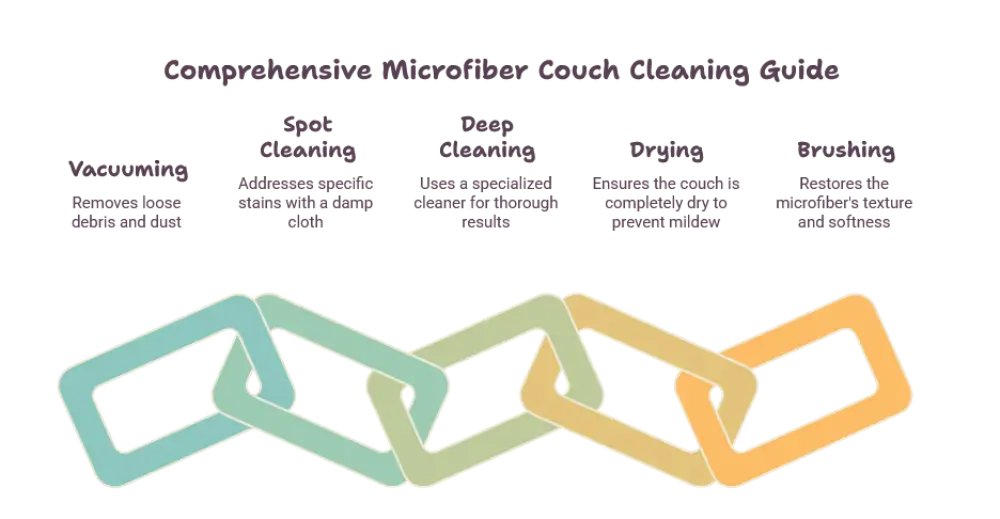
Start by vacuuming the couch thoroughly using the upholstery attachment. This removes loose dirt, dust, crumbs, and pet hair before you apply any liquid. Skipping this step often causes dirt to smear into the fabric once it becomes damp.
Test the Cleaner on a Hidden Spot
Before cleaning the entire couch, test your chosen solution on a small hidden area such as the back or underside. Wait a few minutes to see if any discoloration or texture change occurs.
Apply the Right Solution Based on the Code
For W coded fabric, mix a small amount of mild dish soap with warm water. For S coded fabric, use rubbing alcohol in a spray bottle since water can leave permanent rings.
Spray the solution lightly onto a clean sponge or cloth rather than directly onto the fabric. This prevents oversaturation.
Scrub Gently in Circular Motions
Using the dampened cloth or sponge, rub the fabric gently in small circular motions. Focus on one section at a time so the cleaner does not dry before you wipe it away.
Wipe Away Residue
After scrubbing, use a dry microfiber cloth to wipe off any excess cleaner and lifted dirt. Continue this process across the entire couch surface.
Brush the Fabric While Damp
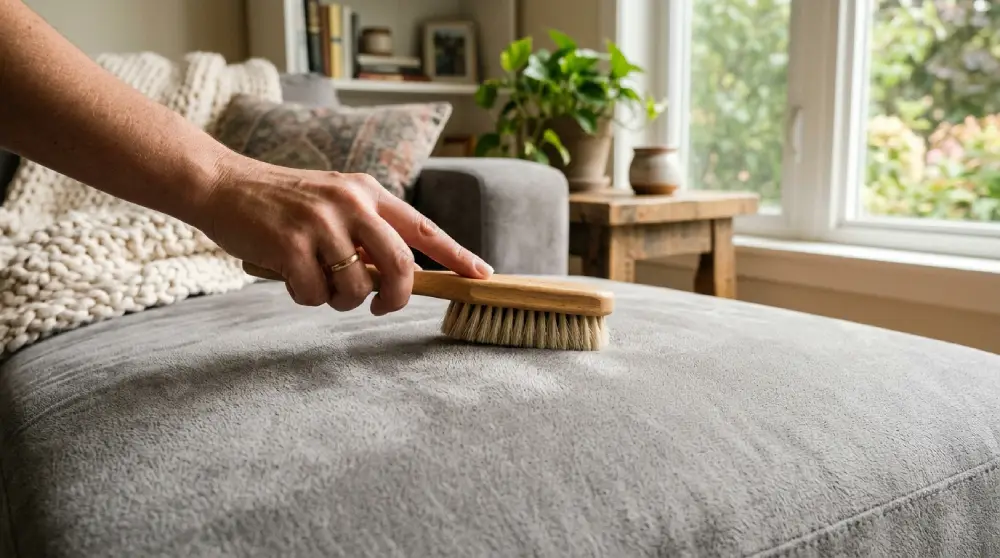
While the fabric is still slightly damp, use a soft bristled brush to fluff the fibers back into place. This step restores the couch’s original soft texture and prevents stiffness once it dries.
Let It Air Dry Completely
Allow the couch to air dry naturally in a well ventilated room. Avoid sitting on it or placing objects on the surface until it is fully dry, which usually takes a few hours.
How to Remove Specific Stains
Grease and Oil Stains
Sprinkle baking soda over the greasy area and let it sit for about fifteen minutes to absorb the oil. Afterward, brush it off and clean the spot with your appropriate solvent or water based cleaner.
Ink Stains
Dab a small amount of rubbing alcohol onto a cotton ball and gently blot the stain. Never rub ink stains since this can spread the color deeper into the fibers.
Food and Drink Spills
Blot the spill immediately with a dry cloth to absorb as much liquid as possible. Follow up with your regular cleaning solution to remove any remaining residue.
Removing Odors From Microfiber Couches
Odors tend to settle into microfiber fibers over time. Sprinkle baking soda evenly across the entire couch and let it sit for around thirty minutes. Vacuum thoroughly afterward to lift both the baking soda and trapped odors from deep within the fabric.
Tips to Keep Your Microfiber Couch Looking New
Regular maintenance prevents deep stains from forming and keeps the fabric soft. Vacuum your couch weekly to prevent dust buildup, keep pets off the furniture when possible, and rotate cushions regularly to ensure even wear.
Avoid placing the couch in direct sunlight for long periods, as this can fade the fabric color unevenly over time.
Common Mistakes to Avoid
Many people damage their microfiber couches by using the wrong cleaner type or oversaturating the fabric with water. Scrubbing too hard can also flatten the fibers permanently, so always use gentle, circular motions instead of harsh rubbing.
Skipping the brushing step after cleaning is another common mistake, since it leaves the fabric feeling stiff and uneven once dry.
Conclusion
Cleaning a microfiber couch does not have to be complicated once you understand the fabric type and follow the right steps. By checking the cleaning code, using suitable solutions, and brushing the fabric while damp, you can keep your couch soft, clean, and stain free for years. Regular maintenance combined with proper stain treatment will help your microfiber furniture look new for a long time.
FAQs
Can I use water to clean my microfiber couch?
It depends on the cleaning code tag on your couch. If it shows a W or WS code, water based cleaners are safe to use, but if it shows an S code, you should use a solvent based cleaner instead.
How often should I clean my microfiber couch?
Vacuuming weekly and doing a deeper clean once every few months helps maintain the fabric’s softness and prevents dirt from settling deep into the fibers.
Why does my microfiber couch feel rough after cleaning?
This usually happens when the fabric is not brushed while damp. Brushing the fibers gently after cleaning restores the original soft texture.
Can rubbing alcohol damage microfiber fabric?
Rubbing alcohol is generally safe for S coded microfiber fabrics and is often recommended for removing tough stains like ink and grease.
How do I get rid of watermarks on my microfiber couch?
Lightly dampen the entire area with the same cleaner used originally, then brush the fabric evenly while damp to blend the mark into the surrounding texture.