If you have ever pulled a favorite shirt out of your closet only to spot yellow patches or white residue under the arms, you already know how frustrating deodorant stains can be. Learning how to remove deodorant stains from shirts is one of the most useful laundry skills you can pick up, because these marks tend to build up over time and become harder to treat the longer they sit. The good news is that most deodorant stains, whether fresh or set in, can be treated at home with items you probably already have in your kitchen or bathroom.
In this guide, you will learn why deodorant stains form, the best methods to remove both white and yellow marks, and tips to keep your shirts looking fresh for longer.
Why Deodorant Stains Happen
Deodorant stains are usually caused by a mix of aluminum compounds, sweat, and body oils reacting with the fabric fibers. White marks are typically leftover deodorant residue sitting on top of the fabric, while yellow stains form when sweat and antiperspirant ingredients react with fibers over time and through heat exposure, such as from an iron or dryer.
Understanding the type of stain you are dealing with helps you choose the right removal method.
White Deodorant Marks
These are surface level and often the easiest to deal with. They usually sit on darker fabrics and can often be removed without washing at all.
Yellow Sweat and Deodorant Stains
These are deeper set stains caused by a chemical reaction between sweat, deodorant, and fabric. They require a bit more effort but are still treatable, especially if caught early.
How to Remove White Deodorant Marks
White deodorant residue is the easiest stain to fix since it often just sits on top of the fabric.
Use a Dry Cloth or Baby Wipe
Gently rub the stained area with a dry microfiber cloth, an old sock, or even a baby wipe. The friction lifts the residue right off the fibers without needing water.
Try a Fabric Softener Sheet
Rubbing a used dryer sheet over the mark works surprisingly well. The slight texture and residual softener help break up the deodorant buildup.
Nylon Stockings Trick
If you have an old pair of nylon stockings lying around, ball them up and rub the stained area in a circular motion. The texture works like fine sandpaper to lift the marks.
How to Remove Yellow Deodorant Stains
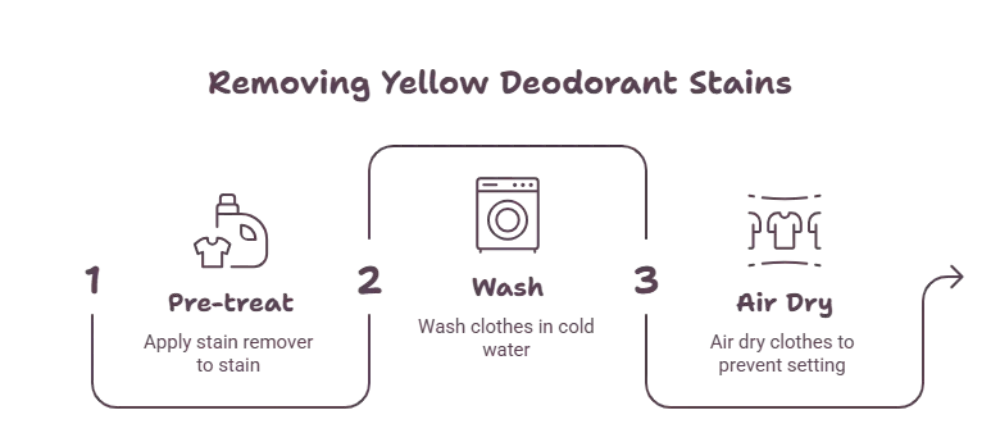
Yellow stains take more effort because the sweat and antiperspirant have chemically bonded with the fabric.
Vinegar and Baking Soda Method
Start by spraying the stained area with white vinegar and let it sit for about ten minutes. Then sprinkle baking soda over the spot and gently scrub with an old toothbrush. Rinse with cold water before washing as usual.
Lemon Juice and Water Solution
Mix equal parts lemon juice and water, then soak the stained area for thirty minutes. The natural acidity helps break down the buildup. This works especially well on white cotton shirts.
Hydrogen Peroxide and Dish Soap
Combine hydrogen peroxide with a small amount of dish soap and apply it directly to the stain. Let it sit for about fifteen minutes, then scrub gently and rinse. This combination is excellent for tougher, older stains.
Aspirin Paste Method
Crush two aspirin tablets and mix them with a small amount of warm water to form a paste. Apply the paste to the stain and let it sit for two to three hours before washing. Aspirin contains acetylsalicylic acid, which helps dissolve stubborn residue.
Step by Step Washing Process
Once you have treated the stain, follow this process for the best results.
Pretreat the Stain
Apply your chosen stain removal method directly to the affected area before tossing the shirt into the wash.
Wash in Cold Water
Always use cold water when washing stained shirts. Hot water can set the stain permanently by causing the proteins in sweat to bind further with the fabric.
Check Before Drying
Inspect the shirt before placing it in the dryer. Heat can lock in stains that were not fully removed, making them much harder to treat afterward. If any trace remains, repeat the treatment and wash again.
Air Dry When Possible
Air drying gives you the chance to check the fabric one more time and avoids setting any leftover residue with heat.
Tips to Prevent Future Deodorant Stains
Preventing stains is often easier than removing them.
Let Deodorant Dry Before Dressing
Give your deodorant a minute or two to dry completely before putting on your shirt. This reduces the amount of product that transfers onto the fabric.
Choose the Right Deodorant Formula
Switching to a clear or gel formula rather than a thick white stick can significantly reduce residue buildup on clothing.
Wash Shirts Promptly
Avoid letting worn shirts sit in a hamper for days. The longer sweat and deodorant sit on fabric, the more likely they are to set into a stain.
Rotate Your Shirts
Wearing the same shirt repeatedly without proper washing increases buildup. Giving shirts time to rest between wears helps reduce staining over time.
Conclusion
Deodorant stains are common, but they do not have to ruin your favorite shirts. Whether you are dealing with fresh white marks or stubborn yellow stains, there is a simple household solution that can help restore your clothing. By treating stains early, washing with cold water, and taking a few preventive steps, you can keep your shirts looking clean and fresh for much longer.
Frequently Asked Questions
Can baking soda remove old deodorant stains?
Yes, baking soda combined with vinegar or water can help break down old deodorant stains when applied as a paste and left to sit before washing.
Does vinegar damage fabric when removing stains?
White vinegar is generally safe for most fabrics when diluted, but it is best to test it on a hidden area first, especially with delicate materials like silk.
Why do deodorant stains turn yellow over time?
Yellowing happens when sweat and antiperspirant ingredients react with fabric fibers and are further set in by heat exposure from ironing or drying.
Is it safe to use hydrogen peroxide on colored shirts?
Hydrogen peroxide can lighten some colored fabrics, so it is best used on white or light colored shirts, or tested on a hidden spot first.
How can I remove deodorant stains without washing the shirt?
For white residue, gently rubbing the area with a dry cloth, dryer sheet, or nylon stocking can lift the marks without needing a full wash.