You’re staring at it again, aren’t you? That ghastly splotch, a defiant declaration against the pristine surface it mars. Whether it’s a crimson betrayal on your favorite white shirt, an oily slick on your pristine countertop, or a muddy testament on your new rug, stains are an inevitable, infuriating part of life. But fear not, intrepid stain battler! You hold in your hands the ultimate guide, a compendium of wisdom designed to transform you from a cowering victim into a triumphant stain-vanquishing warrior. This isn’t just about scrubbing harder; it’s about scrubbing smarter, recognizing the enemy, and deploying the most effective weaponry. Get ready to reclaim your unblemished existence!
You’ve heard it a million times, but it bears repeating: time is of the essence. The longer a stain sits, the deeper it sets its roots, becoming a permanent fixture instead of a temporaryblemish. Think of it like a negotiation; the fresher the wound, the more receptive it is to treatment. Hesitation is your enemy here.
Understand the Stain’s Nature
Before you even think about grabbing a cleaning solution, pause. What kind of stain are you dealing with? Is it oil-based, water-based, protein-based, or something else entirely? Many common cleaning agents are effective against specific types of stains but can be useless or even detrimental to others. A grease stain won’t respond to the same treatment as a blood stain, and vice-versa. Identifying your adversary is the first step towards its defeat. Don’t blindly attack; strategize.
Blot, Don’t Rub
This is a rookie mistake many people make. Your instinct might be to scrub furiously, but this only pushes the stain deeper into the fabric fibers, spreading it and making it harder to remove. Instead, blot gently with a clean white cloth or paper towel. Apply light pressure, working from the outside of the stain inwards. This absorbs the liquid and prevents the stain from expanding. Think of it as delicately lifting the stain off the surface, not grinding it in.
Test in an Inconspicuous Area
Before you unleash your chosen cleaning agent on the stain, always, always test it on an inconspicuous area of the item first. This is crucial, especially for delicate fabrics, colored materials, or surfaces you’re unsure about. A tiny patch underneath a cushion, an inside seam, or a hidden corner will tell you if the cleaner will cause discoloration, damage, or an adverse reaction. A moment of caution can save you from a permanent disaster.
Your Stain Removal Toolkit: Essential Supplies for Every Household
You wouldn’t go into battle without your weapons, and stain removal is no different. A well-stocked arsenal is your best defense against unexpected spills and splatters. Don’t wait for a stain to appear; prepare beforehand.
Everyday Heroes: The Basics You Already Own
You’d be surprised how many powerful stain fighters are already lurking in your pantry or bathroom cabinet. These common household items are often your first line of defense and can tackle a surprising array of stains effectively.
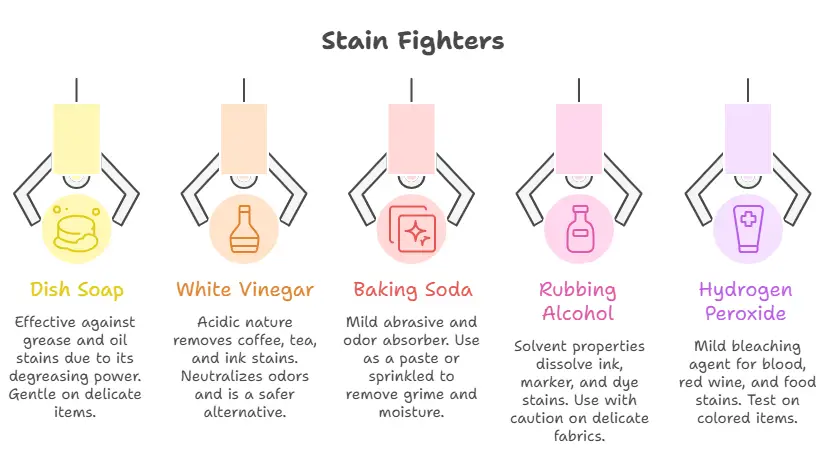
Dish Soap
This humble liquid is a true champion against grease and oil stains. Its degreasing power is legendary. A small dab mixed with water can penetrate and lift many stubborn oily marks from fabrics, hard surfaces, and even carpets. It’s also surprisingly gentle on many materials, making it a go-to for delicate items.
White Vinegar
The acidic nature of white vinegar makes it a versatile stain remover and odor neutralizer. It’s excellent for tackling coffee, tea, and some ink stains, as well as mineral deposits and mildew. Its natural properties make it a safer alternative to harsh chemical cleaners for many applications.
Baking Soda
A mild abrasive and an excellent odor absorber, baking soda is your ally against a variety of stains. It can be used as a paste to gently scrub away grime, or sprinkled liberally to absorb moisture and odors from carpets and upholstery. It’s particularly effective on food stains and pet messes.
Rubbing Alcohol
For ink, marker, and some types of dye stains, rubbing alcohol (isopropyl alcohol) is your secret weapon. Its solvent properties dissolve many permanent pigments, allowing you to blot them away. Be cautious on delicate fabrics or finishes, as it can sometimes cause discoloration.
Hydrogen Peroxide
A mild bleaching agent, hydrogen peroxide is fantastic for blood stains, red wine, and some food stains, especially on white or light-colored fabrics. Use it with caution on colored items, as it can lighten the fabric. Always test in an inconspicuous area.
Specialized Solutions: When the Basics Aren’t Enough
Sometimes, the generalists just won’t cut it. That’s when you turn to specialized stain removers designed for specific challenges.
Enzyme Cleaners
These powerful formulations contain enzymes that break down protein-based stains like blood, urine, faeces, grass, and food. They are particularly effective for pet messes and organic stains. Always follow the manufacturer’s instructions carefully, as they often require specific contact times.
Stain Sticks and Gels
Convenient and portable, these products are excellent for pre-treating stains before washing. They allow the stain remover to penetrate deeply into the fibers, loosening the stain’s grip. Keep one in your laundry room and another for on-the-go emergencies.
Stain Sprays for Carpets and Upholstery
Unlike fabric cleaners, these are designed to be safe for fibers that cannot be easily submerged in water. They often contain foam-based formulas or quick-drying solutions to prevent over-wetting and potential mildew growth.
Tackling Common Stains Like a Pro
Now that you’re armed with knowledge and tools, let’s dive into some of the most common stain culprits and the most effective strategies for their removal. Remember the golden rule: act fast!
Coffee and Tea Stains
That morning pick-me-up can quickly turn into a morning “Oh no!” These tannin-rich stains require a quick response.
Fresh Coffee/Tea Stains
Immediately blot the excess liquid with a clean cloth. Then, flush the area with cold water. For fabrics, you can often sprinkle some table salt on the wet stain to absorb the liquid, then rinse. Alternatively, apply a solution of white vinegar and water (1:1 ratio) or a few drops of liquid laundry detergent directly to the stain. Let it sit for a few minutes, then blot and rinse.
Dried Coffee/Tea Stains
Dried stains are tougher. Soak the fabric in a mixture of cool water and enzyme laundry detergent for at least 30 minutes, or even overnight for stubborn stains. For delicate items, a solution of hydrogen peroxide (diluted if necessary) can be dabbed onto the stain, followed by a rinse. For carpets, a solution of warm water and a few drops of dish soap can be applied, blotted, and then rinsed thoroughly.
Grease and Oil Stains
From cooking oil splatters to mechanic’s grease, these stains are notorious for their stubborn, oily residue.
Fresh Grease/Oil Stains
As quickly as possible, blot up any excess oil with a paper towel or clean cloth. Then, apply an absorbent powder like cornstarch, talcum powder, or baking soda directly onto the stain. Let it sit for at least 15-30 minutes (or longer for large stains) to soak up the oil. Brush off the powder, then apply a strong liquid dish soap directly to the stain. Work it in gently with your fingers or a soft brush. Let it sit for a few minutes before rinsing thoroughly with warm water.
Dried Grease/Oil Stains
For dried stains on fabric, pre-treat with a heavy-duty laundry detergent or a specialized grease remover. You might need to let it soak for several hours or even overnight. For hard surfaces, a strong degreaser or a paste made from baking soda and water can be effective. Apply the paste, let it sit, then scrub and wipe clean.
Blood Stains
These can be particularly alarming, but with the right approach, even dried blood can be removed. Remember, cold water is key!
Fresh Blood Stains
Immediately rinse the stained area with cold water. The colder, the better, as hot water will “cook” the proteins in the blood, setting the stain permanently. For fabrics, try soaking the item in cold water with a pre-soak product or enzyme cleaner. If that’s not available, a generous application of hydrogen peroxide can help break down the blood; simply pour it on, let it fizz, and blot. Repeat if necessary, then rinse thoroughly.
Dried Blood Stains
Dried blood requires a more aggressive approach. For fabrics, soak the item in an enzyme-based stain remover or a mixture of cold water and a few drops of ammonia (use with caution and in a well-ventilated area). You might need to gently scrape off any dried crust before soaking. For carpets, a paste of meat tenderizer and cold water can surprisingly break down the proteins. Apply, let sit, then blot and rinse.
Red Wine Stains
That celebratory spill can feel like a disaster, but prompt action can save your fabric.
Fresh Red Wine Stains
Immediately blot the excess wine with a clean cloth. The next step is critical: liberally sprinkle table salt over the entire stain. The salt will absorb the wine and prevent it from setting. Let it sit for 5-10 minutes, then vacuum or brush off the salt. Alternatively, pour club soda over the stain and blot. The carbonation can help lift the pigment. For particularly stubborn fresh stains, try pouring boiling water (if the fabric can handle it) through the stain from a height.
Dried Red Wine Stains
Dried red wine stains can be a challenge. For fabrics, soak in a mixture of warm water and oxygen bleach (if safe for the fabric) or an enzyme cleaner. You might also try a paste of baking soda and a few drops of dish soap, allowing it to sit on the stain before rinsing. Specialist wine stain removers are also highly effective for dried stains.
When to Call in the Professionals: Knowing Your Limits
There will be times when, despite your best efforts and this comprehensive guide, a stain remains stubbornly defiant. Recognizing when to throw in the towel (on your personal efforts, not on the item itself!) and seek professional help is a crucial part of effective stain management.
Delicate Fabrics and Sentimental Items
Some materials are simply too fragile or valuable to risk damage with DIY methods. Think silk, velvet, antique lace, or a cherished heirloom. Aggressive scrubbing, harsh chemicals, or even incorrect water temperatures can ruin these items irreversibly. A professional cleaner possesses the expertise and specialized equipment to treat these fabrics safely.
Large or Deeply Set Stains
If you’re dealing with a massive spill covering a significant area, or a stain that’s deeply embedded into carpet padding or upholstery foam, your home cleaning efforts might only provide superficial results. Professionals have powerful extraction equipment and industrial-strength solutions to penetrate deep and remove the stain at its source.
Unknown Stain Origins
Sometimes, you’re faced with a mysterious mark and have no idea what caused it. Without knowing the stain’s composition, you risk using the wrong cleaner and inadvertently setting the stain or causing further damage. Professional cleaners often have methods for identifying unknown stains and can then tailor their approach accordingly.
Mold, Mildew, and Contaminated Stains
Stains involving mold, mildew, or hazardous materials (like sewage) require specialized knowledge and equipment to ensure proper removal and sanitation. Attempting to DIY these can be detrimental to your health and the longevity of the item. Leave these to the experts.
Preventive Measures: The Best Stain Remover is Prevention
Are you eating curry on your white couch? Applying nail polish over an antique rug? Taking a moment to assess the potential for spills and adjusting your activity (or your location) can significantly reduce stain incidents. A simple towel on your lap or moving to a more forgiving surface can make all the difference.
Clean Spills Immediately (Revisited!)
This ties back to the golden rule, but it’s worth reiterating as a preventative measure. Even if it’s just plain water, a quick wipe can prevent it from attracting dirt and leaving a water mark. Make it a habit – as soon as you see a spill, address it. Don’t let it linger.
Regular Cleaning and Maintenance
Keeping your home generally clean reduces the accumulation of dirt and grime that can exacerbate stains, making them harder to remove. Regular vacuuming, dusting, and wiping down surfaces prevent minor smudges from becoming major problems.
You are now officially a stain-fighting maestro. Armed with these pro tips, you can face almost any spill with confidence and competence. Remember the sequence: identify, blot, pre-treat, wash, and when in doubt, call a professional. No longer will a rogue splash or an accidental drip send you into a panic. Instead, you’ll meet it with the calm, calculated precision of a seasoned stain removal expert. Go forth and conquer those stains!
FAQs
What are professional stain removal techniques?
Professional stain removal techniques are methods and processes used by trained professionals to effectively remove tough stains from various surfaces such as clothing, upholstery, carpets, and more. These techniques often involve the use of specialized cleaning agents, equipment, and expertise to safely and effectively eliminate stains without causing damage to the material.
What types of stains can be removed using professional techniques?
Professional stain removal techniques can effectively remove a wide range of stains, including but not limited to food and beverage stains, oil and grease stains, ink stains, pet stains, and more. These techniques are designed to tackle both water-based and oil-based stains on various surfaces.
How do professional stain removal techniques differ from DIY methods?
Professional stain removal techniques differ from DIY methods in that they often involve the use of specialized cleaning agents and equipment that may not be readily available to the average consumer. Additionally, professionals are trained to assess the type of stain and the material it has affected, allowing them to tailor their approach for safe and effective removal.
Are professional stain removal techniques safe for all types of fabrics and surfaces?
Professional stain removal techniques are generally safe for a wide range of fabrics and surfaces when performed by trained professionals. However, it is important to consult with a professional to assess the specific material and stain before attempting any removal techniques, as certain delicate fabrics or surfaces may require special care.
Can professional stain removal techniques guarantee complete removal of all stains?
While professional stain removal techniques are highly effective, they cannot always guarantee complete removal of all stains. The success of stain removal depends on various factors such as the type of stain, the material it has affected, and the duration of time the stain has been present. In some cases, residual discoloration or damage may remain, especially if the stain has set in for an extended period.