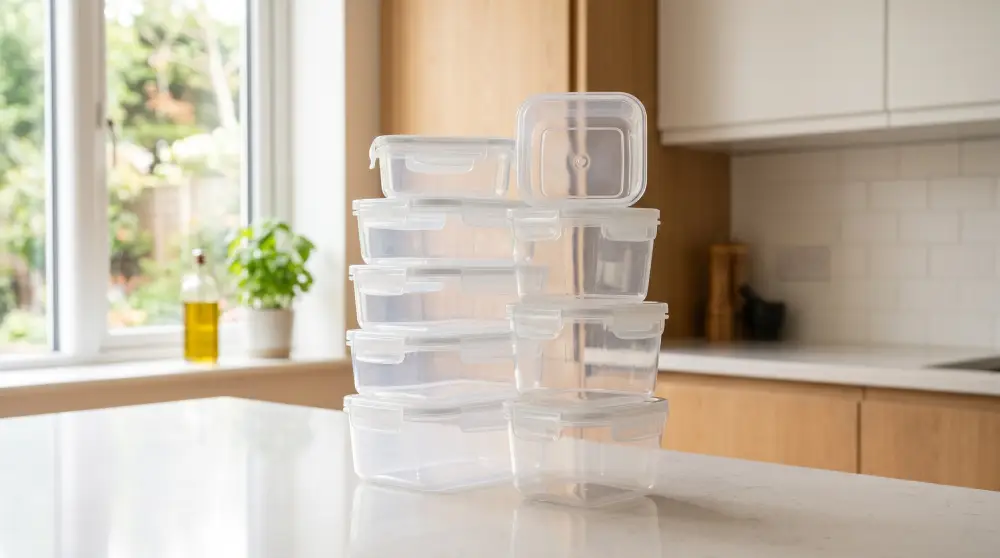
If you have ever pulled a food storage container out of your cupboard and noticed an ugly yellow or orange tint on the inside, you are not alone. This is one of the most common kitchen frustrations, especially for households that store tomato based sauces, curries, or oily leftovers in plastic containers. The good news is that you can remove yellow stains from plastic containers using simple ingredients that are probably already sitting in your kitchen right now.
In this guide, we will walk through why these stains happen, the most effective home remedies to remove yellow stains from plastic containers, and how to prevent the problem from coming back.
- Why Plastic Containers Get Yellow Stains
- How to Remove Yellow Stains from Plastic Containers Using Baking Soda
- Removing Yellow Stains from Plastic Containers with Sunlight
- Using Vinegar to Remove Yellow Stains from Plastic Containers
- Lemon Juice as a Natural Stain Remover
- Hydrogen Peroxide for Stubborn Yellow Stains
- Dish Soap and Hot Water Soak
- Preventing Yellow Stains from Plastic Containers in the Future
- Tips for Maintaining Stain Free Plastic Containers Long Term
- Conclusion
- Frequently Asked Questions
Why Plastic Containers Get Yellow Stains
Before jumping into the cleaning methods, it helps to understand what causes this discoloration in the first place. Plastic is porous on a microscopic level, which means certain pigments can seep into the surface rather than staying on top of it.
Key points on why staining happens:
- Tomato based foods contain a pigment called lycopene, which is notorious for soaking into plastic and leaving behind a reddish orange or yellow tint.
- Turmeric, a common spice in curries, contains curcumin, a powerful natural dye that clings to plastic surfaces.
- Oily and greasy foods can trap pigments against the plastic, making stains set in faster and deeper.
- Heat speeds up staining. Microwaving food in plastic containers opens up the plastic’s pores even more, allowing pigments to penetrate further.
- Older or lower quality plastic containers tend to stain more easily because the surface is more porous than newer, higher grade plastics.
Understanding these causes is the first step toward effectively treating and preventing stains.
How to Remove Yellow Stains from Plastic Containers Using Baking Soda
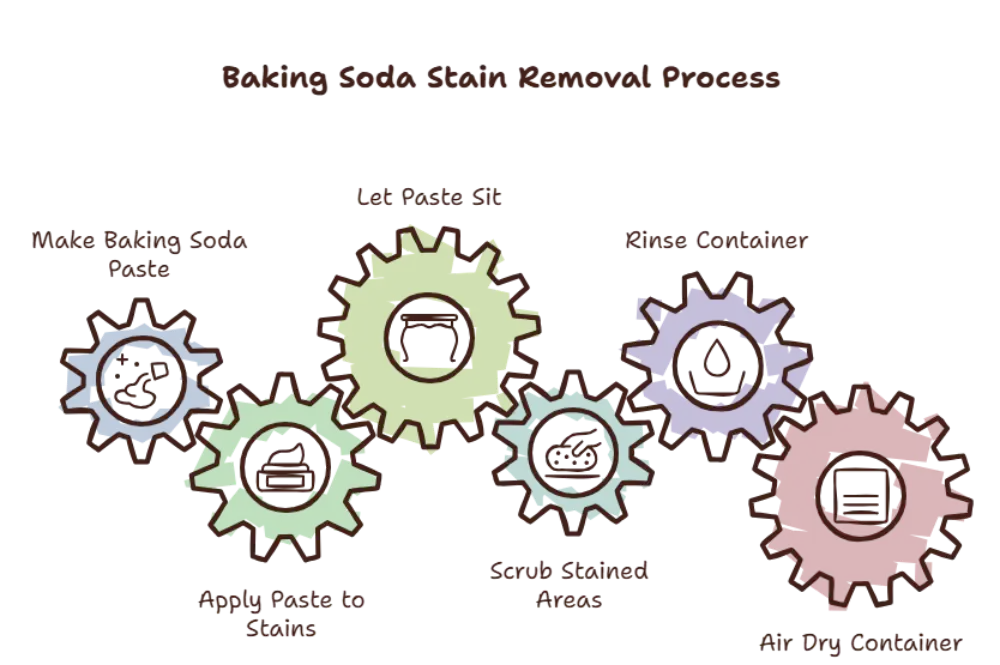
Baking soda is one of the most reliable and gentle ways to remove yellow stains from plastic containers. It works as a mild abrasive and also helps neutralize odors that often accompany staining.
Steps to follow:
- Make a thick paste using baking soda and a small amount of water.
- Apply the paste generously to the stained areas of the container.
- Let it sit for at least 30 minutes, or longer for deep set stains.
- Scrub gently with a soft sponge or an old toothbrush for hard to reach corners.
- Rinse thoroughly with warm water and let the container air dry.
Baking soda is safe for food containers, does not leave behind harsh chemical residue, and is gentle enough to use regularly without damaging the plastic surface.
Removing Yellow Stains from Plastic Containers with Sunlight
Sunlight is one of the most underrated and effective ways to remove yellow stains from plastic containers. Ultraviolet rays break down the pigment molecules trapped in the plastic, gradually fading the discoloration without any scrubbing required.
How to do it:
- Wash the container as you normally would to remove any loose food residue.
- Place the container in direct sunlight, ideally near a window or outdoors.
- Leave it exposed for several hours, or even a full day for stubborn stains.
- Check periodically, as some stains fade within a few hours while others may take one or two days.
This method works particularly well in sunny climates and is completely free, making it a favorite among people who want a chemical free solution.
Using Vinegar to Remove Yellow Stains from Plastic Containers
White vinegar is a mildly acidic household staple that can break down pigment buildup on plastic surfaces. It is especially useful for stains caused by tomato sauce or other acidic foods.
Steps for using vinegar:
- Fill the stained container with equal parts white vinegar and warm water.
- Let it soak for one to two hours.
- Pour out the solution and scrub the inside with a sponge.
- Rinse well and dry the container.
For an extra boost, you can combine vinegar with baking soda. The fizzing reaction that occurs when the two mix can help lift stubborn stains and loosen any sticky residue along with the discoloration.
Lemon Juice as a Natural Stain Remover
Lemon juice contains citric acid, which works similarly to vinegar but adds a fresh, pleasant scent and a mild bleaching effect when combined with sunlight.
How to use it:
- Squeeze fresh lemon juice directly onto the stained area, or rub a cut lemon over the surface.
- Let the juice sit on the plastic for about 15 to 20 minutes.
- Rinse with warm water and a bit of dish soap.
- For tougher stains, sprinkle a little salt onto the lemon before rubbing for added abrasive power.
Combining lemon juice with sunlight exposure can speed up the stain removal process significantly, since both methods rely on breaking down pigment molecules.
Hydrogen Peroxide for Stubborn Yellow Stains
For deeply set or old stains that have not responded to gentler methods, hydrogen peroxide can be an effective option. It works as a mild bleaching agent without the harshness of chlorine bleach.
Steps to follow:
- Mix one part hydrogen peroxide with one part water.
- Pour the solution into the container, making sure it covers all stained areas.
- Let it sit for one to two hours, checking periodically.
- Rinse thoroughly with water until no residue remains.
Always rinse hydrogen peroxide treated containers extremely well before storing food in them again, since you want to make sure no solution lingers on the surface.
Dish Soap and Hot Water Soak
Sometimes the simplest approach is the most effective. A long soak in hot water and dish soap can loosen oils and pigments before they have a chance to set in too deeply.
Key points for this method:
- Use the hottest water your container can safely handle, checking the manufacturer’s guidelines first.
- Add a generous amount of dish soap known for cutting through grease.
- Let the container soak for at least an hour, or overnight for tough stains.
- Scrub with a non abrasive sponge afterward and rinse well.
This method works best as a first line of defense for fresh stains before they have fully set into the plastic.
Preventing Yellow Stains from Plastic Containers in the Future
Once you have managed to remove yellow stains from plastic containers, the next priority is keeping them stain free going forward. Prevention is always easier than treatment.
Helpful prevention tips:
- Spray or coat the inside of containers with a thin layer of cooking spray before adding tomato based or turmeric heavy foods. This creates a barrier that prevents pigments from soaking into the plastic.
- Avoid microwaving food directly in plastic containers, since heat opens up the plastic’s pores and makes staining worse.
- Wash containers immediately after use rather than letting stained food sit for hours or overnight.
- Choose glass containers for foods that are known to stain, such as tomato sauce, curry, or turmeric based dishes.
- Hand wash stain prone containers instead of relying solely on the dishwasher, since hot dishwasher cycles can intensify staining.
Tips for Maintaining Stain Free Plastic Containers Long Term
Keeping your containers looking new requires a bit of ongoing care. A few simple habits can make a noticeable difference over time.
- Rinse containers as soon as you finish eating rather than letting them sit in the sink.
- Periodically give all your plastic containers a sunlight treatment, even if they are not visibly stained, as a preventive measure.
- Replace containers that are heavily worn or scratched, since scratches create more surface area for pigments to cling to.
- Store containers with lids slightly ajar when not in use to allow air circulation and reduce moisture buildup that can contribute to staining and odors.
Conclusion
Yellow and orange stains on plastic containers are a common but completely manageable problem. Whether you prefer a chemical free approach using sunlight and baking soda, or a more targeted method using vinegar, lemon juice, or hydrogen peroxide, there are plenty of effective ways to remove yellow stains from plastic containers and restore them to a cleaner appearance. Combine these treatments with a few simple prevention habits, and your plastic containers can stay looking fresh for much longer.
Frequently Asked Questions
What causes yellow stains on plastic containers?
Yellow stains are usually caused by pigments in foods like tomato sauce, turmeric, and curry soaking into the porous surface of the plastic, especially when heat is involved during cooking or microwaving.
Does sunlight really remove yellow stains from plastic containers?
Yes. Sunlight contains ultraviolet rays that break down the pigment molecules trapped in plastic, gradually fading stains over a few hours to a couple of days depending on severity.
Is it safe to use hydrogen peroxide on food storage containers?
Yes, as long as the container is rinsed thoroughly afterward. Hydrogen peroxide acts as a mild bleaching agent and is generally considered safer than chlorine bleach for food containers.
How can I prevent my plastic containers from staining in the first place?
Coating the inside with a thin layer of cooking spray before storing staining foods, avoiding microwaving in plastic, and washing containers immediately after use are all effective prevention methods.
Will baking soda damage my plastic containers?
No. Baking soda is a mild, non abrasive cleaner that is safe for regular use on plastic and will not scratch or damage the surface when used with a soft sponge or cloth.