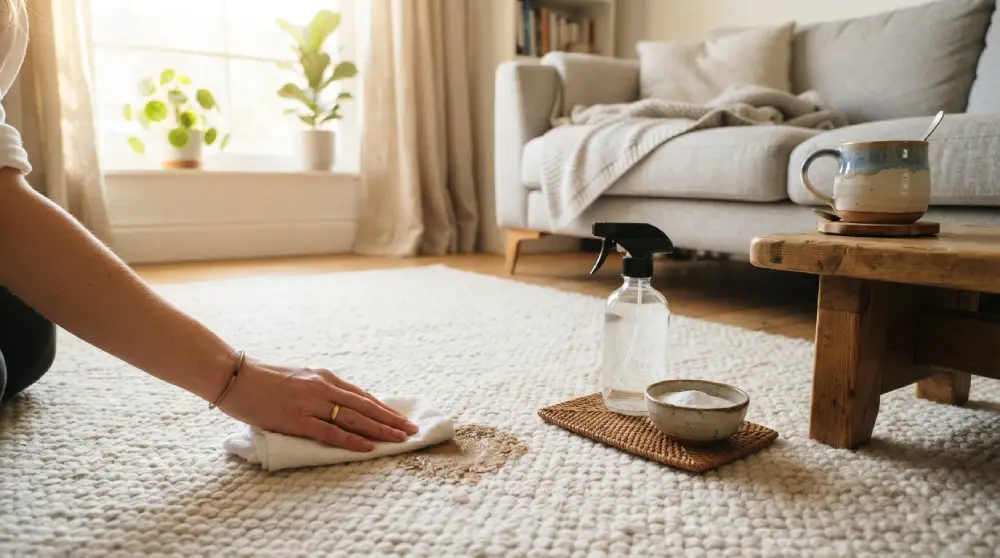
Spilled your morning cup on the living room floor? Stay calm. Knowing how to remove coffee stains from carpet can save your flooring and your mood.
Coffee contains dark pigments called tannins that cling to carpet fibers quickly. The good news is that most spills lift out with simple items from your kitchen.
This guide covers safe methods for fresh and old stains, so your carpet looks clean again.
- Why Coffee Stains Carpet So Easily
- What You Need Before You Start
- How to Remove Fresh Coffee Stains from Carpet
- How to Remove Old or Dried Coffee Stains
- Removing Coffee With Milk or Cream
- Tips for Different Carpet Types
- Common Mistakes to Avoid
- Drying the Carpet After Cleaning
- How to Prevent Future Coffee Stains
- Conclusion
- FAQs
Why Coffee Stains Carpet So Easily
Coffee is hot, dark, and acidic. Those three traits make it a tough opponent for carpet fibers.
Heat opens up the fibers and lets the liquid sink deep. The tannins then bond with the material and leave a brown mark behind.
Time matters too. A fresh spill sits near the surface, but a dried one sets into the backing and becomes harder to lift.
That is why acting fast is the single best move you can make.
What You Need Before You Start
Gather your supplies first so you can work without delay. Most of these are already in your home.
- Clean white cloths or paper towels
- Cool water in a spray bottle
- Mild liquid dish soap
- White vinegar
- Baking soda
- Hydrogen peroxide, three percent strength
- A soft brush or old toothbrush
- A wet and dry vacuum, if you have one
Always use white cloths. Colored fabric can transfer dye onto your carpet and create a second stain.
How to Remove Fresh Coffee Stains from Carpet
A fresh spill is the easiest to handle. Follow these actions in order and you will often remove the stain completely.
Blot First, Never Rub
Grab a clean cloth and press it firmly onto the spill. Let it soak up as much liquid as possible.
Rubbing pushes coffee deeper into the fibers and spreads the stain wider. Blot gently, working from the outside edge toward the center.
Switch to a dry section of the cloth often. Keep going until no more brown liquid transfers.
Rinse With Cool Water
Lightly spray the area with cool water. Hot water can set the stain, so avoid it.
Blot again with a fresh cloth to pull the diluted coffee upward. Repeat this rinse and blot cycle a few times.
For many small spills, this alone does the job.
Use a Gentle Dish Soap Mix
If a mark remains, mix one teaspoon of mild dish soap with one cup of cool water. Dab the mixture onto the stain with a cloth.
Let it sit for about five minutes. Then blot with a clean damp cloth to lift the soap and the stain together.
Rinse with plain water so no soap residue stays behind. Leftover soap attracts dirt and can leave a sticky patch.
How to Remove Old or Dried Coffee Stains
Dried stains need a bit more patience. The tannins have set, so you will need a stronger approach.
Start by gently scraping away any crusted residue with a spoon. Vacuum up the loose bits before you apply any liquid.
Vinegar and Water Solution
White vinegar is a gentle acid that helps break down coffee pigments. It also helps neutralize odors.
Mix equal parts white vinegar and cool water in a spray bottle. Spray the stain until it is damp, but not soaked.
Wait about ten minutes, then blot with a clean cloth. Repeat if the stain is still visible.
Baking Soda Method
Baking soda is great for pulling stains and smells out of fibers.
Dampen the stain slightly with water. Sprinkle a generous layer of baking soda over the area.
Leave it for several hours or overnight. Vacuum the powder away and check the spot.
This method works especially well on stains that have a lingering coffee smell.
Hydrogen Peroxide for Light Carpets
For stubborn marks on light colored carpet, hydrogen peroxide can help. It works as a mild bleaching agent.
Mix two parts hydrogen peroxide with one part dish soap. Apply a small amount to the stain with a cloth.
Let it sit for ten to fifteen minutes, then blot with cool water. Do not use this on dark or colored carpet, because it can lighten the fibers.
Always test on a hidden spot first, such as inside a closet. Wait a few minutes to confirm there is no color change.
Removing Coffee With Milk or Cream
Coffee with milk, cream, or sugar behaves differently. Dairy adds fats and proteins that make the stain trickier.
Begin by blotting up the liquid and rinsing with cool water. Then apply the dish soap mixture to break down the greasy part of the stain.
Once the dairy is gone, treat any leftover brown tint with the vinegar solution.
Sugar can leave a sticky residue. Rinse the area well so it does not attract dirt later.
Tips for Different Carpet Types

Not every carpet reacts the same way. Knowing your material helps you avoid damage.
Synthetic Carpet
Nylon and polyester are fairly forgiving. They handle vinegar, dish soap, and baking soda well.
Still, avoid heavy scrubbing. A soft brush and gentle dabbing are enough.
Wool Carpet
Wool is more delicate and can be harmed by strong chemicals. Skip hydrogen peroxide and use only mild dish soap and cool water.
Use as little liquid as possible, because wool takes a long time to dry. Check the care label before you begin.
Natural Fiber Rugs
Jute, sisal, and seagrass absorb liquid quickly and can stain from water alone. Blot carefully and use minimal moisture.
For these materials, a professional cleaner is often the safest choice for large spills.
Common Mistakes to Avoid
A few small errors can turn an easy cleanup into a lasting stain. Keep these in mind.
- Rubbing instead of blotting, which spreads the stain
- Using hot water, which can set the pigment
- Soaking the carpet, which can damage the padding underneath
- Skipping the patch test on a hidden area
- Leaving soap behind, which attracts dirt
Also avoid walking on the damp spot. Foot traffic pushes moisture deeper and can leave marks.
Drying the Carpet After Cleaning
Once the stain is gone, dry the area properly. Damp carpet can develop a musty smell and even mold.
Press a dry towel over the spot to absorb extra moisture. Then place a fan nearby or open a window to speed things up.
You can also use a wet and dry vacuum to pull out remaining water. Wait until the carpet is fully dry before moving furniture back.
How to Prevent Future Coffee Stains
A little prevention goes a long way. Small habits can protect your carpet for years.
Use a travel mug with a secure lid when you walk around the house. Keep your coffee on a stable table with a coaster.
Consider placing an area rug in spots where you often sip drinks. A rug is easier to clean or replace than wall to wall carpet.
You can also apply a carpet protector spray. It creates a barrier that gives you more time to blot spills before they soak in.
Conclusion
Learning how to remove coffee stains from carpet is simple once you know the right steps. Blot quickly, rinse with cool water, and choose a gentle cleaner that suits your carpet type.
For older stains, vinegar, baking soda, or hydrogen peroxide can make a real difference. Always test first, avoid rubbing, and dry the area well.
With fast action and a little patience, your carpet can look fresh again.
FAQs
How do you get dried coffee stains out of carpet?
Scrape off any crusted residue, then spray the stain with equal parts white vinegar and cool water. Let it sit for about ten minutes and blot with a clean cloth. Repeat until the stain fades, or follow with a baking soda treatment for stubborn marks.
Does vinegar remove coffee stains from carpet?
Yes, white vinegar works well on many coffee stains. Its mild acidity helps break down the pigments and reduce odors. Mix it with cool water, apply it gently, and blot instead of rubbing.
Can I use hot water to clean a coffee stain?
It is best to avoid hot water. Heat can set the tannins into the carpet fibers and make the stain harder to remove. Cool water is a safer choice for both fresh and old stains.
Will baking soda remove coffee stains from carpet?
Baking soda can help lift light or old coffee stains and absorb smells. Dampen the stain, cover it with baking soda, and leave it for several hours before vacuuming. For deeper stains, combine it with a vinegar solution.
How do I get coffee with milk out of carpet?
Blot up the spill first, then rinse with cool water. Apply a mix of mild dish soap and cool water to break down the milk fats and proteins. If a brown tint remains, treat it with a vinegar and water solution.