Regular tidying keeps a home looking neat, but it only scratches the surface. A true deep cleaning checklist goes far beyond the weekly wipe down, targeting the dust, grime, and hidden buildup that collects in corners, crevices, and appliances over time. Whether you are preparing for a seasonal refresh, moving into a new space, or simply want a home that feels genuinely fresh, having an organized plan makes the job far less overwhelming.
The process of cleaning has been part of household life for generations, evolving from simple sweeping and washing to today’s specialized tools and techniques. This guide breaks deep cleaning into manageable, room by room tasks so you can tackle your home with confidence and finish with a space that looks, feels, and smells genuinely clean.
- What Is Deep Cleaning?
- How Often Should You Deep Clean Each Area
- Kitchen Deep Cleaning Checklist
- Bathroom Deep Cleaning Checklist
- Bedroom Deep Cleaning Checklist
- Living Room and Common Area Checklist
- Laundry Room, Entryway, and Extra Spaces
- Supplies for an Effective Deep Clean
- Tips to Make Deep Cleaning Easier
- Common Mistakes to Avoid During a Deep Clean
- Final Thoughts
- FAQs
What Is Deep Cleaning?
Deep cleaning differs from routine cleaning in both scope and intensity. Where everyday tidying focuses on visible surfaces like countertops and floors, deep cleaning addresses areas that are often overlooked, including baseboards, vents, behind appliances, inside cabinets, and grout lines. It involves removing buildup that accumulates over weeks or months, not days.
Think of regular cleaning as maintenance and deep cleaning as restoration. A typical deep clean might include scrubbing tile grout, washing windows inside and out, descaling faucets, vacuuming under furniture, and sanitizing high touch surfaces throughout the home. Because it covers so much ground, deep cleaning takes longer than a standard tidy up, but the results last considerably longer too.
Most households benefit from a thorough deep clean every three to six months, with extra attention given to kitchens and bathrooms since these rooms accumulate grease, soap residue, and bacteria more quickly than other areas.
How Often Should You Deep Clean Each Area
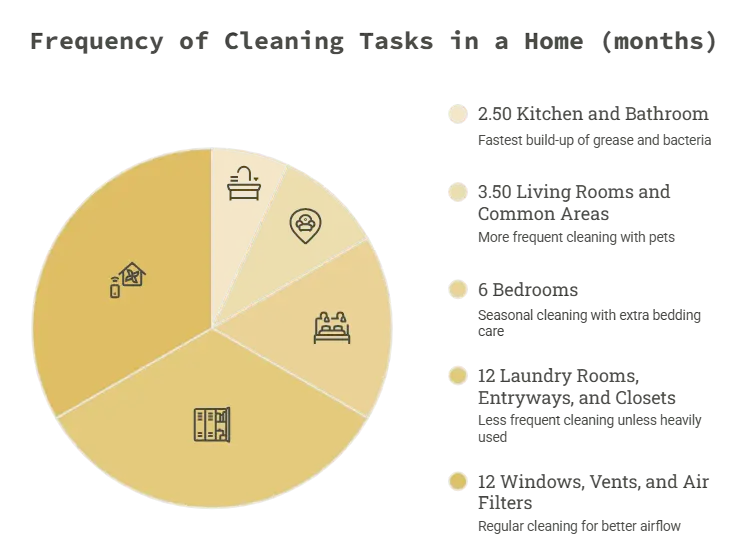
Not every room needs the same level of attention on the same schedule. Splitting tasks into a rotation keeps the workload manageable and prevents any single area from becoming overwhelming.
- Kitchen and bathroom: every two to three months, since grease, soap scum, and bacteria build up fastest here.
- Bedrooms: every season, with bedding and mattresses receiving extra care.
- Living rooms and common areas: every three to four months, or more often in households with pets.
- Laundry rooms, entryways, and closets: twice a year is usually enough unless these spaces see heavy daily use.
- Windows, vents, and air filters: at least twice a year to support better airflow throughout your home.
Adjusting this schedule around your household size, whether you have pets or children, and your local climate will help you stay ahead of buildup rather than constantly playing catch up.
Kitchen Deep Cleaning Checklist
The kitchen sees daily use, which means grease, crumbs, and spills build up quickly in places you might not check during a normal wipe down. Work through this list to get every corner spotless.
- Empty and wipe down the inside of the refrigerator, including shelves, drawers, and door seals.
- Clean the oven interior, including racks and the glass door.
- Degrease the stovetop, range hood, and exhaust filter.
- Wash inside and outside of all cabinets and drawers.
- Descale the sink and faucet.
- Wipe down small appliances such as the toaster, coffee maker, and microwave, inside and out.
- Scrub grout lines on backsplash tiles.
- Clean light fixtures and ceiling corners for dust and cobwebs.
- Sanitize trash and recycling bins.
- Mop floors and clean baseboards along the edges.
Pay close attention to the area behind and beneath large appliances like the refrigerator and stove, since dust, crumbs, and grease tend to collect there unnoticed for months.
Bathroom Deep Cleaning Checklist
Bathrooms combine moisture, soap residue, and daily grime, making them one of the most important rooms to deep clean thoroughly.
- Scrub tile grout and reseal it if needed.
- Descale the showerhead and faucets using a vinegar soak.
- Clean and disinfect the toilet, including the base, hinges, and tank exterior.
- Wash shower curtains or glass doors to remove soap scum.
- Wipe down cabinets, drawers, and medicine cabinet shelves.
- Clean exhaust fans to remove dust buildup.
- Sanitize countertops, sinks, and light switches.
- Wash bath mats and swap in freshly laundered towels.
- Mop and disinfect floors, paying close attention to corners.
Mold and mildew thrive in damp bathroom environments, so check around windowsills, under sinks, and behind toilets for early signs of growth.
Bedroom Deep Cleaning Checklist
Bedrooms collect dust, dead skin cells, and allergens in places that rarely get touched during routine tidying.
- Flip or rotate the mattress and vacuum both sides.
- Wash all bedding, pillows, and mattress protectors in hot water.
- Dust ceiling fans, light fixtures, and the tops of furniture.
- Clean inside closets, including shelves and the floor.
- Wash windows, sills, and curtains or blinds.
- Vacuum under the bed and behind furniture.
- Wipe down switch plates, door handles, and baseboards.
- Organize and declutter drawers as you go.
A clean, allergen reduced bedroom can genuinely improve sleep quality, so this room deserves just as much attention as the kitchen and bathroom.
Living Room and Common Area Checklist
Shared spaces accumulate dust and clutter fast, especially in households with pets or children.
- Vacuum upholstery, including under cushions.
- Dust electronics, shelves, and decorative items.
- Clean windows, sills, and window treatments thoroughly.
- Wipe down remote controls, light switches, and door handles.
- Shampoo carpets or deep clean area rugs.
- Polish wood furniture and clean glass surfaces.
- Dust vents and air registers.
- Declutter surfaces and organize shelving.
These areas often see the highest foot traffic in the home, so frequent dusting between deep cleans helps maintain a fresher space overall.
Laundry Room, Entryway, and Extra Spaces
Don’t overlook smaller spaces that quietly collect dirt and odors.
- Clean the washing machine drum and detergent dispenser tray.
- Wipe down dryer lint traps and vents.
- Sweep and mop entryway floors, including under mats.
- Wipe down light switches, railings, and door frames throughout the home.
- Vacuum and dust stairs, hallways, and closets.
These spaces are easy to forget but contribute significantly to overall cleanliness when included in a full deep cleaning checklist.
Supplies for an Effective Deep Clean
Having the right tools on hand before you start makes the entire process smoother. Useful supplies include microfiber cloths, an all purpose cleaner, glass cleaner, baking soda, white vinegar, a scrub brush, rubber gloves, a vacuum with attachments, and a mop with a washable head. Keeping these items organized in one caddy or bucket means you won’t waste time searching for supplies mid task.
Choosing simple, multi use products can also cut down on clutter under your sink while still covering most surfaces throughout your home.
Tips to Make Deep Cleaning Easier
Breaking the checklist into smaller sessions across a few days can prevent burnout, especially in larger homes. Start from the top of each room and work downward so dust settles onto surfaces you haven’t cleaned yet rather than ones you already finished.
Good ventilation matters too. Opening windows and running exhaust fans while cleaning helps clear dust, allergens, and cleaning product fumes from the air. For more detail on keeping your home healthy between deep cleans, this indoor air quality guide from a university extension program offers helpful, research backed advice on reducing household allergens.
Finally, build a simple rotation: kitchen and bathroom every few months, bedrooms and living areas seasonally, so deep cleaning never feels like an overwhelming, once a year project.
Common Mistakes to Avoid During a Deep Clean
Even with a solid checklist, a few habits can slow you down or leave areas only partly clean.
- Skipping the decluttering step first, which makes wiping and vacuuming around items take far longer.
- Using the same cloth across multiple rooms, which can spread bacteria instead of removing it.
- Cleaning floors before dusting higher surfaces, so settled dust ends up back on the floor anyway.
- Mixing cleaning chemicals that should never be combined, which can release harmful fumes.
- Rushing through grout, vents, and appliance interiors, the exact spots a deep clean is meant to address.
- Forgetting to replace or wash cleaning tools themselves, since a dirty mop or vacuum filter limits how effective your effort can be.
Working through tasks in a logical order, top to bottom and back to front, helps you avoid redoing work and keeps the entire process more efficient.
Final Thoughts
A thorough deep cleaning checklist turns an intimidating task into a series of manageable steps. By moving room by room, gathering the right supplies ahead of time, and paying attention to often missed spots like vents, baseboards, and appliance interiors, you can restore your home to a genuinely fresh state. Make this checklist part of your seasonal routine, and you’ll spend less time catching up on neglected areas and more time enjoying a consistently clean, comfortable living space.
FAQs
What is included in a deep cleaning checklist?
A deep cleaning checklist covers tasks that go beyond everyday tidying, such as scrubbing grout, cleaning behind and inside appliances, washing windows and baseboards, descaling faucets, vacuuming under furniture, and sanitizing high touch surfaces in every room of the home.
How is deep cleaning different from regular cleaning?
Regular cleaning focuses on visible surfaces like countertops and floors to maintain everyday tidiness. Deep cleaning targets overlooked spots, including vents, cabinet interiors, and appliance backs, removing buildup that accumulates over weeks or months rather than days.
How long does deep cleaning a house usually take?
The time needed depends on the size of the home and how long it has been since the last thorough clean. Smaller homes may take a single day, while larger homes or first time deep cleans often take a full weekend when split across rooms.
How often should a home be deep cleaned?
Most households benefit from deep cleaning kitchens and bathrooms every two to three months, bedrooms and living areas each season, and spaces like windows, vents, and closets at least twice a year.
What supplies are needed for an effective deep clean?
Useful basics include microfiber cloths, an all purpose cleaner, glass cleaner, baking soda, white vinegar, a scrub brush, rubber gloves, a vacuum with attachments, and a mop with a washable head. Keeping them together in one caddy makes the process much smoother.