Image Alt Text: A sparkling clean modern kitchen with organized countertops, shiny appliances, and fresh flowers, representing a completed kitchen deep cleaning checklist
The kitchen is the heart of every home, but it is also the space that accumulates the most grease, grime, bacteria, and hidden mess over time. A routine wipe-down simply is not enough to keep it truly clean and hygienic. That is exactly why following a thorough kitchen deep cleaning checklist is so important. A kitchen deep cleaning checklist gives you a systematic, room-by-room approach to tackling every surface, appliance, cabinet, and corner that your regular cleaning routine misses. Whether you deep clean your kitchen once a month, once a season, or whenever it feels overdue, having a structured checklist ensures that nothing gets overlooked and that every part of your kitchen is left genuinely spotless and sanitized. This guide walks you through the complete process from top to bottom, giving you everything you need to deep clean your kitchen with confidence and efficiency.
- Why You Need a Kitchen Deep Cleaning Checklist
- How Often Should You Deep Clean Your Kitchen?
- Kitchen Deep Cleaning Checklist: Start at the Top
- Kitchen Deep Cleaning Checklist for Appliances
- Kitchen Deep Cleaning Checklist for Countertops and Backsplash
- Kitchen Deep Cleaning Checklist for Cabinets and Drawers
- Kitchen Deep Cleaning Checklist for the Sink and Drains
- Kitchen Deep Cleaning Checklist for Floors
- Tips to Make Your Kitchen Deep Cleaning Checklist Easier to Complete
- Frequently Asked Questions
Why You Need a Kitchen Deep Cleaning Checklist
Most people wipe down counters and wash dishes daily, but surface-level cleaning does not address the buildup that accumulates behind appliances, inside cabinets, under the sink, or inside the oven over weeks and months. Without a dedicated deep cleaning routine, these areas become breeding grounds for bacteria, mold, pests, and unpleasant odors.
A kitchen deep cleaning checklist solves this problem by giving you a complete, organized plan of action. Instead of standing in your kitchen wondering where to start, the checklist tells you exactly what to do, in what order, and how to approach each task effectively. It removes the guesswork, reduces overwhelm, and ensures that every session results in a kitchen that is genuinely clean all the way through.
A kitchen deep cleaning checklist is not just about appearances. It is about food safety, hygiene, and creating a healthy environment where you prepare meals for yourself and your family. Bacteria like Salmonella and E. coli thrive in kitchen environments that are only superficially cleaned.
How Often Should You Deep Clean Your Kitchen?
Before getting into the checklist itself, it helps to understand the right frequency for a kitchen deep clean. Unlike daily tidying or weekly maintenance, a deep clean is a more intensive process that addresses every surface and appliance in the space.
For most households, a full kitchen deep clean should happen at minimum once every one to three months. Families who cook frequently, have young children, or own pets may benefit from doing it every four to six weeks. Households that entertain often should consider a deep clean before and after any large gathering.
Some items on your kitchen deep cleaning checklist, such as cleaning the inside of the oven or defrosting the freezer, may only be needed two to four times per year depending on usage. Building these into a seasonal rhythm makes them feel less daunting and easier to maintain.
Frequency matters as much as thoroughness. A partial deep clean done more often is better than a thorough one done only once a year.
Kitchen Deep Cleaning Checklist: Start at the Top
One of the most important principles in any kitchen deep cleaning checklist is to always clean from top to bottom. This ensures that any debris, dust, or drips that fall from higher surfaces are captured and cleaned up as you work your way down, rather than soiling areas you have already cleaned.
Ceilings, Vents, and Light Fixtures
Start by looking up. Kitchen ceilings accumulate grease particles from cooking, especially above the stove. Use a microfiber cloth or a flat mop with an extendable handle to wipe down the ceiling, paying extra attention to the area directly above the cooking surface.
Range hood filters and ventilation grates are notorious for trapping grease. Remove them carefully and soak them in hot water with a generous squeeze of dish soap for 15 to 20 minutes. Scrub with a stiff brush, rinse thoroughly, and allow them to dry completely before reinstalling.
Light fixtures and ceiling fans in the kitchen also collect grease and dust. Wipe bulbs with a dry cloth and wash any removable covers or shades with warm soapy water.
Kitchen Deep Cleaning Checklist for Appliances
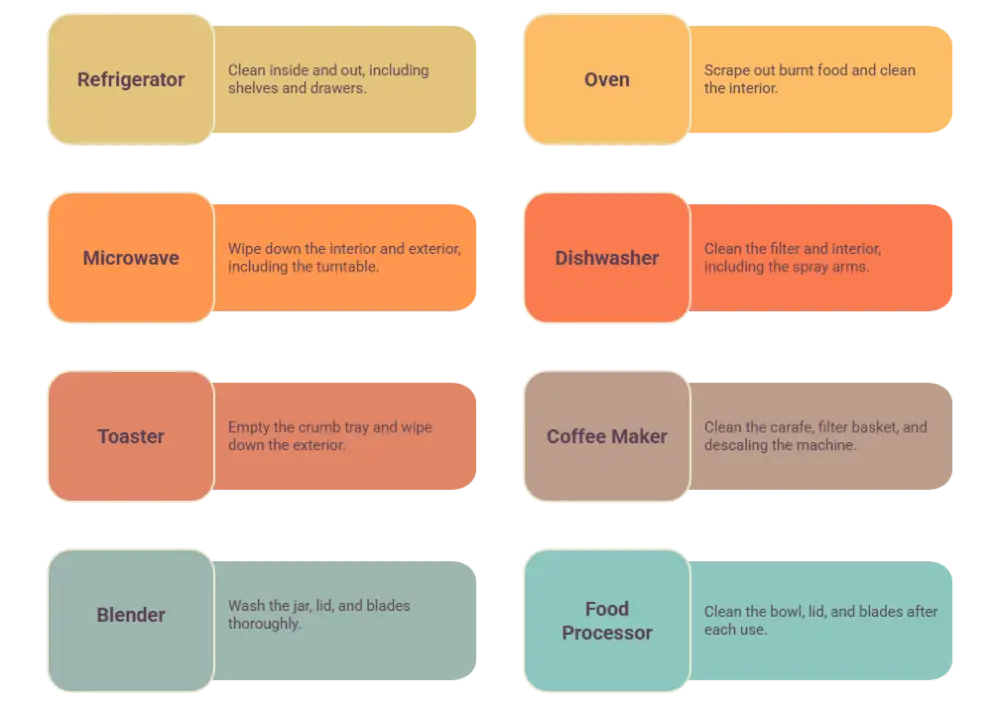
Appliances are often the most neglected areas in any kitchen cleaning routine, yet they require some of the most thorough attention during a deep clean.
Oven and Stovetop
The oven is typically the most time-consuming item on any kitchen deep cleaning checklist, but the results are always worth the effort.
Remove oven racks and soak them in hot soapy water in your sink or bathtub. While they soak, apply a thick paste of baking soda and water to the interior walls, floor, and ceiling of the oven. Avoid applying the paste to the heating elements. Leave the paste on for a minimum of 12 hours or overnight for the best results. The next day, wipe away the dried paste with a damp cloth. For stubborn spots, spray a little white vinegar over the residue and wipe again. The fizzing reaction helps lift baked-on grease and food.
For the stovetop, remove all burner grates and caps if you have a gas stove. Soak them in hot soapy water while you scrub the stovetop surface with a baking soda paste and a non-scratch sponge. Rinse and dry the grates before replacing them.
Refrigerator
The refrigerator requires a full empty-out for a proper deep clean. Remove all food items and place perishables in a cooler with ice. Take out all shelves, drawers, and compartment dividers and wash them with warm soapy water. Allow them to dry completely before returning them to the fridge.
Wipe the interior walls, ceiling, and floor of the refrigerator with a solution of equal parts water and white vinegar. This disinfects and deodorizes without leaving any chemical residue near your food. Pay special attention to door seals, which trap crumbs and mold in their folds. Use an old toothbrush dipped in the vinegar solution to scrub these seals clean.
Do not forget the exterior. Wipe down the door, handles, and sides of the refrigerator. Pull the fridge away from the wall and vacuum the coils at the back or underneath. Dirty condenser coils reduce efficiency and increase energy consumption.
Microwave
Remove the turntable plate and wash it in the sink with dish soap. Fill a microwave-safe bowl with one cup of water and a few slices of lemon or a tablespoon of white vinegar. Heat on high for three to five minutes until the interior is steamy. Let it sit for another two minutes without opening the door, then wipe down the interior walls with a damp cloth. The steam loosens splattered food instantly, making it effortless to clean.
Dishwasher
Many people assume the dishwasher cleans itself, but it actually requires regular deep cleaning to function properly and hygienically. Remove and rinse the filter at the bottom of the dishwasher. Place a cup of white vinegar in an upright dishwasher-safe container on the top rack and run a hot cycle. This removes grease buildup and mineral deposits. Follow with a cycle where you sprinkle baking soda across the bottom of the machine to deodorize and brighten the interior.
Appliances harbor some of the most significant bacteria and grease deposits in any kitchen. Including each one individually on your kitchen deep cleaning checklist ensures none are forgotten or rushed through.
Kitchen Deep Cleaning Checklist for Countertops and Backsplash
Countertops see daily action and deserve thorough attention during a deep clean. Clear everything off the counters completely, including appliances you keep out permanently. Wipe down each appliance before returning it to its spot.
Scrub countertop surfaces with a cleaner appropriate for the material. Stone surfaces benefit from a pH-neutral cleaner rather than vinegar. Laminate and tile surfaces can handle a vinegar and water spray or a baking soda paste for any stubborn staining.
The backsplash behind the stove is one of the most grease-splattered areas in any kitchen. Spray generously with an all-purpose cleaner or a degreasing solution and let it dwell for a few minutes before wiping down with a microfiber cloth. Scrub grout lines with a toothbrush and a baking soda paste to restore their original color.
Kitchen Deep Cleaning Checklist for Cabinets and Drawers
Cabinets and drawers are easy to overlook because their contents hide the mess inside. Empty each cabinet and drawer completely. Wipe down the interior walls and base with a damp cloth, then dry thoroughly before replacing items.
Cabinet fronts accumulate significant grease and fingerprints, especially those near the stove and above the cooking area. Wipe them down with a solution of warm water and a drop of dish soap. For painted cabinets, avoid abrasive scrubbers. For wood cabinets, a wood-safe cleaner helps restore their finish.
Use the opportunity to reorganize and declutter as you go. Discard expired pantry items, donate duplicates, and group similar items together for easier access. A clean cabinet is also a well-organized one.
Kitchen Deep Cleaning Checklist for the Sink and Drains
The kitchen sink is one of the most bacteria-laden surfaces in the entire home, outpacing even the bathroom in many studies. During a deep clean, do not just rinse and wipe.
Scrub the sink basin with baking soda and a non-scratch sponge, working the powder into all corners and around the drain. Rinse and follow with a spray of white vinegar or a hydrogen peroxide solution to disinfect. Polish stainless steel sinks with a few drops of mineral oil on a cloth to restore shine and repel water spots.
For drains, pour half a cup of baking soda down the drain followed by half a cup of white vinegar. Cover the drain opening and let the reaction work for 15 minutes before flushing with boiling water. This clears buildup, eliminates odors, and helps keep drains flowing freely.
Do not forget the faucet and handles. Mineral deposit buildup around the base of the faucet can be loosened by wrapping a cloth soaked in white vinegar around it for an hour, then scrubbing away the deposits.
Kitchen Deep Cleaning Checklist for Floors
Floors are the final step in any kitchen deep cleaning checklist, which makes sense since all the debris from cleaning higher surfaces eventually lands here.
Start by sweeping or vacuuming thoroughly, getting under appliances and into corners. Pull out the refrigerator, stove, and any freestanding units to sweep behind them. The buildup in these hidden areas can be substantial and is a common attractant for pests.
Mop with a solution of hot water and a few drops of castile soap or a purpose-appropriate floor cleaner. For tile floors, pay close attention to grout lines, scrubbing them with a stiff brush if needed. Allow the floor to dry completely before moving appliances back into place.
Floors behind and under appliances are hotspots for grease, crumbs, and pest activity. Including them in your kitchen deep cleaning checklist is essential for true cleanliness and household hygiene.
Tips to Make Your Kitchen Deep Cleaning Checklist Easier to Complete
Preparation makes the entire process smoother and faster. Gather all your cleaning supplies before you begin so you are not stopping to search for items mid-task. Use a timer to keep yourself focused on each section. Play music or a podcast to make the time pass more enjoyably.
Work in sections rather than trying to do everything at once. If a full deep clean feels like too much for one day, split it across two days. Day one can cover appliances and cabinets while day two handles surfaces, the sink, and floors.
Enlist help when possible. Assigning specific tasks from the kitchen deep cleaning checklist to different family members dramatically reduces the time it takes to complete.
Frequently Asked Questions
How long does it take to complete a full kitchen deep cleaning checklist?
The time required depends on the size of your kitchen and how long it has been since the last deep clean. For most average-sized kitchens, expect to spend between three and five hours on a thorough deep clean. If you split the checklist across two sessions, the process feels far more manageable. Kitchens that are maintained with regular weekly cleaning will naturally require less time during each deep clean.
What supplies do I need to follow a kitchen deep cleaning checklist?
The core supplies you need include microfiber cloths, a non-scratch sponge, a stiff-bristle brush, an old toothbrush for grout and small crevices, baking soda, white vinegar, dish soap, an all-purpose cleaner or degreaser, rubber gloves, and a mop with a bucket. Optional additions include a steam cleaner for grout and tile, and a vacuum with a hose attachment for vents and behind appliances.
Should I use natural or chemical cleaners when following a kitchen deep cleaning checklist?
Both can be effective depending on the task. Natural solutions like baking soda and white vinegar handle most kitchen cleaning tasks exceptionally well and are safe around food preparation surfaces. For extremely heavy grease buildup or commercial-grade cleaning needs, a purpose-built degreaser may be necessary. The safest approach is to use natural solutions wherever possible and reserve stronger chemical products for areas that genuinely require them.
How do I maintain a clean kitchen between deep cleaning sessions?
Consistency in daily habits is the key. Wipe down counters and the stovetop after every cooking session. Wash dishes promptly rather than letting them pile up. Empty the trash before it overflows. Sweep the floor daily in high-traffic cooking areas. Wipe the exterior of appliances weekly. These small habits dramatically reduce the amount of work required when your full kitchen deep cleaning checklist comes around again.
What is the most commonly forgotten item on a kitchen deep cleaning checklist?
The most frequently forgotten areas include the inside of the refrigerator door seals, the top of the refrigerator and cabinets, the range hood filters, the underside of cabinet doors near the stove, the kitchen trash can itself including its exterior and lid, and the area behind and beneath large appliances. Adding these explicitly to your kitchen deep cleaning checklist ensures they receive proper attention each time.