
We spend a surprising amount of time cleaning our homes, and most of us never stop to think about what is actually in the products we use every day. Eco-friendly cleaning products are changing the way households approach cleanliness by offering formulas that are safe for people, pets, and the planet without sacrificing performance. Whether you are just starting your green journey or looking to deepen your commitment to sustainable living, this guide covers everything you need to know about making the switch to eco-friendly cleaning products.
- What Are Eco-Friendly Cleaning Products?
- Why Conventional Cleaners Are a Growing Concern
- Key Benefits of Switching to Eco-Friendly Cleaning Products
- What to Look for When Choosing Eco-Friendly Cleaning Products
- Common Certifications That Signal Genuine Eco-Friendly Credentials
- Eco-Friendly Cleaning Products Room by Room
- Simple DIY Eco-Friendly Cleaning Recipes to Try at Home
- Making the Transition: Practical Tips for Switching to Eco-Friendly Cleaning Products
- The Future of Eco-Friendly Cleaning Products
- Frequently Asked Questions
What Are Eco-Friendly Cleaning Products?
Eco-friendly cleaning products are formulated using ingredients that are biodegradable, non-toxic, and sourced through sustainable practices. Unlike conventional cleaners that often rely on petroleum-derived chemicals, synthetic fragrances, and harsh solvents, green cleaning products use plant-based surfactants, natural acids, and essential oils to cut through grime, grease, and bacteria.
The term covers a wide range of household staples including all-purpose sprays, dishwashing liquids, laundry detergents, toilet bowl cleaners, glass cleaners, and scrubbing powders. What unites them is a commitment to reducing the chemical load in your home and the environmental footprint left behind after every wash and rinse.
Why Conventional Cleaners Are a Growing Concern
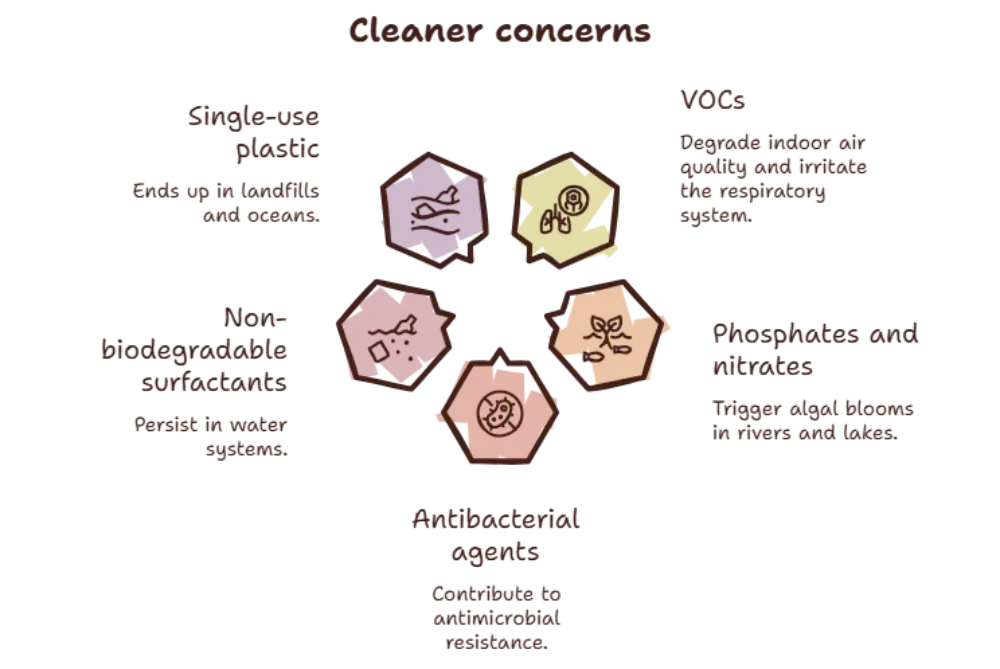
Traditional cleaning products have served households for decades, but research has steadily revealed a less comfortable picture about what they leave behind. Many contain volatile organic compounds (VOCs) that evaporate into indoor air and contribute to respiratory irritation, headaches, and long-term health issues. Phosphates and synthetic surfactants that flow down drains can disrupt aquatic ecosystems, while plastic packaging adds to the global waste burden.
Indoor air quality is a concern that often goes unaddressed. Studies show that the air inside a typical home can be two to five times more polluted than outdoor air, and cleaning products are a significant contributor. This is especially relevant for households with young children, pregnant women, elderly members, or anyone with asthma or sensitivities.
Key concerns with conventional cleaners include:
- VOCs that degrade indoor air quality and irritate the respiratory system
- Phosphates and nitrates that trigger algal blooms in rivers and lakes
- Antibacterial agents like triclosan that contribute to antimicrobial resistance
- Non-biodegradable surfactants that persist in water systems
- Single-use plastic packaging that ends up in landfills and oceans
Key Benefits of Switching to Eco-Friendly Cleaning Products
Safer for Your Family and Pets
One of the most immediate benefits of eco-friendly cleaning products is the reduction of harmful chemical exposure inside your home. Plant-based formulas are generally free from chlorine bleach, ammonia, synthetic musks, and parabens, meaning surfaces are safer to touch after cleaning and the air you breathe during and after the process is cleaner.
Children crawl on floors. Pets lick their paws. Eco-friendly cleaners dramatically reduce the risk of accidental ingestion or skin irritation for the most vulnerable members of your household.
Gentler on the Environment
Biodegradable ingredients break down naturally in water systems rather than accumulating in rivers, soil, and marine environments. Concentrated formulas reduce the volume of product needed per use, which means fewer bottles produced, less water shipped, and a smaller carbon footprint per clean. Many eco-friendly brands have also committed to carbon-neutral manufacturing and renewable energy sourcing.
Better for Long-Term Skin Health
Repeated exposure to harsh chemical cleaners can strip the natural oils from your skin, leading to dryness, eczema flares, and contact dermatitis. Plant-derived surfactants are far milder and less likely to cause irritation, making eco-friendly dishwashing liquids and surface sprays a sensible choice for anyone who cleans with bare hands regularly.
Transparent Ingredient Labelling
A defining feature of quality eco-friendly cleaning products is ingredient transparency. Responsible brands publish full ingredient lists so you can make an informed decision. This level of honesty is still relatively rare in the conventional cleaning industry, where fragrance compounds can be listed as a single word despite containing dozens of undisclosed chemicals.
What to Look for When Choosing Eco-Friendly Cleaning Products
The green cleaning market has grown rapidly, which means not every product labelled natural or eco truly lives up to the claim. Understanding what to look for helps you cut through greenwashing and invest in products that genuinely deliver on their environmental promise.
Key criteria to evaluate:
- Biodegradable surfactants: Look for ingredients derived from coconut, corn, or sugar cane rather than petroleum
- No phosphates, chlorine bleach, or synthetic fragrances: These are the primary offenders in conventional formulas
- Third-party certifications: Certifications from recognised environmental bodies add an independent layer of credibility
- Recyclable or refillable packaging: Packaging choices matter as much as formula choices
- Concentrated formulas: A concentrated cleaner that you dilute at home means less plastic waste and lower transport emissions
- Clear ingredient disclosure: A trustworthy brand publishes every ingredient, not just the headline actives
Common Certifications That Signal Genuine Eco-Friendly Credentials
Certifications help cut through marketing noise by providing an independent verification that a product meets specific environmental and safety standards. While no single certification covers every aspect of sustainability, each one signals a meaningful commitment.
Recognised certifications to look for:
- ECOCERT: A globally respected organic and natural cosmetics and household product standard
- Leaping Bunny / PETA Cruelty-Free: Confirms no animal testing at any stage of production
- USDA Certified Biobased: Verifies the percentage of ingredients derived from renewable biological sources
- EU Ecolabel: A European standard that limits environmental impact across the full product lifecycle
- EWG Verified: Rated by the Environmental Working Group for safety and ingredient transparency
Eco-Friendly Cleaning Products Room by Room
Kitchen
The kitchen is where grease, food residue, and bacteria demand effective cleaning. Plant-based dish soaps with coconut-derived surfactants cut through grease without synthetic dyes or artificial fragrances. All-purpose sprays with citric acid or white vinegar are excellent for countertops, stovetops, and appliance exteriors. Baking soda remains one of the most effective and versatile scrubbing agents available for tackling burnt residue in pots and pans.
Bathroom
The bathroom environment is where mould, limescale, and bacteria tend to accumulate. Citric acid-based toilet cleaners are powerful against mineral deposits without the choking fumes of chlorine bleach. Tea tree oil and eucalyptus-based sprays provide natural antimicrobial properties for tiles and grout. Castile soap, a pure soap made from olive or coconut oil, is a highly effective and biodegradable option for surfaces, sinks, and bathtubs.
Floors and General Surfaces
For hardwood, tile, and laminate floors, diluted plant-based multi-surface cleaners work beautifully without leaving residue or streaks. Microfibre mops and cloths paired with a simple diluted eco-spray reduce the amount of product needed significantly while achieving a superior clean compared to traditional mops and chemical-heavy floor cleaners.
Laundry
Laundry detergents represent one of the highest-volume cleaning product categories in most households. Concentrated eco-friendly laundry liquids and powder detergents formulated without optical brighteners, synthetic fragrances, or phosphates clean effectively even at lower temperatures, reducing energy consumption as well as chemical load. Laundry strips, a relatively recent innovation, dissolve completely in water and eliminate plastic bottles almost entirely.
Simple DIY Eco-Friendly Cleaning Recipes to Try at Home
Some of the most effective eco-friendly cleaning products never come in a bottle at all. A few pantry staples can handle the majority of household cleaning tasks with zero plastic waste and minimal cost.
All-Purpose Surface Spray
Combine equal parts water and white vinegar in a glass spray bottle. Add 10 drops of tea tree essential oil and 10 drops of lemon essential oil. Shake gently before each use. Effective on countertops, sinks, and glass. Avoid on natural stone surfaces as the acidity can etch marble and granite.
Scrubbing Paste for Tough Stains
Mix half a cup of baking soda with enough liquid castile soap to form a thick paste. Add 5 drops of eucalyptus oil. Apply to sinks, tubs, or grimy stovetops, leave for five minutes, then scrub and rinse. This paste rivals commercial abrasive cleaners without any harsh chemicals.
Natural Glass Cleaner
Combine two cups of water, half a cup of white vinegar, and a quarter cup of rubbing alcohol in a spray bottle. Spray onto glass and wipe with a crumpled sheet of newspaper or a microfibre cloth for a streak-free finish.
Making the Transition: Practical Tips for Switching to Eco-Friendly Cleaning Products
The transition to eco-friendly cleaning products does not have to happen overnight. A gradual approach is both more manageable and more economical since it means using up existing products before replacing them rather than throwing out partially used bottles.
Practical steps to ease the switch:
- Start with the products you use most often, such as all-purpose spray and dish soap, and replace those first
- Research refill stations in your area where you can top up glass or stainless steel bottles with bulk cleaning concentrates
- Join community swap groups or zero-waste Facebook groups where members exchange tips on local stockists
- Give each new product a fair trial of at least two to three weeks before deciding whether it performs well enough
- Keep a small notebook or note on your phone logging which eco products impressed you so you can reorder confidently
The Future of Eco-Friendly Cleaning Products
Innovation in the green cleaning space is accelerating rapidly. Waterless cleaning tablets that dissolve in tap water are gaining mainstream traction, eliminating the need to transport heavy liquid products. Probiotic cleaning sprays, which use beneficial bacterial cultures to outcompete pathogens on surfaces, represent a genuinely new frontier in effective and natural sanitation.
Packaging innovation is also advancing, with brands experimenting with compostable pouches, seaweed-derived capsules, and fully home-compostable wipes. As consumer awareness grows and regulatory pressure on chemical transparency increases, eco-friendly cleaning products are moving from niche alternatives to the mainstream standard.
Frequently Asked Questions
Are eco-friendly cleaning products as effective as conventional ones?
Yes, in most everyday cleaning tasks, eco-friendly cleaning products perform on a par with conventional formulas. Plant-based surfactants, citric acid, and essential oils are highly effective at cutting grease, removing soap scum, and killing bacteria on surfaces. Highly concentrated formulas can even outperform diluted conventional cleaners. The key is using the right product for the right task and allowing adequate contact time where needed.
What does biodegradable mean on a cleaning product label?
Biodegradable means that the ingredients in the product can be broken down by microorganisms in the natural environment within a reasonable time frame, typically 28 days under standard test conditions. This significantly reduces the long-term environmental impact once the product enters waterways or soil through drainage systems.
Are eco-friendly cleaning products safe for children and pets?
Generally, yes. Eco-friendly cleaning products formulated without chlorine bleach, ammonia, synthetic fragrances, and harsh solvents present a far lower risk to children and pets than conventional alternatives. However, it is still important to store all cleaning products out of reach of children and to check individual product labels for any specific precautions, particularly if your pet has known sensitivities.
How can I tell if a product is genuinely eco-friendly or just greenwashed?
Look beyond the label imagery and marketing language. Genuine eco-friendly cleaning products will disclose their full ingredient list, hold recognised third-party certifications such as ECOCERT, Leaping Bunny, or EU Ecolabel, and offer transparent information about their packaging and manufacturing practices on their website. If a brand is vague about ingredients or relies solely on words like natural and green without evidence, that is a red flag.
Do eco-friendly cleaning products cost more than conventional ones?
The upfront unit price of some eco-friendly cleaning products can be higher, but this comparison is often misleading. Concentrated formulas require far less product per use, meaning each bottle goes significantly further than a conventionally sized one. DIY recipes using vinegar, baking soda, and castile soap are also extremely cost-effective. Over the course of a year, many households that make the switch to concentrated or DIY eco-friendly products find their cleaning budget stays the same or even decreases.