Key Highlights: Professional medical cleaning services are essential for infection prevention in clinics and hospitals. These services go beyond standard cleaning, focusing on sanitization and disinfection to meet high cleaning standards. Following strict protocols ensures regulatory compliance and protects patients and staff. Specialized techniques and hospital-grade products are used to reduce cross-contamination. The primary goal is to create a safe and healthy environment for everyone in a healthcare setting. Customizable plans can be created to fit the specific needs of any medical facility.
Introduction
Maintaining a clean and hygienic clinic is not just about appearances; it is a critical part of patient safety and care. In healthcare facilities, the risk of infection is always present, making specialized cleaning protocols a necessity. Professional medical cleaning services provide the expertise and tools required to ensure your clinic is a safe environment for patients, staff, and visitors. Partnering with a dedicated cleaning company helps you meet health standards and provides peace of mind for everyone who walks through your doors.
Understanding Medical Cleaning Services for Clinics
Medical cleaning is a highly specialized service designed specifically for healthcare facilities. Unlike general janitorial work, it involves a rigorous cleaning process focused on sanitizing, disinfecting, and preventing the spread of germs in sensitive environments. This ensures that every part of a clinic, from waiting rooms to exam rooms, meets strict hygiene standards.
The goal of medical office cleaning is to create a safe space that minimizes health risks. These cleaning services use specific protocols and hospital-grade products to decontaminate surfaces and reduce healthcare-associated infections (HAIs). This attention to detail is vital for protecting both vulnerable patients and healthcare workers. We’ll explore the specific services included and why this level of clean is so important.
Key Differences Between Medical Cleaning and Standard Commercial Cleaning
While both medical cleaning and standard commercial cleaning aim to create a tidy space, their priorities are fundamentally different. Commercial cleaning typically focuses on aesthetics—making an office or retail space look clean and presentable. Its main goal is general hygiene and appearance.
Medical cleaning, on the other hand, prioritizes infection control and patient safety above all else. This requires adherence to strict healthcare cleaning standards and best practices established by health organizations. The staff performing these duties are trained in handling potentially hazardous materials and preventing cross-contamination, a skill set not required for standard cleaning.
The distinction is clear when you compare their methods and objectives.
| Aspect | Medical Cleaning | Standard Commercial Cleaning |
|---|---|---|
| Primary Goal | Infection prevention and control; patient and staff safety. | General cleanliness and appearance. |
| Cleaning Agents | EPA-registered, hospital-grade disinfectants. | General-purpose cleaning solutions. |
| Staff Training | Specialized training in infection control, bloodborne pathogens, and healthcare regulations. | Basic training on cleaning tasks and chemical use. |
| Focus Areas | High-touch surfaces, patient contact areas, sterile environments. | Floors, trash removal, and visible dust or dirt. |
Services Commonly Included in Medical Cleaning for Clinics
Professional healthcare cleaning services offer a comprehensive suite of tasks designed to meet the unique demands of healthcare settings. The cleaning standards are exceptionally high, focusing on detailed disinfection procedures that target harmful pathogens. These services are tailored to the specific needs of a clinic, whether it’s a small physician’s office or a large outpatient center.
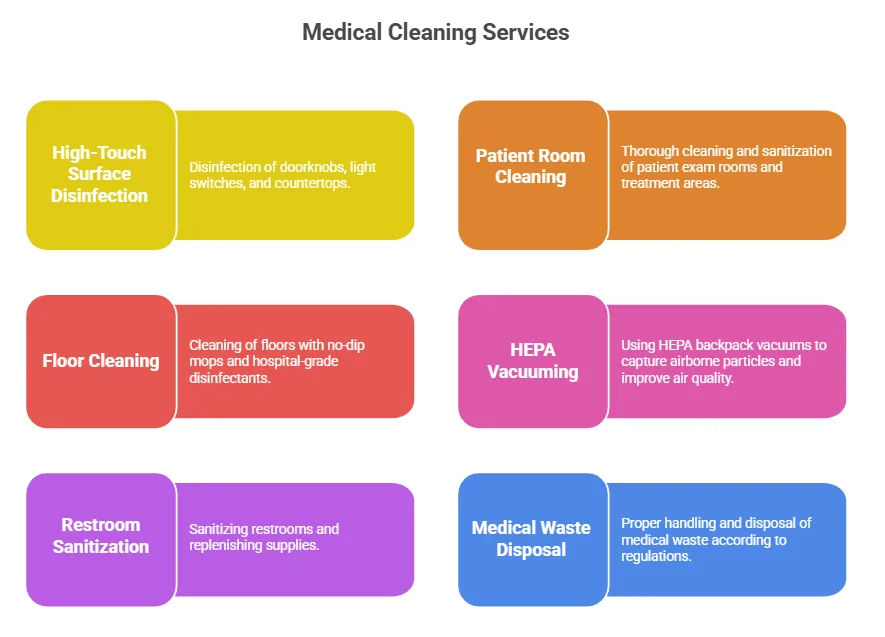
Instead of a one-size-fits-all approach, a medical cleaning plan covers all critical areas to prevent the spread of germs. This includes everything from public waiting areas to private examination rooms. The ultimate goal is to ensure every surface is thoroughly sanitized and safe for patient contact.
Commonly included cleaning services are:
- Disinfection of high-touch surfaces like doorknobs, light switches, and countertops.
- Thorough cleaning and sanitization of patient exam rooms and treatment areas.
- Cleaning of floors with no-dip mops and hospital-grade disinfectants to prevent cross-contamination.
- Using HEPA backpack vacuums to capture airborne particles and improve air quality.
- Sanitizing restrooms and replenishing supplies.
- Proper handling and disposal of medical waste according to regulations.
Why Specialized Cleaning is Critical in Healthcare Settings
Healthcare facilities present unique challenges that standard commercial spaces do not. With a constant flow of patients, many of whom may have compromised immune systems, the infection risk is significantly higher. Germs, bacteria, and viruses can easily spread through the air or linger on surfaces, posing a threat to everyone in the building.
For this reason, specialized medical cleaning is not a luxury but a necessity. It addresses these risks head-on with targeted methods designed to eliminate pathogens and prevent outbreaks. Understanding these specific risks, such as cross-contamination and healthcare-associated infections, is the first step in creating a truly safe environment. Let’s look at how this is achieved through infection control and safety measures.
Infection Control and Cross-Contamination Prevention
The cornerstone of any reputable medical cleaning program is a strict focus on infection control. The primary objective is to stop the spread of germs before they can cause illness. Professional healthcare cleaning services achieve this by using a systematic approach built on proven disease control methods and high cleaning standards. This includes using hospital-grade disinfectants that are proven to kill 99.9% of bacteria and viruses.
A key technique in preventing cross-contamination is the use of color-coded microfiber cloths. Different colors are designated for specific areas, such as restrooms versus patient rooms. This simple but effective practice ensures that germs from a high-risk area are not transferred to a clean one.
Furthermore, professionals are trained to clean in a specific order, typically from the cleanest areas to the dirtiest, to contain contaminants. They also use tools like no-dip flat mops, which ensure that only clean water and solution are applied to floors. These meticulous processes are essential for maintaining a hygienic environment and protecting patient health.
Protecting Patient, Staff, and Visitor Safety
A clean clinic directly contributes to patient safety and confidence. When patients see that a facility is visibly well-maintained, it reassures them that their health is the top priority. Proper cleaning is fundamental to creating a safe environment where patients can receive care without the added worry of healthcare-associated infections (HAIs).
Protecting healthcare staff is just as important. Doctors, nurses, and administrative personnel are on the front lines and exposed to pathogens daily. A professionally cleaned workspace reduces their risk of falling ill, which in turn improves productivity and morale. These cleaning services create a healthier setting for everyone, from the front desk to the operating room.
Professional companies take specific steps to ensure this level of safety. They use advanced equipment like HEPA backpack vacuums that capture 99% of airborne particles, improving overall air quality. By following rigorous protocols built on CDC guidelines, such as disinfecting all high-touch surfaces, they actively reduce the presence of harmful germs and create a facility that is safe for all.
Essential Standards and Certifications for Medical Cleaning Services
When choosing a partner for your clinic’s cleaning needs, it’s vital to select a company that adheres to the highest industry standards. Medical cleaning companies are not all created equal; the best ones are committed to regulatory compliance and follow established healthcare regulations. This ensures they provide a service that is not only effective but also legally sound.
Looking for a company that can demonstrate its commitment through recognized certifications and training is crucial. This proves their team has the specialized knowledge required to clean a medical environment safely and effectively. The following sections will cover the specific guidelines and certifications you should look for.
Regulatory Guidelines for Clinic Cleaning in the United States
In the United States, medical cleaning is governed by health regulations set forth by several key organizations. The Centers for Disease Control and Prevention (CDC) and the Association of periOperative Registered Nurses (AORN) provide foundational guidelines for infection control and healthcare cleaning standards. Reputable cleaning companies build their protocols around these expert recommendations.
Achieving regulatory compliance means more than just a surface-level clean. It involves using EPA-registered, hospital-grade disinfectants and following precise procedures for cleaning different areas of a facility. This structured approach helps prevent the spread of infections and ensures your clinic is always prepared for an inspection or audit.
By partnering with a service that understands and implements these guidelines, you can be confident that your facility meets the required cleaning standards. This commitment to compliance is a critical factor in protecting your patients, your staff, and your clinic’s reputation. It demonstrates a dedication to providing the highest level of safety and care.
Recognized Certifications and Training for Cleaning Professionals
Beyond following guidelines, the quality of medical cleaning services depends heavily on the training of the professionals performing the work. Top-tier companies invest in comprehensive training programs that go far beyond basic cleaning techniques. This ensures their staff understands the unique risks and responsibilities associated with healthcare regulations.
A certified team is trained to handle specific challenges found in medical settings. This includes understanding how to manage bloodborne and airborne pathogens, often based on materials provided by organizations like the National Safety Council (NSC). This specialized knowledge is crucial for maintaining safety and adhering to industry standards. When hiring a cleaning service, always ask about their training and certification processes.
Look for companies that provide their teams with ongoing education in areas such as:
- The proper use of hospital-grade disinfectants and personal protective equipment (PPE).
- Protocols for preventing cross-contamination, including color-coding systems.
- Compliance with CDC, AORN, and other relevant healthcare guidelines.
- Training on bloodborne pathogens and contamination cleaning procedures.
Frequently Asked Questions
How often should a clinic schedule professional medical cleaning?
The ideal cleaning schedule depends on your clinic’s size, patient volume, and the types of services you provide. However, regular cleaning is essential for any healthcare facility. Most clinics benefit from daily cleaning services to manage high-touch surfaces and maintain a safe environment. A professional provider can help you create a customized cleaning process.
Can medical cleaning services be customized for different clinics?
Absolutely. Professional medical cleaning services are not one-size-fits-all. A reputable company will assess your facility’s needs to create a customized plan. Whether you run a dental office, a dialysis center, or an urgent care clinic, the services can be tailored to address the specific needs and challenges of your unique healthcare setting.
What should I look for when hiring a medical cleaning company?
When hiring a medical cleaning company, look for experience in healthcare settings, a commitment to regulatory compliance, and proof of certified training. Check for positive reviews and ask if they follow CDC and AORN cleaning standards. A professional company will always be transparent about its methods and offer a free quote.
Conclusion
In conclusion, prioritizing a specialized medical cleaning service for clinics is not just a matter of hygiene; it’s essential for maintaining patient safety and upholding the standards of care in healthcare environments. By differentiating between regular cleaning and medical-grade cleaning, clinics can significantly reduce the risk of infection and cross-contamination. Moreover, understanding the necessary certifications and regulatory guidelines ensures that the cleaning services you employ are compliant with industry standards. Your patients, staff, and visitors deserve a clean and safe environment. If you’re ready to elevate the cleanliness and safety of your clinic, reach out today for a consultation to find the right medical cleaning service tailored to your needs.