Key Highlights: Dirty locker rooms are a significant health hazard, acting as a breeding ground for bacteria, viruses, and fungi. Persistent odors often signal underlying issues like mold or bacteria buildup that require deep cleaning. Following best practices, such as using effective cleaning products and cleaning from top to bottom, is crucial for hygiene. The frequency of cleaning should be based on usage, with high-traffic locker rooms requiring daily attention. Facility managers can prevent health hazards by implementing a consistent cleaning schedule for all locker room surfaces. Professional Locker Room cleaning services by Naomi’s Cleaning Services ensure all areas, including high-touch surfaces and equipment, are thoroughly sanitized.
Introduction
Locker rooms are essential spaces in gyms, schools, and community centers, but they can quickly become breeding grounds for germs if not maintained. Due to high humidity and constant foot traffic, these areas require more than just a quick wipe-down. Implementing proper cleaning strategies is key to ensuring the health and safety of every member and athlete. This guide will cover the best practices for keeping your locker rooms hygienic, from tackling common challenges to establishing a consistent cleaning routine that works.
Locker Room Cleaning in Carlton, OR – Why It Matters for Health and Safety
Keeping locker rooms clean is about much more than just appearances; it’s a fundamental aspect of health and safety. These high-traffic areas, filled with moisture and warmth, create the perfect breeding ground for bacteria, mold, and viruses. Without quality locker room cleaning, you risk exposing users to a variety of dangerous pathogens.
For facilities in Carlton, McMinnville, and across Yamhill County, ensuring a sanitary environment is vital for your reputation and the well-being of your community. Neglecting hygiene can lead to outbreaks and diminish trust. Let’s explore the common challenges and risks associated with unclean locker rooms.
Common Challenges: Moisture, Sweat, Mold, and Odors
Locker rooms present a unique set of cleaning challenges. The combination of humidity from showers, sweat, and poor ventilation turns these spaces into a perfect petri dish for germs. Persistent odors are often the first sign that something is wrong, indicating the presence of bacteria or mold that regular cleaning might be missing.
Even surfaces that appear clean can hide invisible threats. These great hiding places for germs can quickly multiply if not addressed with thorough sanitation. Key challenges include:
- Bacterial growth on benches, floors, and damp surfaces.
- Mold development in poorly ventilated areas or behind fixtures.
- Buildup of body oils and sweat that hasn’t been properly removed.
- Lingering moisture that encourages fungal growth.
Addressing these issues requires a deep understanding of where germs thrive. From drains to porous tile grout, every inch of the locker room needs attention to eliminate the source of moisture and odors, not just mask them.
Risks of Poor Locker Room Hygiene in Schools and Fitness Centers
When locker room hygiene is neglected, the health risks extend to everyone who uses the facility. Schools and fitness centers become hotspots for transmitting infections if surfaces are not properly disinfected. From shared benches to gym equipment, the potential for cross-contamination is high. A simple lapse in cleaning can lead to widespread issues.
Common infections can spread easily in these environments. Athlete’s foot, a type of fungal infection, thrives on damp floors and shower areas. Viral infections like the flu and norovirus can be transmitted through high-touch surfaces. Even more serious bacterial infections can occur, posing a significant threat to health.
Understanding these risks is the first step toward preventing them. Below is a look at common pathogens found in locker rooms.
| Infection Type | Examples | How It Spreads |
|---|---|---|
| Fungal Infections | Athlete’s foot, Ringworm | Walking barefoot on contaminated floors and wet surfaces. |
| Bacterial Infections | Staph/MRSA, Strep Throat | Contact with unclean surfaces, shared towels, or gym equipment. |
| Viral Infections | Common Cold, Flu, Plantar Warts | Touching contaminated handles, faucets, and benches. |
Best Practices for Maintaining a Clean Locker Room
Maintaining a consistently clean locker room requires a structured approach. Adhering to best practices ensures that you not only clean surfaces but also effectively disinfect them, preventing germs from taking hold. A key strategy is to clean from top to bottom, which prevents re-soiling areas you’ve already sanitized. For instance, start with shower walls before moving to locker room floors.
This systematic process is crucial for tackling all areas, especially high-risk zones like locker room restrooms and damp floors. Next, we will discuss the right products and a cleaning schedule to keep your facility safe and welcoming.
Recommended Cleaning Products for Effective Disinfection
Choosing the right cleaning products is fundamental to effective locker room sanitation. Not all cleaners are created equal, and using the wrong ones can leave harmful pathogens behind. Look for disinfectants that are approved by the Environmental Protection Agency (EPA) and proven to kill a broad spectrum of bacteria and viruses.
Products with an active ingredient like hydrogen peroxide are a great choice because they are tough on germs yet gentle on locker room surfaces. These disinfectants often break down into harmless oxygen and water, leaving less residue behind. This makes them safer for users and the environment.
When selecting products, consider the following:
- Look for disinfectants with a fast, proven kill time for bacteria (BS EN 1276) and viruses (BS EN 14476).
- Choose cleaners specifically formulated to remove body oils, soap scum, and limescale.
- Use color-coded tools to prevent cross-contamination between restrooms and changing areas.
- Ensure products are suitable for the various surfaces in your facility, from metal lockers to tile floors.
Regular Cleaning Frequency to Prevent Smells and Hazards
Consistency is the key to preventing odors and health hazards in locker rooms. Since these spaces are constantly exposed to moisture and germs, cleaning must be performed on a regular basis. The ideal cleaning frequency depends on usage trends; a high-traffic facility will require more attention than one with fewer locker room users.
Establishing a schedule based on peak usage times ensures that bacteria and grime don’t have a chance to accumulate. This proactive approach acts as preventative maintenance, protecting both your members and your facility. By staying ahead of potential issues, you can maintain a hygienic and inviting environment for everyone.
Here is a recommended cleaning schedule for most facilities:
| Frequency | Cleaning Tasks |
|---|---|
| Daily | Disinfect all high-touch surfaces, clean floors, and sanitize restrooms. |
| Weekly | Deep clean showers, sanitize locker interiors, and clean ventilation systems. |
| Monthly | Perform a full deep clean of all surfaces, including under and behind fixtures. |
| As Needed | Immediately address spills and biohazard incidents. |
Step-by-Step Locker Room Cleaning Procedures by Naomi’s Cleaning
At Naomi’s Cleaning, we know that proper locker room cleaning is a detailed process. Our approach ensures superior cleaning results by focusing on every corner of your facility. We go beyond surface wiping to eliminate the hidden locker room dangers that can compromise health and safety. Our team is trained to systematically address all areas, from floors to ceilings.
Our procedures target high-traffic zones, persistent odors, and even personal storage spaces to deliver a truly hygienic environment. Here’s a closer look at how we tackle the toughest cleaning challenges to keep your members safe.
Addressing High-Traffic Areas and Persistent Odors
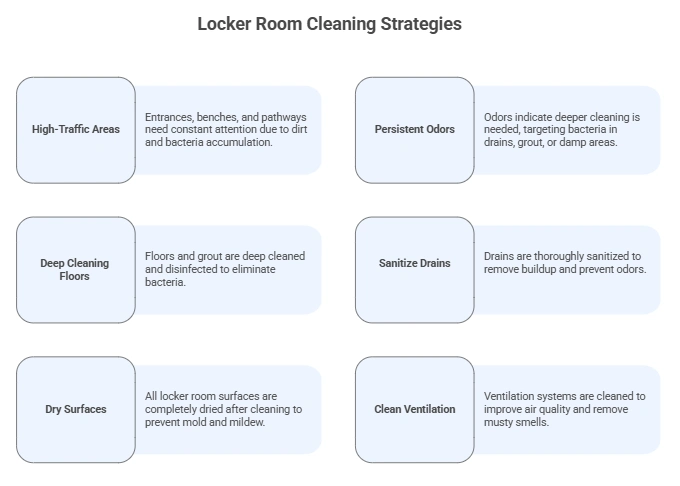
High-traffic areas in locker rooms, such as entrances, benches, and pathways to showers, accumulate dirt and bacteria faster than other spots. These zones require constant attention, especially during peak times. One of the great tips for managing these areas is to create a cleaning schedule that aligns with your facility’s busiest hours.
Persistent odors are a clear sign that deeper cleaning is needed. Instead of masking smells with air fresheners, it’s crucial to target the source. Odors often stem from bacteria thriving in drains, grout, or damp areas that have not been thoroughly dried.
Our team at Naomi’s Cleaning focuses on eliminating the cause of odors by:
- Deep cleaning and disinfecting floors and grout.
- Thoroughly sanitizing drains to remove buildup.
- Ensuring all locker room surfaces are completely dry after cleaning.
- Cleaning ventilation systems to improve air quality and remove musty smells.
Cleaning Athletic Equipment and Personal Storage Spaces
Cleaning shouldn’t stop at the locker room floor. Athletic and fitness equipment, along with personal storage spaces like lockers, are major touchpoints for germs. Any shared item, from wrestling mats to free weights, can contribute to the spread of infections if not regularly disinfected. Equipment rooms and storage areas need just as much attention as the main changing area.
It is important to provide a clean and safe space for locker room users to store their belongings. Emptying lockers and cleaning them internally prevents the buildup of dust, moisture, and bacteria. This ensures that the contents remain clean and free from contamination.
Our comprehensive cleaning includes:
- Emptying and dusting lockers before disinfecting the interior and exterior.
- Wiping down all gym equipment with an EPA-approved disinfectant.
- Paying special attention to handles, hooks, and other high-touch points.
- Using appropriate cleaning methods for different materials, such as metal lockers and upholstered benches.
Conclusion
In summary, maintaining a hygienic locker room is crucial for the health and safety of athletes and members. The combination of moisture, sweat, and heavy foot traffic creates an environment prone to bacteria and odors, which can negatively impact user experience. By implementing best practices and regular cleaning procedures, you can ensure a safe and inviting space for everyone. Naomi’s Cleaning, with our impressive 215+ Google reviews and 4.7-star rating, is here to provide expert locker room cleaning in Carlton, OR, and surrounding areas. Take the first step towards a cleaner facility today – request a cleaning quote or consultation and let us help you create a hygienic space for all.
Frequently Asked Questions
What makes Naomi’s Cleaning stand out in Yamhill County and Willamette Valley?
Naomi’s Cleaning stands out due to our technical expertise and commitment to superior cleaning. With over 215 Google reviews and a 4.7-star rating, our reputation is built on trust. We give special attention to the unique needs of locker rooms, ensuring every corner is in good working order and hygienically clean.
How can facility managers proactively improve locker room maintenance?
Facility managers can improve locker room maintenance by establishing a preventative maintenance schedule that accounts for peak times. This includes daily spot-checks, stocking supplies, and using the preferred tools for disinfection. Regular deep cleaning by a professional service is also a key proactive step.
Which types of facilities benefit most from professional locker room cleaning?
Nearly all facilities with locker rooms benefit from professional cleaning, especially high-traffic ones like schools, gyms, and fitness centers. Whether it’s for a hotel guest or a health club member, a professionally cleaned space enhances the user experience and protects them from health risks across all different areas of your facility.