Rust stains in a toilet bowl are one of the most stubborn household problems. If you want to remove rust stains from toilet bowl naturally, the good news is that you do not need harsh chemicals to get the job done. With a few pantry staples and a little patience, you can restore your toilet bowl to a clean, spotless condition without exposing your bathroom to strong fumes or damaging chemicals.
These orange or brownish stains usually appear along the waterline or under the rim, and they tend to return again and again if the root cause is not addressed. In this guide, you will learn why rust stains form, which natural ingredients actually work, and how to keep your toilet bowl stain free for good.
What Causes Rust Stains in a Toilet Bowl
Rust stains are not caused by dirt. They form when iron and other minerals present in your water supply oxidize and settle on the porcelain surface. This is extremely common in homes that rely on well water or older plumbing systems where iron pipes have started to corrode.
Every time the toilet is flushed, a small amount of mineral rich water touches the same spots, and over time these minerals build up into a visible stain. Hard water areas are especially prone to this issue, which is why rust stains often reappear even after a thorough cleaning.
Common Signs of Rust Buildup
You may notice orange or reddish brown rings near the waterline, streaks running down the inside of the bowl, or a rough texture when you touch the stained area. These are all indicators that mineral deposits have hardened on the surface and require a targeted natural cleaning approach.
Is It Safe to Use Natural Cleaners on Rust Stains
Yes, natural cleaning methods are safe for both your toilet bowl and your household. Unlike commercial rust removers that contain harsh acids, natural ingredients like vinegar, baking soda, and citric acid are gentle on porcelain while still being effective against mineral stains.
Natural cleaners are also a better choice if you have children, pets, or family members sensitive to strong chemical smells. They will not damage the glaze on your toilet bowl when used correctly, and most of the ingredients are already sitting in your kitchen cabinet.
Natural Ways to Remove Rust Stains from Toilet Bowl
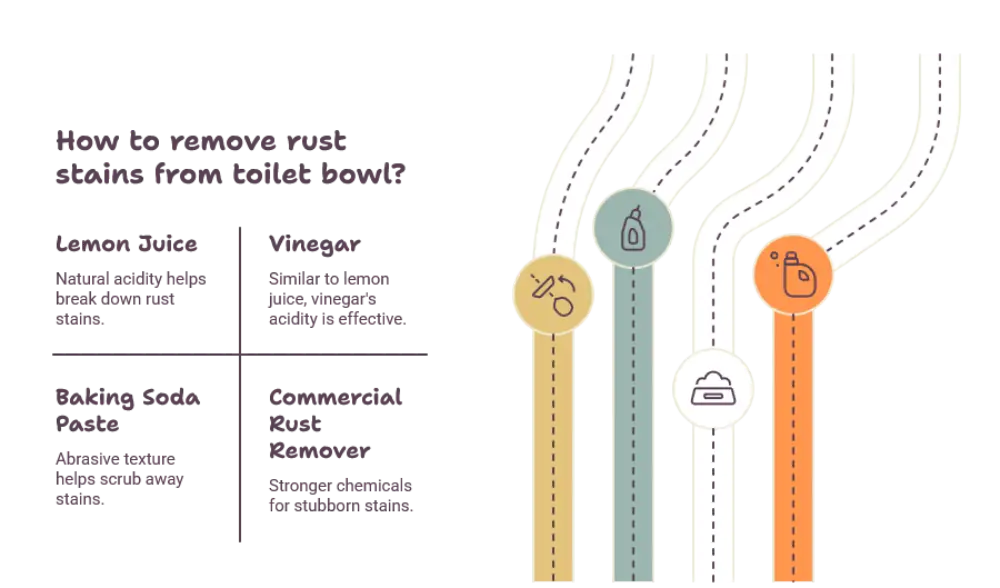
There are several proven natural methods that work well on rust stains. Depending on how severe the staining is, you may need to try more than one approach or repeat the process a few times.
Baking Soda and Vinegar
This classic combination is one of the most effective natural rust removers. Sprinkle a generous layer of baking soda over the stained areas, then pour white vinegar directly on top. The mixture will fizz and bubble, which helps lift the mineral deposits from the porcelain. Let it sit for around thirty minutes, then scrub with a toilet brush and flush.
Borax and Lemon Juice
Borax has natural abrasive and cleaning properties that pair beautifully with the acidity of lemon juice. Mix borax with fresh lemon juice until it forms a thick paste, apply it directly to the rust stains, and let it work for about an hour. The citric acid breaks down the iron deposits while the borax scrubs them away.
Pumice Stone Method
A wet pumice stone can physically remove rust stains without scratching porcelain, as long as both the stone and the toilet bowl surface remain wet at all times. Gently rub the stone over the stained area in small circular motions. This method works particularly well on stains that have hardened over a long period.
Cola Soak Method
The mild acidity in cola drinks can help break down rust deposits naturally. Pour enough cola into the bowl to cover the stained areas, let it sit overnight, then scrub and flush in the morning. While this method takes longer, it requires almost no effort during the soaking period.
Salt and Lime Combination
Mix coarse salt with fresh lime juice to create a natural abrasive paste. Apply the mixture to the rust stains and let it sit for about twenty minutes before scrubbing. The salt provides gentle abrasion while the lime juice dissolves mineral buildup.
Step by Step Cleaning Process
Start by turning off the water supply and flushing the toilet to lower the water level so the stained porcelain is fully exposed. Choose your preferred natural method from above and apply it generously to every stained spot. Allow the solution enough time to break down the mineral deposits rather than scrubbing too soon.
Once the waiting period is over, use a toilet brush or a soft scrub pad to gently work on the stains. Avoid metal scrubbers, as they can scratch the porcelain and make future stains stick even more easily. Finish by turning the water supply back on and flushing thoroughly to rinse away any residue.
Dealing with Stubborn Stains
For rust stains that refuse to budge, combine two methods together, such as applying the baking soda and vinegar paste first, followed by gentle pumice stone scrubbing. Repeating the process over two or three days often achieves results that a single attempt cannot.
Tips to Prevent Rust Stains from Coming Back
Preventing rust stains is far easier than removing them repeatedly. Wiping down the waterline area with a natural cleaner once a week stops mineral deposits from building up in the first place. Keeping the toilet lid closed when not in use also reduces mineral exposure from splashing water.
If your home relies on well water, consider testing your water for iron content, since high iron levels are the leading cause of recurring rust stains. Installing a water softener or iron filter can dramatically reduce staining across your entire bathroom, not just the toilet bowl.
Regular Maintenance Habits
Cleaning your toilet bowl at least twice a week with a natural vinegar rinse keeps mineral deposits from hardening. A quick scrub with a soft brush during your regular bathroom cleaning routine prevents small deposits from turning into deep set stains.
When to Call a Plumber
If rust stains keep returning within days of cleaning, or if you notice rust colored water coming from your taps as well, the issue may be linked to corroding pipes rather than the toilet itself. A licensed plumber can inspect your plumbing system and recommend a long term solution such as pipe replacement or a whole home filtration system.
Conclusion
Rust stains in a toilet bowl are frustrating, but they are completely manageable using natural ingredients you likely already have at home. Baking soda, vinegar, borax, lemon juice, and pumice stones all offer safe and effective ways to lift mineral deposits without relying on harsh chemicals. Combine regular maintenance with the right natural method, and your toilet bowl can stay bright, clean, and stain free for the long run.
Frequently Asked Questions
What causes rust stains in a toilet bowl?
Rust stains form when iron and other minerals in your water supply oxidize and settle on the porcelain surface, especially in homes with well water or aging pipes.
Is vinegar strong enough to remove rust stains from a toilet bowl?
Yes, white vinegar combined with baking soda is highly effective at breaking down mineral deposits and lifting rust stains from porcelain surfaces.
How often should I clean my toilet bowl to prevent rust stains?
Cleaning your toilet bowl two to three times a week with a natural solution helps prevent mineral deposits from hardening into visible stains.
Can a pumice stone damage my toilet bowl?
A pumice stone is safe for porcelain as long as it stays wet during use, since a dry stone can scratch the surface.
Why do rust stains keep coming back after cleaning?
Recurring rust stains usually indicate high iron content in your water supply or corroding pipes, which may require a water softener or a plumber’s inspection.