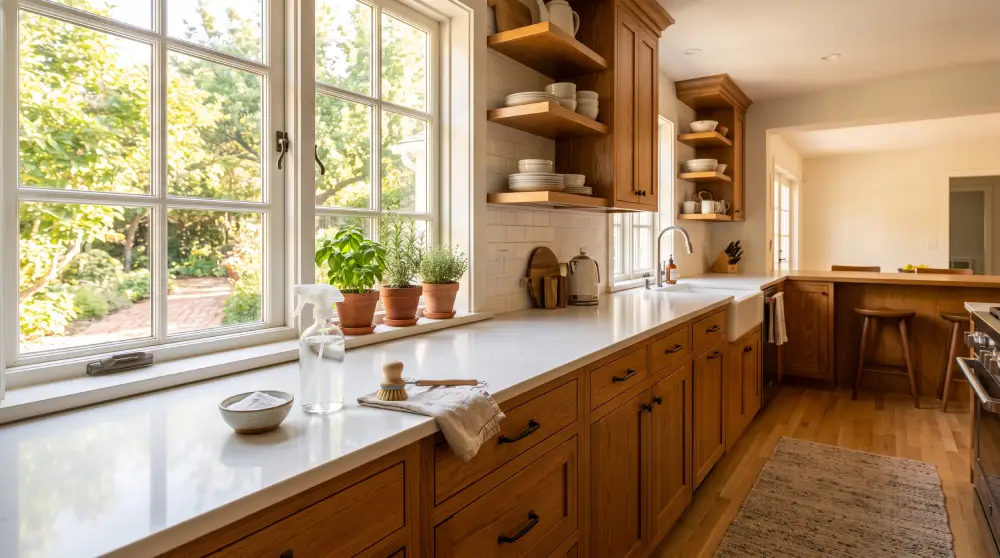
If you have ever stood in your kitchen and noticed that sticky, yellowish film coating your cabinet doors, you already know how stubborn cooking grease can be. Learning how to remove grease from kitchen cabinets naturally is one of the most searched home cleaning questions for a reason. Over time, grease, oil vapors, and cooking residue build up into a thick layer that feels almost impossible to lift. The good news is that you do not need a cabinet full of chemical cleaners to get the job done. Nature has already provided us with some of the most powerful grease cutters available, and most of them are already sitting in your pantry right now.
Why Grease Builds Up on Kitchen Cabinets
Every time you fry, sauté, or boil anything on the stovetop, microscopic droplets of oil and grease float through the air and settle onto nearby surfaces. Your kitchen cabinets, especially those above and beside the stove, absorb these droplets day after day. Over weeks and months, this invisible film becomes a thick, sticky layer that attracts dust and dirt, turning into a dark, grimy coating that can feel almost waxy to the touch. The longer it sits, the harder it becomes to remove, which is why regular natural cleaning matters so much. Understanding how grease behaves on different cabinet materials, whether wood, laminate, or painted surfaces, helps you choose the right natural approach and avoid accidentally damaging the finish while cleaning.
Why Natural Methods Work Better Than You Think
Many people assume that only heavy-duty commercial degreasers can tackle serious cabinet grease, but this is simply not true. Natural ingredients like baking soda, white vinegar, dish soap, lemon juice, and olive oil work through chemistry that is perfectly suited to breaking down cooking grease. Baking soda is a mild abrasive that physically lifts grease while also reacting chemically to neutralize fatty acids. White vinegar cuts through grime with its acidic properties, while dish soap breaks down oil molecules at the molecular level because it contains surfactants that attract both water and grease simultaneously. Using these ingredients not only protects your family from unnecessary chemical exposure but also keeps your cabinet finishes safer from harsh solvents that can strip paint, dull lacquer, or warp wood grain over time.
How to Remove Grease from Kitchen Cabinets Naturally with Baking Soda
Baking soda paste is arguably the most effective single natural solution for how to remove grease from kitchen cabinets naturally. It works on wood, painted surfaces, and laminate with equal effectiveness.
To make the paste, combine three parts baking soda with one part warm water and stir until it reaches a thick, spreadable consistency. Apply the paste directly onto the greasy cabinet surface using a soft cloth or an old toothbrush for crevices and carved details. Allow it to sit for two to three minutes so it can begin loosening the grease layer. Then use a circular scrubbing motion with a damp cloth to lift the grime. You will notice the cloth picking up brownish residue, which is the old grease releasing from the surface. Wipe clean with a fresh damp cloth and dry immediately with a soft towel to prevent moisture from soaking into the wood.
Key points to remember when using baking soda:
It is mildly abrasive, so always use a soft cloth rather than a scrub pad on wood or painted cabinets. Test on an inconspicuous area first. Rinse well to avoid a white powdery residue drying on the surface.
How to Remove Grease from Kitchen Cabinets Naturally Using White Vinegar
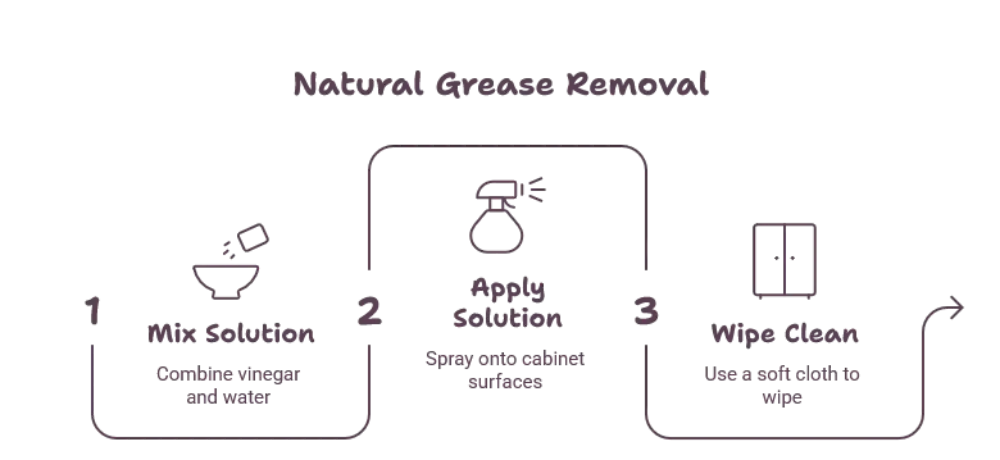
White vinegar is a powerhouse natural degreaser that many homeowners already have in their kitchens. Its mild acidity makes it excellent for cutting through grease without damaging most cabinet finishes when used correctly.
Mix equal parts white vinegar and warm water in a spray bottle. Spray directly onto the greasy surface and let it sit for one to two minutes. Wipe with a microfiber cloth using firm, circular motions. For particularly stubborn patches, you can apply undiluted vinegar directly to a cloth and hold it against the grease for a few minutes before wiping. Always follow up with a clean damp cloth to remove vinegar residue, and then dry the surface thoroughly.
One important note: avoid using vinegar on natural stone surfaces or on cabinets with a wax finish, as the acid can dull or damage these materials. On standard painted wood or laminate cabinets, however, diluted vinegar is both safe and highly effective.
How to Remove Grease from Kitchen Cabinets Naturally with Dish Soap and Warm Water
Never underestimate the power of simple liquid dish soap combined with warm water. This combination is often the first line of defense against how to remove grease from kitchen cabinets naturally, and for light to moderate grease buildup, it is usually all you need.
Add a few drops of liquid dish soap to a bowl of warm water and mix gently until sudsy. Dip a microfiber cloth into the mixture, wring it out so it is damp but not soaking wet, and wipe down the cabinet surfaces. The warmth of the water helps soften the grease while the soap emulsifies it, allowing it to transfer to the cloth. Rinse your cloth frequently so you are not just spreading grease around. Finish by wiping with clean water and drying completely.
Lemon Juice and Salt for Stubborn Grease Spots
When you have particularly stubborn patches of grease that have hardened over time, a combination of lemon juice and salt offers a natural scrubbing solution with degreasing power. The citric acid in lemon juice dissolves grease while the salt crystals provide gentle abrasion to lift the residue physically.
Sprinkle a small amount of salt directly onto the greasy spot, then squeeze fresh lemon juice over it. Let the mixture sit for five minutes, then scrub gently with a soft cloth. The fizzing reaction helps lift the grease from the surface. Wipe clean with a damp cloth and dry immediately. This method is especially satisfying on older, hardened grease that has resisted other treatments.
The Olive Oil and Baking Soda Trick for Wood Cabinets
Here is a method that surprises many people: olive oil combined with baking soda is not only safe for wood cabinets but can actually condition and restore the wood while cleaning it. This works because the baking soda cuts the kitchen grease while the olive oil nourishes and protects the wood grain, leaving it with a subtle natural sheen rather than a dried out appearance.
Mix two parts baking soda with one part olive oil to create a thick paste. Apply it to the cabinet surface with a soft cloth, rubbing in the direction of the wood grain. Work in small sections, allowing the paste to sit briefly before buffing it off with a clean dry cloth. The result is a cabinet that is clean, conditioned, and lightly polished without any synthetic chemicals.
How to Remove Grease from Kitchen Cabinet Hardware Naturally
Cabinet handles, knobs, and hinges accumulate just as much grease as the cabinet surfaces themselves, and they are often overlooked during cleaning. Soak removable hardware in a bowl of warm water mixed with a generous splash of white vinegar and a few drops of dish soap for fifteen to twenty minutes. For hardware that cannot be removed, apply a baking soda paste with an old toothbrush, scrubbing gently around the edges and crevices before rinsing with a damp cloth.
How Often Should You Clean Kitchen Cabinets Naturally
Consistency is the secret to keeping cabinets looking clean without heavy scrubbing. A quick wipe down with diluted dish soap solution once a week prevents grease from ever building up into the stubborn layers that require intensive treatment. A more thorough natural cleaning with baking soda or vinegar should be done monthly, particularly on cabinets near the stove. Doing a deep natural clean every three to four months keeps the surfaces in excellent condition and extends the life of the cabinet finish significantly.
Protecting Cabinets After Natural Cleaning
Once your cabinets are clean, consider wiping them with a very thin layer of coconut oil or olive oil using a soft cloth to create a light protective barrier that makes future grease less likely to bond to the surface. This natural conditioning step also helps prevent the wood from drying out and cracking over time.
Frequently Asked Questions
What is the fastest natural way to remove grease from kitchen cabinets?
A paste made from baking soda and warm water applied directly to the surface and left for two to three minutes before wiping is the fastest and most effective natural method for cutting through kitchen cabinet grease.
Is white vinegar safe to use on all cabinet types?
White vinegar diluted with equal parts water is safe for most painted, laminate, and sealed wood cabinets. However, avoid using it on wax-finished wood or natural stone surfaces, as the acidity can dull or damage those materials.
Can I use lemon juice alone to remove grease from cabinets?
Lemon juice works best combined with salt, which provides gentle abrasion alongside the degreasing power of citric acid. On its own, lemon juice may be too mild for heavy grease buildup but works well for light residue and surface maintenance.
How do I prevent grease from building up on cabinets in the first place?
Using a kitchen splatter guard while cooking, running the exhaust fan every time you use the stove, and doing a quick weekly wipe down with diluted dish soap solution are the most effective ways to prevent significant grease buildup on your cabinets.
Will natural cleaners damage painted or lacquered cabinet finishes?
When used correctly, diluted natural cleaners like baking soda paste, vinegar solution, and dish soap are gentle enough for painted and lacquered surfaces. Always test in a hidden area first, avoid abrasive scrubbing pads, and dry the surface immediately after cleaning to protect the finish.