You stand at the precipice of a significant paradigm shift, a movement towards a more conscientious and sustainable approach to facility maintenance: green cleaning. It’s not merely a trend; it’s an evolving standard rooted in the understanding that the methods and materials you employ in cleaning have far-reaching implications, extending beyond the immediate shine of a surface. This article serves as your guide through the foundational principles of green cleaning, dissecting its origins, practical applications, and the tangible benefits it offers. Consider it a blueprint for reimagining your cleaning protocols, transforming them from a reactive necessity into a proactive strategy for health and environmental stewardship.
Your journey into green cleaning begins with an exploration of its origins and the compelling factors that necessitated its emergence. Historically, cleaning practices prioritized efficacy above all else, often at the expense of human health and ecological balance. The strong, often acrid, scents of traditional cleaning agents were once synonymous with cleanliness, a metaphor for germ annihilation. However, you are now equipped with an elevated understanding of the true cost of such efficacy.
The Problem with Conventional Cleaning
You must acknowledge the inherent flaws in conventional cleaning. Think of it as a double-edged sword: it eradicates visible dirt and grime, but simultaneously introduces a host of potentially harmful substances into your environment.
- Hazardous Chemical Profiles: Many traditional cleaning products contain volatile organic compounds (VOCs), phthalates, ammonia, chlorine bleach, and synthetic fragrances. You inhale these compounds, they settle on surfaces you touch and objects you handle, and they are eventually flushed into wastewater systems. The immediate effects can range from respiratory irritation and skin sensitivities to headaches and nausea. More prolonged exposure has been linked to chronic health issues, including asthma, allergies, and even endocrine disruption.
- Environmental Degradation: The ecological footprint of conventional cleaning is substantial. When you discharge these chemicals, they enter waterways, impacting aquatic life and ecosystems. Their production often involves energy-intensive processes and the generation of significant waste. Packaging, frequently non-recycled plastics, further exacerbates the problem, contributing to landfill accumulation.
- Worker Health Risks: Consider the individuals performing the cleaning tasks. They are on the front lines, often subjected to daily, concentrated exposure to these hazardous chemicals. This chronic exposure significantly increases their risk of occupational illnesses, a direct consequence of the very work they perform to maintain your environment.
The Rise of Environmental Consciousness
The burgeoning environmental movement of the latter half of the 20th century served as the fertile ground from which green cleaning emerged. As your awareness of climate change, pollution, and resource depletion grew, so too did the demand for more sustainable practices across all sectors, including facility management.
- Public Health Concerns: Increased scientific research began to illuminate the direct links between chemical exposure and public health outcomes. You, as a consumer and a facilities manager, became more discerning, demanding products that not only cleaned but also protected well-being.
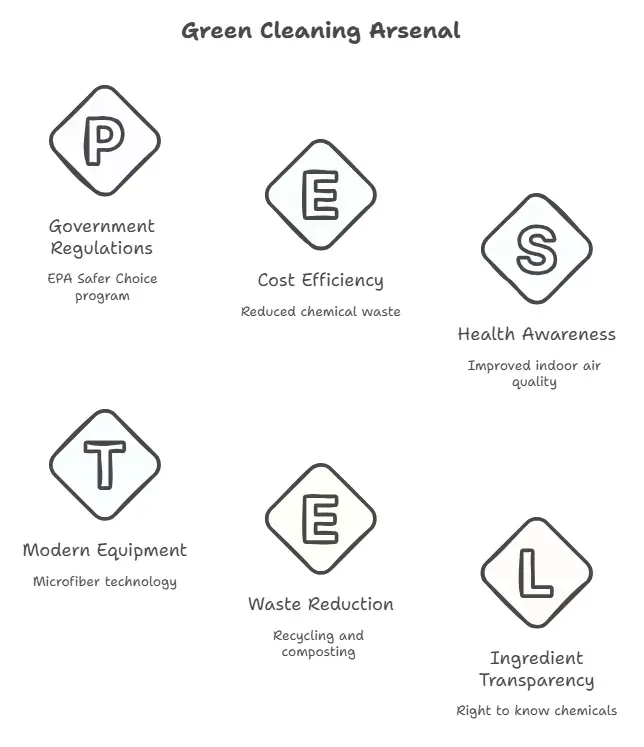
- Regulatory Pressures: Governments and regulatory bodies, responding to public demand and scientific evidence, began to implement policies encouraging or mandating more environmentally friendly practices. Certification programs and standards, such as those established by the EPA or Green Seal, provided benchmarks for identifying genuinely green products and services.
- Technological Advancements: Innovation played a crucial role. Scientists and chemists developed alternative ingredients and formulations that offered comparable, if not superior, cleaning performance without the associated health and environmental risks. You now have access to a broader palette of effective, eco-friendly solutions.
Core Principles of Green Cleaning Implementation
To genuinely embrace green cleaning, you must move beyond superficial aesthetics and internalize its foundational principles. It’s an integrated approach, a holistic strategy that touches upon every aspect of your cleaning operation.
Prioritizing Health and Safety
At the heart of green cleaning is an unwavering commitment to the health and safety of building occupants, cleaning personnel, and the wider community. You are not simply cleaning; you are fostering wellness.
- Minimizing Chemical Exposure: This is perhaps the most immediate and tangible benefit. By selecting products with low VOC content, no hazardous air pollutants, and fewer irritants, you drastically reduce the chemical burden on indoor air quality. You are, in essence, purifying the air you breathe and the surfaces you touch.
- Improving Indoor Air Quality (IAQ): Traditional cleaning agents are significant contributors to poor IAQ. Green cleaning products, by contrast, are designed to minimize off-gassing and airborne particles. This results in fewer respiratory issues, reduced allergy symptoms, and an overall healthier, more productive environment for everyone within your facility. Think of it as opening a window to let in fresh air, but doing so proactively through your choice of cleaning supplies.
- Reducing Allergen and Irritant Levels: Many conventional cleaners can exacerbate allergies and sensitivities. Green cleaning products are often formulated without common allergens like synthetic dyes and fragrances. This makes your facility more accessible and comfortable for individuals with sensitivities, fostering a more inclusive environment.
Environmental Stewardship
Your responsibility extends beyond the immediate confines of your building. Green cleaning places a premium on minimizing your ecological footprint, acting as a steward of the environment.
- Resource Conservation: This principle manifests in various ways. You are encouraged to use concentrated cleaning products, which require less packaging and reduce transportation emissions. The adoption of efficient cleaning equipment that uses less water and energy is also paramount. Consider a high-efficiency vacuum cleaner that employs advanced filtration; it not only cleans better but also consumes less power.
- Waste Reduction Strategies: From bulk purchasing to reusable cleaning cloths, waste reduction is a cornerstone. You should prioritize products with recyclable or compostable packaging and implement robust recycling programs for cleaning supply containers. The goal is to move towards a circular economy where waste is minimized, and resources are continually reutilized.
- Biodegradability and Non-Toxicity: The chemical products you select should be biodegradable, meaning they break down naturally without harming ecosystems. They should also be non-toxic, ensuring that any accidental discharge or runoff poses minimal threat to aquatic life, soil composition, and general environmental health.
Tools and Techniques: The Green Cleaning Arsenal
Equipping yourself with the right knowledge extends to understanding the practical tools and techniques that underpin effective green cleaning. It’s not just about what you use, but how you use it.
Product Selection and Certification
Navigating the landscape of “green” products can be complex. You need reliable indicators to distinguish genuine eco-friendly options from those merely employing “greenwashing.”
- Third-Party Certifications: Look for products certified by reputable organizations such as Green Seal, Environmental Choice (EcoLogo), or the EPA’s Safer Choice program. These certifications indicate that products have undergone rigorous testing and meet predefined environmental and health criteria, providing you with a trusted seal of approval. Think of these certifications as a trusted compass guiding you through a dense forest of product options.
- Ingredient Transparency: Demand ingredient transparency from manufacturers. You have a right to know what chemicals are present in the products you use. Prioritize products with clear, comprehensive ingredient lists, avoiding those that are vague or withhold information. This empowers you to make informed decisions and avoids the “black box” approach to chemical disclosure.
- Performance Efficacy: Crucially, green cleaning products must still deliver on their primary promise: to clean effectively. Sustainable choices should not equate to compromised performance. Modern green formulations are engineered to match or surpass the efficacy of their conventional counterparts, often utilizing bio-based enzymes, plant-derived surfactants, and advanced micro-fiber technology.
Equipment and Technology
Modern technology plays a vital role in enhancing the efficiency and sustainability of your cleaning operations.
- Microfiber Technology: Microfiber cloths and mops are exceptionally effective at trapping dirt, dust, and microscopic particles, often with just water or minimal cleaning solutions. Their enhanced cleaning power means you use fewer chemicals, less water, and reduce cross-contamination. They are also highly durable and reusable, contributing to waste reduction.
- High-Filtration Vacuum Cleaners: Invest in vacuum cleaners equipped with HEPA (High-Efficiency Particulate Air) filters. These filters capture 99.97% of airborne particles as small as 0.3 microns, significantly improving indoor air quality by removing dust, allergens, and other microscopic pollutants. This is paramount for facilities with allergy sufferers or sensitive populations.
- Automated Scrubbers and Extractors: Modern floor care equipment often incorporates features that conserve water and energy, such as efficient water reclamation systems and lower energy consumption motors. Some even use orbital scrubbing technology, which can clean more effectively with less water and fewer chemicals.
- Electrostatic Sprayers: These devices apply cleaning solutions with an electrical charge, causing them to cling to surfaces more effectively and evenly. This can lead to more thorough disinfection with less product usage, increasing efficiency and reducing chemical waste.
Best Practices and Procedures
The “how” of cleaning is as important as the “what.” Sound operational procedures are fundamental to green cleaning.
- Proper Dilution and Application: Educate your cleaning staff on the correct dilution ratios for concentrated products. Over-diluting reduces efficacy, while under-diluting wastes product and can pose health risks. Proper application techniques, such as spray-and-wipe methods, minimize overspray and optimize product usage.
- Integrated Pest Management (IPM): Green cleaning extends to pest control. IPM focuses on preventing pest infestations through good sanitation, building maintenance, and non-toxic methods, rather than relying solely on chemical pesticides. This protects building occupants from harmful chemicals while effectively managing pests.
- Waste Segregation and Recycling: Implement clear, accessible systems for segregating waste into recyclable, compostable, and general waste streams. This maximizes your recycling efforts and minimizes landfill contributions, aligning with your environmental stewardship goals.
- Employee Training and Education: Your cleaning staff are your most valuable asset in implementing green cleaning. Provide comprehensive training on the proper use of green products, equipment operation, and safety protocols. Empower them with the knowledge and understanding of why green cleaning is important, fostering a sense of ownership and commitment.
The Tangible Benefits of Embracing Green Cleaning
The commitment to green cleaning is not merely an ethical imperative; it yields a multitude of tangible benefits that extend across economic, social, and environmental dimensions. You will find that the investment pays dividends in numerous areas.
Health and Well-being Enhancements
The most immediate and profound impact of green cleaning is on the health and comfort of individuals within your facility.
- Reduced Illness and Absenteeism: By minimizing exposure to harmful chemicals and improving indoor air quality, you create a healthier environment. This can lead to a decrease in respiratory illnesses, allergy flare-ups, and other health issues among occupants and staff, potentially reducing absenteeism and increasing overall productivity.
- Improved Employee Morale and Productivity: A healthier work environment contributes directly to higher employee satisfaction and morale. When staff and occupants feel safer and more comfortable in their surroundings, their focus can shift from discomfort to their work, leading to enhanced productivity and a more positive atmosphere.
- Enhanced Public Image and Reputation: Demonstrating a commitment to health and environmental responsibility significantly boosts your organization’s public image. You project an image of an environmentally conscious and socially responsible entity, which can attract discerning clients, employees, and stakeholders.
Economic Advantages
While the initial investment in some green cleaning products or equipment might seem higher, the long-term economic benefits often outweigh these costs.
- Cost Savings Through Concentrates and Efficiency: Concentrated green cleaning products, while potentially having a higher unit cost, often result in lower “in-use” costs due to reduced transportation, packaging, and the need for less frequent reordering. Efficient equipment that uses less water, energy, and chemicals further reduces operational expenses.
- Extended Lifespan of Materials: Harsh chemicals can degrade surfaces, finishes, and equipment over time. Green cleaning products are often milder and less corrosive, helping to extend the lifespan of your facility’s assets, reducing the need for premature replacements and associated costs.
- Compliance and Risk Mitigation: Adhering to green cleaning standards and regulations can help you avoid potential fines and penalties associated with environmental non-compliance. Furthermore, by reducing exposure to hazardous chemicals, you mitigate the risk of worker’s compensation claims and liability issues.
Environmental Impact Reduction
Your commitment to green cleaning contributes to the broader global effort to protect the planet.
- Conservation of Natural Resources: Through reduced water and energy consumption, and the use of products derived from renewable resources, you actively participate in conserving precious natural resources. Every gallon of water saved, every watt of energy conserved, contributes to a more sustainable future.
- Minimization of Pollution: By using biodegradable, non-toxic products, you significantly reduce the discharge of harmful chemicals into air, water, and soil. This lessens air pollution, protects aquatic ecosystems from contamination, and maintains the health of soil.
- Reduced Waste Generation: From selecting products with minimal packaging to implementing robust recycling programs for spent containers, green cleaning actively seeks to minimize waste going to landfills. This directly supports a circular economy model and reduces the environmental burden of waste management.
Overcoming Challenges and Looking Ahead
| Principle | Description | Example | Benefit |
|---|---|---|---|
| Use of Environmentally Friendly Products | Choose cleaning products that are non-toxic, biodegradable, and free from harmful chemicals. | Using vinegar and baking soda instead of harsh chemical cleaners. | Reduces pollution and health risks. |
| Minimize Waste | Reduce packaging waste and use reusable or recyclable materials. | Using refillable spray bottles and microfiber cloths. | Decreases landfill waste and resource consumption. |
| Efficient Use of Resources | Use water and energy efficiently during cleaning processes. | Using cold water for cleaning and energy-efficient equipment. | Conserves natural resources and lowers utility costs. |
| Proper Training and Education | Ensure staff are trained on green cleaning techniques and product use. | Conducting workshops on sustainable cleaning practices. | Improves effectiveness and safety of cleaning. |
| Indoor Air Quality Improvement | Use products and methods that reduce indoor air pollutants. | Using low-VOC (volatile organic compounds) products. | Enhances occupant health and comfort. |
| Integrated Pest Management | Use non-chemical pest control methods when possible. | Using traps and sealing entry points instead of pesticides. | Reduces chemical exposure and environmental impact. |
Transitioning to green cleaning is not without its challenges, but with a strategic approach, you can navigate these obstacles effectively. Your long-term vision is key.
Common Hurdles in Adoption
You may encounter resistance or perceive certain barriers to full implementation. Understanding these challenges is the first step towards overcoming them.
- Initial Cost Perception: Some green cleaning products or equipment may have a higher upfront cost compared to conventional alternatives. This perception can deter decision-makers who focus solely on immediate expenses rather than long-term value.
- Resistance to Change: Human nature often resists change. Cleaning staff may be accustomed to traditional methods and products, and may view new green alternatives with skepticism or reluctance, fearing a decrease in efficiency or requiring new training.
- Lack of Awareness and Education: A significant barrier can be a simple lack of understanding regarding the benefits and practicalities of green cleaning. Both management and cleaning personnel may not fully grasp why the transition is necessary or how to properly implement it.
Strategies for Successful Transition
With foresight and a proactive approach, you can effectively manage and mitigate these challenges, paving a smoother path to green cleaning.
- Phased Implementation: Rather than attempting a wholesale overhaul, consider a phased approach. Start with a pilot program in a specific area or for a particular cleaning task, allowing for evaluation, adjustments, and gradual integration. This build-up of experience and success can then be leveraged for broader implementation.
- Comprehensive Training and Engagement: Invest in thorough training programs for all cleaning staff. Explain the “why” behind green cleaning, demonstrate proper product usage, and empower them to be part of the solution. Soliciting their feedback can also foster a sense of ownership and increase acceptance.
- Performance Monitoring and Metrics: Establish clear performance metrics to track the effectiveness of your green cleaning program. Monitor product consumption, waste generation, indoor air quality improvements, and even occupant feedback. Quantifiable results can powerfully demonstrate the value and ROI of your green initiatives.
- Communication and Advocacy: Clearly communicate your commitment to green cleaning to all stakeholders—occupants, employees, clients, and the wider community. Highlight the health, environmental, and economic benefits. This public advocacy can strengthen your brand, attract like-minded partners, and inspire others to adopt similar practices.
By embracing the principles of green cleaning, you are making a conscious decision to foster healthier environments, conserve resources, and reduce your ecological footprint. You are not only cleaning your facilities; you are actively contributing to a more sustainable and responsible future. This is your opportunity to lead by example, transforming cleaning from a mere upkeep task into a powerful instrument for positive change.
FAQs
What is green cleaning?
Green cleaning refers to the use of cleaning methods and products that are environmentally friendly, non-toxic, and sustainable. It aims to reduce the impact on human health and the environment by using safer chemicals and practices.
What are the main principles of green cleaning?
The main principles of green cleaning include using non-toxic and biodegradable cleaning products, reducing waste, conserving water and energy, improving indoor air quality, and promoting sustainable practices throughout the cleaning process.
Why is it important to use green cleaning products?
Green cleaning products are important because they minimize exposure to harmful chemicals, reduce pollution, protect ecosystems, and contribute to healthier indoor environments for people and pets.
How does green cleaning contribute to sustainability?
Green cleaning contributes to sustainability by using renewable resources, reducing chemical waste, conserving water and energy, and promoting recycling and reuse, which collectively help preserve natural resources and reduce environmental impact.
Can green cleaning be as effective as traditional cleaning methods?
Yes, green cleaning can be as effective as traditional cleaning methods when using the right products and techniques. Many green cleaning products are designed to effectively remove dirt, germs, and allergens while being safer for people and the environment.