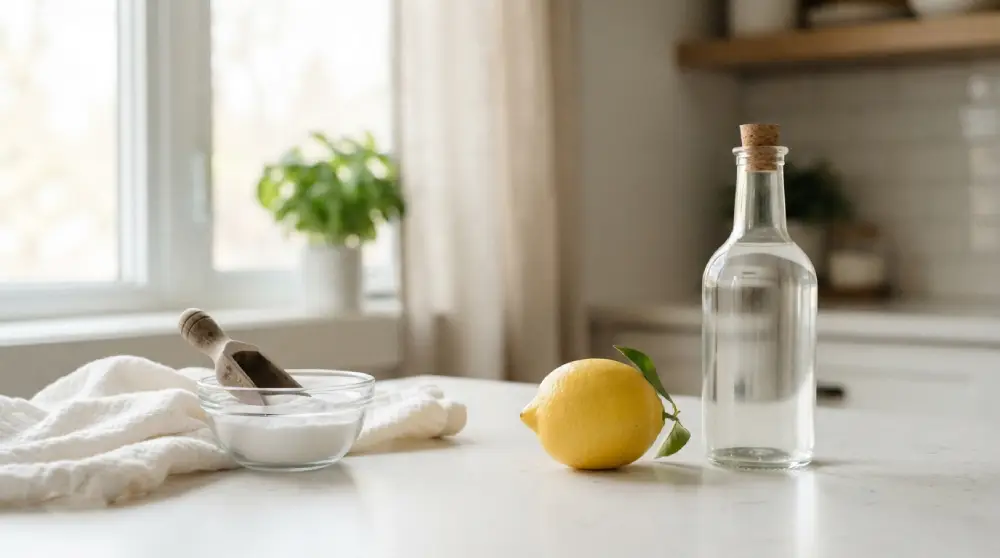
Baking Soda vs Vinegar Cleaning is one of the most popular debates in home care, and for good reason. Both products sit in almost every kitchen, and both are famous for tackling dirt, odors, and buildup.
But they are not the same. Each one works in a different way, and each is better suited to certain jobs.
This guide breaks down how they work, where they shine, and where they can cause damage. By the end, you will know exactly which one to grab for each mess.
How Baking Soda and Vinegar Actually Work
Before choosing a winner, it helps to understand the science.
How Baking Soda Cleans
Baking soda is a mild alkaline powder. Its slightly gritty texture makes it a gentle scrub, and its chemistry helps break down grease and absorb odors.
It works best on:
- Greasy residue
- Sticky food stains
- Lingering smells
- Light surface grime
Because it is mildly abrasive, it lifts dirt without being harsh on most surfaces.
How Vinegar Cleans
White vinegar is a mild acid. That acidity dissolves mineral deposits, soap scum, and hard water spots.
It also helps cut through some types of residue and freshens surfaces. Its sharp smell fades as it dries.
It works best on:
- Hard water stains
- Limescale
- Soap film
- Glass and mirrors
Baking Soda vs Vinegar Cleaning: The Key Differences
The simplest way to think about it is this: baking soda is alkaline, and vinegar is acidic.
Alkaline cleaners are great against grease and acidic messes. Acidic cleaners are great against mineral buildup and alkaline residue.
Here is a quick way to remember it:
- Grease and grime call for baking soda
- Limescale and water spots call for vinegar
- Odors can be handled by either, depending on the source
- Gentle scrubbing is easier with baking soda
Neither one is a true disinfectant for serious germs. They clean well, but they should not replace a proper disinfectant when one is needed.
Best Uses for Baking Soda
Baking soda is a great all around helper. Here are the places it works best.
Kitchen Surfaces
Sprinkle it on a damp sponge and scrub stovetops, countertops, and sinks. It lifts stuck on food without leaving heavy scratches on most surfaces.
For baked on grease inside an oven, make a thick paste with water. Spread it on, let it sit for several hours, then wipe it away.
Refrigerator and Trash Can Odors
An open box of baking soda in the fridge helps absorb smells. You can also sprinkle a little in the bottom of a trash can to keep odors down.
Carpets and Upholstery
Sprinkle baking soda on a dry carpet or sofa. Let it sit for about thirty minutes, then vacuum. It pulls out odors and refreshes fabric.
Bathroom Scrubbing
Use a paste of baking soda and water on tubs, tile, and sinks. It is gentle enough for regular use and helps remove light stains.
Best Uses for Vinegar
Vinegar earns its place for a different set of jobs.
Glass and Mirrors
Mix equal parts white vinegar and water in a spray bottle. Spray it on windows or mirrors and wipe with a clean cloth or newspaper. It leaves a streak free shine.
Hard Water Stains
Faucets and showerheads often collect white mineral spots. Soak a cloth in vinegar and wrap it around the fixture for about an hour. The deposits soften and wipe away easily.
Coffee Makers and Kettles
Run a mix of vinegar and water through a coffee maker, then follow with clean water cycles. For kettles, simmer a diluted solution, let it cool, and rinse well.
Soap Scum
Vinegar breaks down soap film on shower doors and tiles. Spray, wait a few minutes, and wipe.
What Happens When You Mix Them?
This is where many people get confused. When baking soda and vinegar combine, they fizz.
That bubbling looks powerful, but it is mostly a reaction between the acid and the base. The result is mainly water, a salt, and carbon dioxide. In other words, the two cancel each other out.
So if you mix them together in a bottle and expect a super cleaner, you will likely be disappointed.
Why You Should Never Seal the Mixture
Never store the fizzing mixture in a closed container. The gas builds pressure and can cause the container to burst.
When the Fizz Is Actually Useful
The fizz can help loosen light clogs or freshen a drain through gentle agitation. Pour baking soda down the drain first, then add vinegar, let it bubble briefly, and flush with hot water.
It will not fix serious blockages, but it can help with minor buildup and odors.
Surfaces to Avoid
Even natural cleaners can cause damage when used on the wrong surface.
Avoid Vinegar On These
- Natural stone like marble, granite, and limestone
- Hardwood floors with a delicate finish
- Grout that is not sealed
- Cast iron cookware
- Some rubber seals and gaskets
The acid can etch stone, dull finishes, and wear down certain materials over time.
Avoid Baking Soda On These
- Polished or very soft surfaces that scratch easily
- Aluminum cookware, which can discolor
- Delicate glossy finishes
Always test a small hidden area first. A quick spot check can save you from a costly mistake.
Smart Ways to Use Both the Right Way
The best approach is not choosing one forever. It is using each at the right time.
Try this routine for a bathroom sink:
- Scrub the basin with baking soda paste to remove grime
- Rinse well with water
- Spray vinegar on the faucet to remove mineral spots
- Wipe dry for a clean, shiny finish
By using them one after the other instead of mixed, you get the strengths of both without canceling anything out.
Safety Tips You Should Follow
Natural does not mean risk free. Keep these points in mind.
Never mix vinegar with bleach. The combination releases harmful fumes. Also avoid combining vinegar with hydrogen peroxide in the same container, since it can create a corrosive substance.
Ventilate the room when cleaning, especially in small spaces like bathrooms.
Wear gloves if you have sensitive skin, and keep all cleaning products away from children and pets.
Label every spray bottle clearly so nobody confuses it with something else.
Conclusion
When it comes to Baking Soda vs Vinegar Cleaning, there is no single winner. Each one is a strong cleaner when used for the right job.
Choose baking soda for grease, scrubbing, and odors. Choose vinegar for mineral buildup, soap scum, and glass.
Use them separately for the best results, test surfaces before you start, and never mix vinegar with bleach. With a little knowledge, these two pantry staples can handle a surprising amount of your household cleaning.
FAQs
Is baking soda or vinegar better for cleaning?
It depends on the mess. Baking soda is better for grease, stains, and odors, while vinegar works better on hard water spots, limescale, and soap scum.
Can I mix baking soda and vinegar to clean?
You can, but the mixture is not very effective because the two neutralize each other. It is better to use them one after the other. Never store the mixture in a sealed container.
Is vinegar safe to use on all surfaces?
No. Avoid using vinegar on natural stone, unsealed grout, cast iron, and delicate wood finishes, because the acid can damage them.
Does baking soda disinfect surfaces?
Baking soda cleans and deodorizes well, but it is not a strong disinfectant. Use a proper disinfectant when you need to kill germs.
Can I use baking soda and vinegar to unclog a drain?
They can help with minor buildup and odors. Pour baking soda in first, add vinegar, let it fizz briefly, and flush with hot water. Serious clogs may need other methods or a professional.