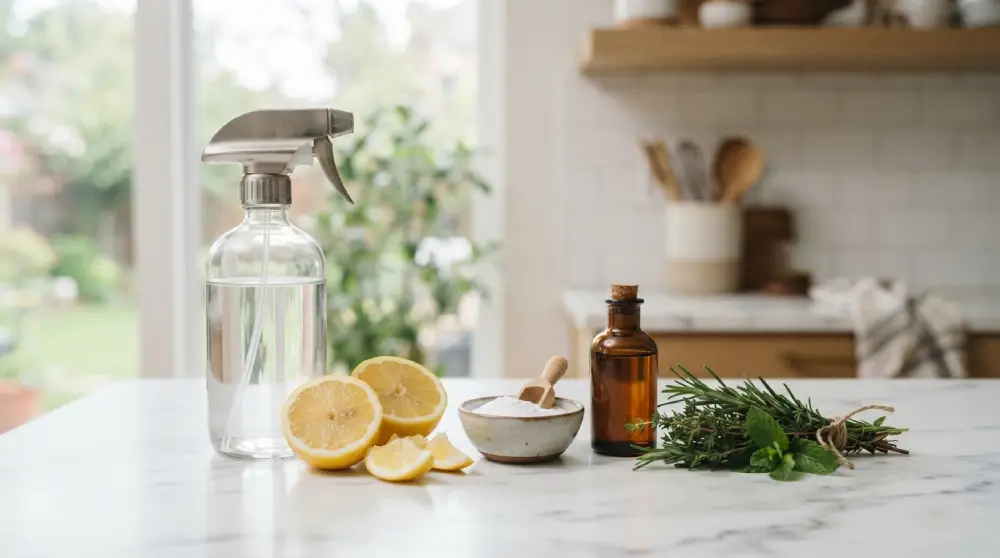
Looking for the best natural disinfectants for home use? Many families want a cleaner house without harsh fumes in the air.
The good news is that several simple ingredients can help reduce germs on everyday surfaces. You may already have some of them in your kitchen.
This guide covers the most trusted options, how to use them safely, and where each one works best.
Why Choose Natural Disinfectants?
Strong chemical cleaners can irritate the eyes, nose, and skin. They can also leave a heavy smell behind, which is not pleasant in a home with children, pets, or sensitive adults.
Natural options are gentler to handle and easier to keep around. Many break down into simple, harmless substances after use.
They are also versatile. One ingredient can often clean several areas of your home.
Best Natural Disinfectants for Home
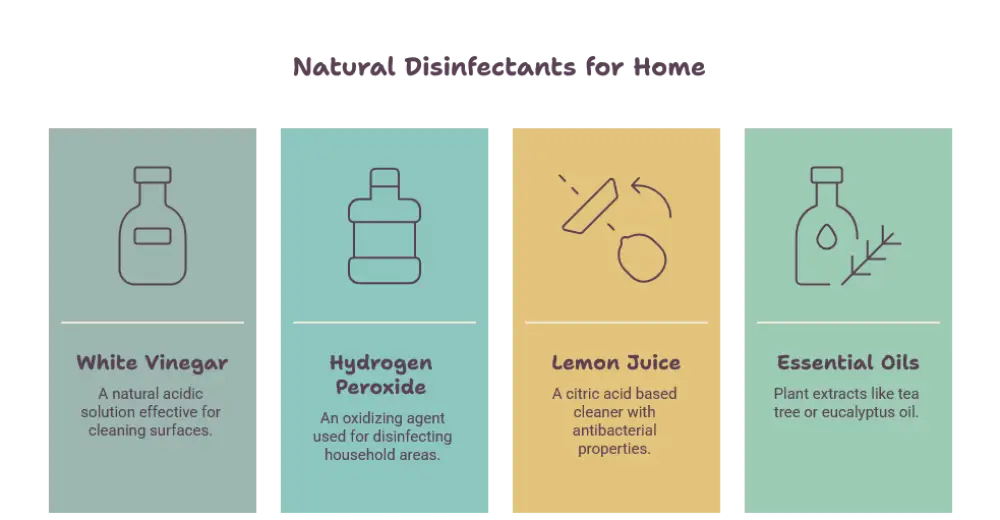
Here are the ingredients that work well in real households, along with the best way to use each one.
White Vinegar
White vinegar is one of the most popular household cleaners. Its acidity helps break down grime and limits the growth of some germs.
It works well on kitchen counters, sinks, and glass. Mix equal parts vinegar and water in a spray bottle for a simple everyday cleaner.
Avoid using it on natural stone such as granite or marble. The acid can dull the surface over time.
Hydrogen Peroxide
The standard brown bottle of hydrogen peroxide from any pharmacy is a strong natural disinfectant. It breaks down into water and oxygen, which makes it a gentle choice for the environment.
Spray it on a surface and let it sit for several minutes before wiping. This contact time matters, because quick wiping does not give it a chance to work.
It is excellent for cutting boards, bathroom tiles, and toilet handles. Keep it in its dark bottle, since light weakens it.
Rubbing Alcohol
Rubbing alcohol at seventy percent strength is a fast acting disinfectant. It evaporates quickly and leaves no residue.
It is ideal for small, high touch items. Think phone screens, remote controls, keyboards, and door handles.
Always use it in a well ventilated room. Keep it away from flames and from painted or varnished surfaces.
Lemon Juice
Lemon juice offers a fresh scent and mild antibacterial action. The natural citric acid helps cut through grease and soap scum.
It suits cutting boards, kettles, and chrome taps. Rub half a lemon over the surface, leave it for a few minutes, then rinse.
It is gentler than other options on this list. For that reason, it works better as a freshener than as a heavy duty disinfectant.
Tea Tree Oil
Tea tree oil is an essential oil known for its germ fighting properties. A little goes a long way.
Add a few drops to a spray bottle of water and shake well before each use. It works nicely in bathrooms and on laundry room surfaces.
Use it with care around pets, especially cats, as the oil can be harmful to them. Store it out of reach of children.
Baking Soda
Baking soda is not a true disinfectant, but it is a helpful partner. Its mild scrubbing action lifts dirt, stains, and odors.
Sprinkle it on a damp sponge to scrub sinks, tubs, and stovetops. Rinse well, then follow with a disinfecting spray if needed.
It also absorbs smells, which makes it useful in refrigerators and trash bins.
Steam
Steam is one of the most underrated natural disinfectants. High heat can kill many germs without any added ingredient.
A steam cleaner works well on tile floors, grout, and sealed countertops. It is also helpful for mattresses and upholstery.
Be careful on unsealed wood and delicate fabrics, as heat and moisture can cause damage.
Cleaning, Sanitizing, and Disinfecting: What Is the Difference?
These three words are often mixed up, so it helps to know what each one means.
Cleaning removes dirt and grime from a surface. Sanitizing lowers the number of germs to a safer level. Disinfecting targets a wider range of germs and works best with proper contact time.
Natural ingredients are great for cleaning and for lowering germs in daily life. For serious illness in the home, you may want stronger measures recommended by health authorities.
Always clean visible dirt first. Disinfectants work better on a clean surface.
How to Make a Simple DIY Disinfectant Spray
A homemade spray is easy to prepare and quick to use. Here is a basic method.
Fill a clean spray bottle with equal parts water and white vinegar. Add a few drops of tea tree oil or lemon essential oil if you like a stronger scent.
Shake the bottle gently before each use. Spray the surface, let it sit for a few minutes, then wipe with a clean cloth.
For a second option, keep a separate bottle of hydrogen peroxide. Use it on its own for bathroom surfaces and cutting boards.
Label every bottle clearly so nobody mistakes it for something else.
Safety Tips You Should Never Skip
Natural does not mean risk free. A few simple rules keep your home safe.
Never mix vinegar and hydrogen peroxide in the same bottle. Together they form peracetic acid, which can irritate the skin, eyes, and lungs.
Never combine any natural cleaner with bleach. Dangerous fumes can form.
Test a small hidden spot before using any new cleaner on a surface. This helps you avoid stains or damage.
Wear gloves if you have sensitive skin. Open a window whenever you clean, even with gentle products.
Where to Use Each Disinfectant
Matching the right product to the right area gives you better results.
Kitchen
Use vinegar spray on counters and hydrogen peroxide on cutting boards. Lemon juice helps with grease and odors on small appliances.
Wipe down fridge handles, stove knobs, and sink taps often. These spots collect germs quickly.
Bathroom
Hydrogen peroxide works well on tiles, toilet seats, and faucet handles. Baking soda helps scrub the tub and sink.
Tea tree oil spray can freshen up shower curtains and corners where dampness lingers.
Floors and Large Surfaces
Steam is a strong choice for sealed hard floors. A diluted vinegar mix also works on tile and vinyl.
Skip vinegar on natural stone and unsealed wood.
High Touch Items
Rubbing alcohol is best here. Wipe phones, light switches, remotes, and doorknobs with a lightly dampened cloth.
Let the surface air dry for the best effect.
Conclusion
Finding the best natural disinfectants for home does not have to be complicated. White vinegar, hydrogen peroxide, rubbing alcohol, lemon juice, tea tree oil, baking soda, and steam each have a clear role in a healthier home.
Pick the right one for each surface, allow proper contact time, and follow basic safety rules. Small, steady habits make the biggest difference.
With these simple ingredients, you can keep your space fresh and clean without relying on harsh chemicals.
FAQs
What is the best natural disinfectant for home use?
Hydrogen peroxide is often considered one of the strongest natural options. White vinegar and rubbing alcohol are also reliable choices depending on the surface you are cleaning.
Is vinegar a real disinfectant?
Vinegar can reduce some germs and works well as an everyday cleaner. It is not as strong as hydrogen peroxide or alcohol, so use it for general cleaning rather than serious germ control.
Can I mix vinegar and hydrogen peroxide together?
No. Mixing them in one container creates peracetic acid, which can harm your skin, eyes, and lungs. Use them separately, and rinse the surface between uses.
How long should a natural disinfectant stay on a surface?
Most need to sit for several minutes before wiping. This contact time gives the ingredient a chance to work properly, so do not wipe the surface right away.
Are natural disinfectants safe for homes with pets and children?
Many are gentler than harsh chemicals, but caution is still needed. Keep all products out of reach, and avoid essential oils like tea tree around cats.